
Intermittent Fasting vs Calorie Counting: Which Wins
Intermittent Fasting vs Calorie Counting: Which Wins
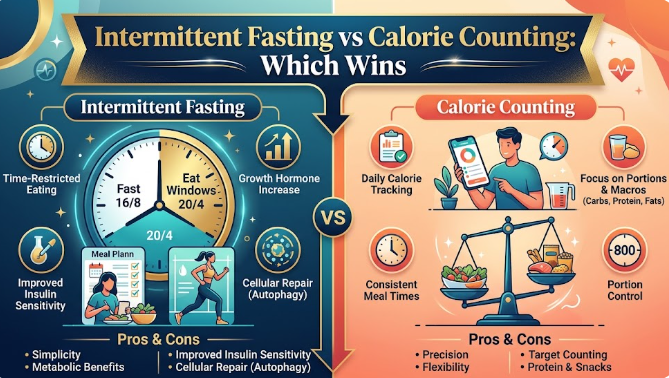
Ask ten people which one actually works and you’ll get ten confident, contradictory answers. That’s usually a sign the real answer is “it depends on the person,” not “one of these is objectively better.” Still, the two methods work in genuinely different ways, and understanding that difference matters more than picking a side.
Calorie counting is a math problem. Intermittent fasting is a scheduling problem. Both can get you to the same place, a sustained calorie deficit, but they get you there through completely different daily habits, and that’s where the “which wins” question actually gets interesting.
1. What Each Method Is Actually Asking You to Do
Calorie counting asks you to track intake with some precision. You log what you eat, you know your target, and you adjust portions or food choices to stay under that number. It’s direct. It’s also demanding, because it requires consistent logging, reasonably accurate estimation of portions, and a tolerance for spreadsheets or apps that some people genuinely enjoy and others find exhausting within two weeks.
Intermittent fasting doesn’t touch what you eat at all, at least not directly. It restricts when you eat, usually through a window like 16:8 (16 hours fasting, 8 hours eating) or through full-day approaches like alternate-day fasting. The theory is straightforward: shrink the eating window, and most people naturally eat less without having to count anything.
Neither method has a special metabolic advantage that beats the other. Weight loss still comes down to energy balance. The real difference is behavioral, not biochemical, and that’s the part worth paying attention to.
2. The Case for Calorie Counting
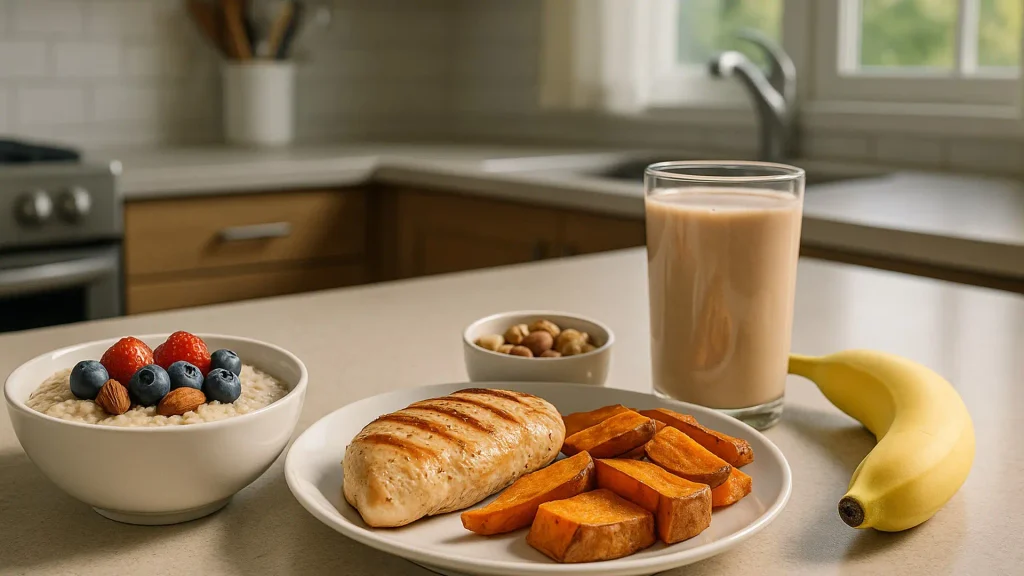
Calorie counting wins on precision. If you want to know exactly what’s happening with your intake, there’s no substitute for actually measuring it. This matters most for people training for a specific body composition goal, athletes managing performance and weight class, or anyone who has tried “eating intuitively” and found that their intuition was quietly off by 600 calories a day.
It also teaches food literacy in a way fasting doesn’t. After a few months of logging, most people develop an accurate internal sense of what a meal costs calorically, even without an app. That skill sticks around long after the tracking stops.
The tradeoff is sustainability. Long-term adherence to detailed food logging is genuinely hard. It’s one of the most common reasons people report burning out on a nutrition plan, not because the plan was wrong, but because the tracking became a second job. If you’ve read 5 Signs Your Fitness Routine Has Quietly Turned Into Burnout, some of that same fatigue applies here. Precision without sustainability doesn’t produce results, it just produces a few good weeks followed by a long break.
3. The Case for Intermittent Fasting
Intermittent fasting wins on simplicity. There’s nothing to log. The rule is just “not yet” until the window opens, and for a lot of people that single rule is easier to follow than dozens of small daily decisions about portion size.
It also tends to reduce mindless eating. Evening snacking, in particular, is where a lot of unplanned calories sneak in, and a fasting window that closes at 7pm removes that opportunity entirely rather than relying on willpower in the moment. This overlaps with something we’ve covered before: Why Evening Workouts Can Disrupt Sleep and Mood touches on how late-day habits, whether it’s training or eating, tend to have outsized effects on the rest of the day.
Where fasting struggles is with people who have a history of restrictive eating patterns, shift workers with irregular schedules, or anyone whose life doesn’t cooperate with a fixed window. Skipping breakfast is easy on a Tuesday at your desk. It’s a lot harder on a Saturday with a 9am soccer game and a family breakfast afterward. Fasting also isn’t automatically “healthier” just because it sounds more disciplined, and that’s a common misconception worth naming directly.
Where People Usually Get This Wrong
The most frequent mistake isn’t choosing the wrong method, it’s assuming the method does the work by itself. Intermittent fasting without any attention to what happens during the eating window can easily turn into two enormous meals that erase the deficit entirely. Calorie counting without attention to protein and fiber can technically hit the number while leaving someone hungry, tired, and one bad day away from quitting. The method sets the structure. The food choices inside that structure still matter.
4. Side-by-Side Comparison
| Intermittent Fasting | Calorie Counting | |
|---|---|---|
| What it controls | Timing of meals | Amount of food |
| Daily effort | Low, mostly passive | Moderate to high, active tracking |
| Precision | Low, indirect | High, direct |
| Best for | People prone to snacking, simple routines | People who want data, specific goals |
| Common failure point | Overeating during the window | Tracking fatigue, burnout |
| Social flexibility | Lower, fixed windows | Higher, adjust any meal |
| Learning curve | Short | Longer, but builds lasting food knowledge |
5. Choosing Between Them
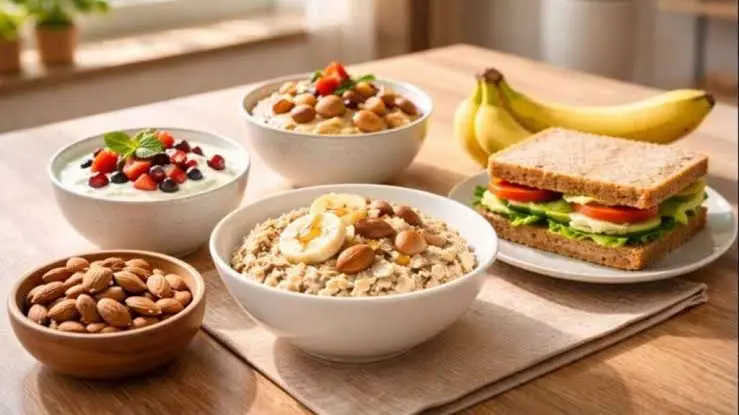
The honest answer is that this decision has less to do with fat loss science and more to do with which kind of person you are day to day. Someone who already has an unpredictable schedule, three kids, and a job with no fixed lunch hour is going to struggle with a rigid 8-hour window no matter how motivated they are on day one. Someone who hates the idea of measuring almond butter with a food scale is going to abandon calorie counting regardless of how effective it is on paper.
A decent way to test this without committing for months: try calorie counting for two weeks, then try a fasting window for two weeks, and pay attention not to the scale but to how much mental energy each one took. That’s usually the deciding factor, and it’s one that gets skipped when people only compare the two methods on paper.
It’s also worth saying that these aren’t mutually exclusive. Plenty of people use a modest eating window and count calories inside it, getting the structure of fasting with the precision of tracking. That combination often works better than either method used strictly on its own, particularly for people who’ve already tried one approach and hit a plateau. If a plateau sounds familiar, it might also be worth looking at training variables rather than just diet, which is where something like 7 Workout Mistakes That Slow Beginner Progress becomes relevant, since stalled progress is rarely just one thing.
At fitnessupdates.org, the pattern we see most often is that people stick with whichever method removes the most daily decisions for them personally, not whichever method a study ranked slightly higher. That’s not a scientific answer. It’s a practical one, and practical usually beats optimal when the real competition is next Tuesday, not next month.
There’s also a longevity angle worth a passing mention. Populations that live longest generally aren’t following either of these systems formally, they’re eating in a way that happens to align loosely with both, smaller portions, earlier dinners, food as a social event rather than a chore. That’s covered in more depth in What Blue Zones Can Teach Us About Movement and Longevity, and it’s a useful reminder that neither method needs to be treated as a permanent identity. They’re tools, not philosophies.
None of this needs to be dramatic. Pick the one that fits the week you actually have, not the week you wish you had, and adjust from there.
FAQs
Is intermittent fasting better for losing belly fat specifically? No. Fat loss location is largely determined by genetics and overall body fat percentage, not by which nutrition method created the deficit. Neither fasting nor calorie counting targets fat in a specific area.
Can I build muscle while doing intermittent fasting? Yes, as long as total protein intake and overall calories support it. The eating window doesn’t prevent muscle growth, but a window that’s too short can make it harder to hit protein targets, so that’s worth watching.
Do I need to count calories if I’m already fasting? Not strictly, but many people plateau on fasting alone because they unknowingly overeat during the window. Tracking for even a week or two during a stall can reveal whether that’s happening.
Is it normal to feel irritable during a fasting window at first? Yes, this is common in the first one to two weeks and usually settles down. If it doesn’t improve, or if it’s paired with disordered eating patterns, that’s a sign to stop and check in with a doctor or dietitian rather than pushing through.
What if I have a history of disordered eating? Should I avoid both? Structured restriction of any kind, whether timing-based or calorie-based, can be risky for someone with a history of disordered eating, and this decision is worth making with a doctor or therapist rather than a fitness article. It’s a reasonable question to ask before starting either approach.
For a broader look at how daily structure affects fitness outcomes beyond just diet, the comparison at Home Workouts vs Gym Training: Which One Wins follows a similar logic, the method matters less than whether it actually fits your life.
2 Comments