
Why You Feel Hungry After a Healthy Meal
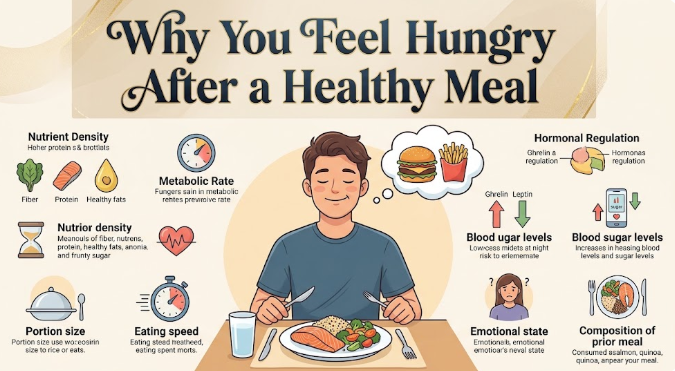
Why You Feel Hungry After a Healthy Meal
There’s a specific kind of confused annoyance that comes from finishing a salad, some grilled chicken, and a side of vegetables, only to find yourself opening the fridge forty minutes later. It happens constantly. People assume that eating “clean” is supposed to come with automatic satisfaction, like the virtue of the food guarantees the feeling of fullness. It doesn’t work that way, and once you understand why, the whole thing stops being mysterious.
1. “Healthy” and “Filling” Are Not the Same Category
A lot of foods earn the healthy label because of what they don’t contain. Low sugar. Low fat. Low calorie. None of that tells you anything about volume, chewing time, or how your stomach stretch receptors respond. A cup of steamed broccoli and a cup of white rice can both be “healthy” in the loose sense, but they behave completely differently once they’re inside you.
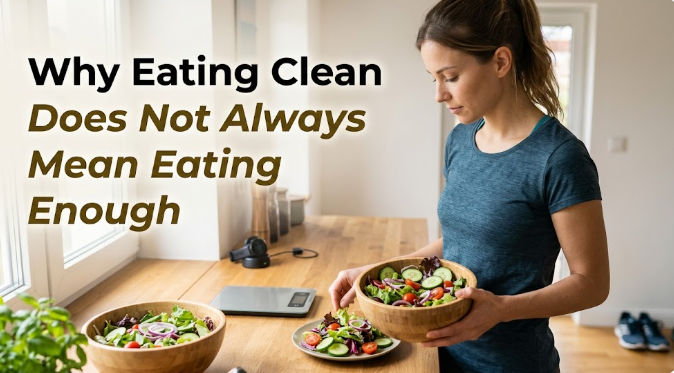
The bigger issue is calorie density mismatched against expectation. A large bowl of mixed greens with a light dressing might come in under 200 calories. It looks like a full meal on the plate. Your stomach agrees for about twenty minutes. Then your body, which was expecting fuel proportional to the size of what you just ate, notices the gap between visual volume and actual energy delivered, and hunger signals start creeping back in earlier than expected.
This is one of the more common patterns we see questions about here at fitnessupdates.org, and it’s rarely about willpower. It’s usually about the meal not matching what the body actually needed.

2. The Macronutrient Balance Nobody Talks About
Satiety isn’t just “did I eat enough.” It’s a hormonal conversation between your gut and your brain, and three players matter more than the rest: protein, fiber, and fat. Carbohydrates alone, especially refined ones, spike blood sugar fast and drop it just as fast, which triggers hunger again well before your next meal is due.
Protein is the heavyweight here. It slows gastric emptying and triggers a stronger release of peptide YY and GLP-1, two hormones that signal fullness to the brain. Fiber adds physical bulk and slows digestion. Fat does something similar by delaying how quickly your stomach empties. A meal missing two of these three tends to leave people hungry again within an hour or two, no matter how virtuous the ingredient list looks.
| Macronutrient | Effect on Fullness | Common Mistake |
|---|---|---|
| Protein | Strongest satiety signal, slows digestion | Portions too small, especially at breakfast |
| Fiber | Adds bulk, slows stomach emptying | Relying on juice or smoothies instead of whole produce |
| Healthy fats | Delays gastric emptying | Cutting fat too aggressively out of “diet” meals |
| Refined carbs | Fast spike, fast crash | Treating white bread or plain pasta as neutral filler |
A salad with grilled chicken and olive oil dressing checks all three boxes. A salad with a few croutons and a fat-free dressing checks none of them, and it’s the second one that leaves people staring into the pantry an hour later.
3. Where People Usually Get It Wrong
This is the part worth slowing down on, because the mistakes are consistent and mostly invisible to the person making them.
The health halo effect is a big one. When food is labeled healthy, people unconsciously assume it’s more filling than it actually is, and they eat slightly less of it as a result, sometimes without noticing. There’s also the speed problem. Eating quickly outpaces the roughly twenty minutes it takes for satiety hormones to catch up with what’s already in your stomach, so a fast fifteen-minute lunch can leave you feeling under-fed even when the portion was objectively fine.
And then there’s the drink-with-meal habit. Washing food down with a big glass of water or, worse, a sugary drink can create a false sense of fullness that fades fast, then leaves a rebound hunger once the liquid volume clears the stomach. People also tend to copy a diet template built for someone else’s activity level. A portion size that works for a mostly sedentary office day won’t hold up on a day that included a hard training session, and pretending otherwise just sets up a 3pm crash.
If you’ve followed one of the routines from our tested beginner programs, you’ve probably felt this firsthand. Training days and rest days are not nutritionally interchangeable, even if the meal plan says they are.
4. Sleep, Stress, and Training Load Change the Equation
Food isn’t the only variable. Ghrelin, the hormone that drives hunger, rises when sleep is short. Leptin, which signals fullness, drops under the same conditions. So a perfectly balanced meal eaten after a rough night of sleep can still leave you hungrier than the identical meal eaten after a full eight hours. Chronic training stress does something similar. If your routine has quietly tipped into overtraining territory, appetite regulation is often one of the first systems to get thrown off, alongside sleep quality and mood. We’ve written before about the early signs your fitness routine has slid into burnout, and disrupted hunger cues show up on that list more often than people expect.
Rest days themselves can be confusing too. Some people feel hungrier on rest days because the body is still repairing tissue and replenishing glycogen, even without a workout that day. Others feel less hungry simply out of habit, because eating had become tied to the routine of training rather than actual need. Neither response is wrong. It’s worth reading why rest days can feel harder than workouts if that mismatch has been throwing off your eating pattern.

5. What Actually Helps
None of this means healthy eating is broken or that you need to abandon vegetables in favor of bigger portions of everything. It means matching the meal to the actual demand. Anchor meals around a real protein source first, then build fiber and healthy fat around it, and let carbohydrates fill in the remaining space rather than dominate the plate. Slow down enough for your stomach’s stretch receptors and hormone signals to actually register what you’ve eaten. Pay attention to whether hunger is showing up on training days specifically, which usually points to a straightforward calorie gap rather than anything more complicated.
It’s also worth looking at the bigger picture occasionally. Some of the longest-lived populations studied for diet and movement patterns don’t eat according to strict macro targets at all. They eat slowly, mostly whole foods, in portions shaped by activity and community habit rather than a diet app’s suggestion. There’s something in that worth borrowing, even outside of a formal framework.
Hunger after a “healthy” meal usually isn’t a sign that something’s wrong with you. More often it’s a sign the meal wasn’t actually matched to what your body was asking for that day.
FAQs
Is it normal to feel hungry an hour after eating a salad? Yes, especially if the salad was light on protein and fat. A salad with only greens and a low-fat dressing digests fast and won’t hold hunger off nearly as long as one built around a real protein source.
Does eating more frequently prevent this kind of hunger? Not automatically. Adding more small, carb-heavy snacks can actually create more blood sugar swings. It’s usually better to fix the composition of your main meals first.
Can drinking water instead of eating help when I feel hungry after a meal? It can blunt the feeling temporarily, but if your body genuinely needs more food or better-balanced food, water is a short-term patch rather than a fix.
Why do I get hungrier on workout days even when I eat the same meals? Training increases energy expenditure, and your appetite hormones respond to that increased demand. Eating the same fixed portions on training and rest days is one of the more common mismatches people run into.
Should I add more fat or more protein if I keep feeling hungry after meals? Protein first, in most cases. It has the strongest and most consistent effect on satiety hormones, with fiber and healthy fat playing a supporting role.
If you want to dig further into how training load interacts with appetite, the archive at fitnessupdates.org has more on the topic.
2 Comments