How Fitness Priorities Shifted in 20 Years
Twenty years ago, nobody in a gym was thinking about their heart rate variability. They were thinking about how many plates were on the bar, whether the treadmill was free, and how many crunches it would take to see abs by summer. That was pretty much the whole conversation.
Walk into almost any gym today and the conversation has completely changed. People are asking about recovery scores, zone 2 cardio, protein timing, and whether their watch thinks they slept well enough to lift heavy. Same buildings, same basic equipment in a lot of cases, but a totally different set of priorities driving the people inside them.
I’ve spent a good chunk of the last decade writing about fitness trends and talking to coaches who’ve been in the industry long enough to watch this shift happen in real time. A few of them still remember when “cardio” meant one thing: the treadmill, and nothing else. It’s worth actually breaking down what changed, because some of it is genuine progress and some of it is just a different flavor of the same old problems.
1. What People Were Actually Training For
In the mid 2000s, the goal was almost always aesthetic. Get lean, get toned, look good for a wedding or a beach trip. Strength training existed, but it was often treated as a means to a look rather than a goal in itself. Women were frequently steered toward light dumbbells and endless cardio out of a fear of “bulking up” that had zero basis in how muscle actually works.
Now the framing has flipped for a large chunk of gym goers. Strength is talked about as a marker of long-term health, not just a summer body strategy. People bring up bone density, functional independence later in life, and metabolic health almost as often as they bring up how they look in a mirror. That’s a real shift, and honestly it’s one of the better ones.
But it’s not universal. A lot of new gym members still walk in chasing a fast aesthetic result, get discouraged when it doesn’t happen in six weeks, and quit. We’ve written before about why new gym goers quit so fast, and the pattern hasn’t really changed even as the marketing language around fitness has gotten more sophisticated.
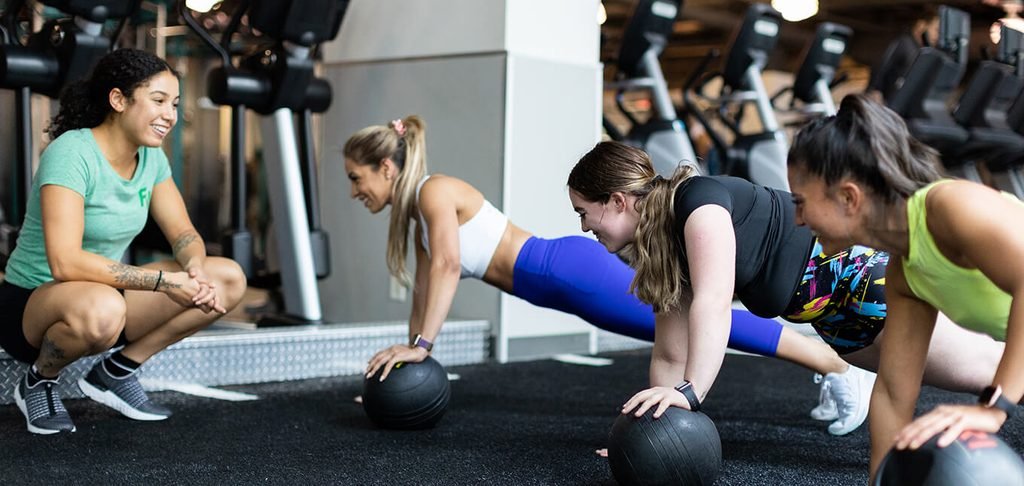
2. How the Tools in the Gym Changed the Conversation
Twenty years ago, tracking your workout meant a spiral notebook or nothing at all. Now it means a wearable device sitting on your wrist that’s quietly logging your heart rate, your sleep, your steps, and increasingly, your stress levels. That data changed how people think about training almost as much as any new exercise science did.
The good part is that people are paying attention to recovery in a way they never used to. The bad part is that some people have started outsourcing their judgment entirely to a device. A ring or a watch telling someone they’re “not ready to train” can talk a genuinely capable person out of a workout they would have benefited from. We covered this tension in more depth in a piece on how wearable trackers are reshaping workouts, and it’s one of the more interesting shifts to watch unfold, mostly because it’s still happening.
Home equipment changed too, obviously. A basic set of adjustable dumbbells and a decent app subscription can now replace what used to require a gym membership. That’s opened fitness up to people who never would have walked into a commercial gym in the first place, and it’s part of a bigger debate we get asked about constantly, which is whether home workouts or gym training actually wins for the average person. There isn’t one clean answer. It depends on what keeps someone consistent, and consistency is still the whole game.
3. Nutrition Advice Got Louder, Not Necessarily Clearer
Here’s where people usually go wrong, and it’s worth being blunt about it. Twenty years ago the diet advice was oversimplified: eat less, move more, avoid fat. It was wrong in a lot of specific ways, but it was at least simple enough that people could act on it.
Today’s advice is more accurate in a technical sense and somehow harder to follow. Protein targets, meal timing windows, fasting protocols, and a constant stream of conflicting takes from people with very confident opinions and no real accountability for being wrong. A beginner trying to figure out how much protein they actually need can end up more confused after research than before it, and that’s a genuine problem worth naming rather than glossing over.
| Fitness Priority | Roughly 2005 | Roughly 2026 |
|---|---|---|
| Main training goal | Look leaner, lose weight | Build strength, protect long-term health |
| Cardio approach | Long, steady treadmill sessions | Mixed zone 2 and interval work |
| Tracking method | Notebook or nothing | Wearable device, app data |
| Nutrition focus | Low fat, calorie counting | Protein targets, meal timing, individual variation |
| Recovery attitude | Push through soreness | Actively planned, sometimes overplanned |
| Mental health link | Rarely discussed | Central part of the conversation |
4. Mental Health Went From an Afterthought to a Headline
This one is probably the biggest actual shift, bigger than any equipment trend. Twenty years ago, if a trainer brought up stress or mood in a session, it was small talk. Today it’s often the main reason someone is training at all.
That’s mostly a good thing. People are more honest now about training as a way to manage anxiety, regulate mood, or just get through a hard stretch of life. It’s also created a newer problem, which is exercise quietly turning into the only coping mechanism someone has, to the point where missing a workout feels like a personal failure rather than just a missed workout. We’ve looked at the line between healthy motivation and something closer to compulsion, and it’s a thinner line than most people assume going in.
And to be fair, movement genuinely does help mood. It’s just not a complete substitute for actual mental health support when someone needs more than that, and pretending otherwise does a disservice to people who are struggling.

5. Where This Leaves Someone Starting Out Today
If someone is just getting into fitness now, they’re inheriting a much more complicated picture than someone starting in 2005 was. More information, more tools, more nuance, and also more noise. The upside is that the actual training principles have gotten better. The downside is that it’s harder to tell good advice from confident-sounding nonsense.
A trend worth watching closely is how many people are choosing social, low-pressure activity over traditional gym training entirely. Adult sports leagues, group classes, and things like pickleball have pulled a surprising number of busy adults away from the weight room, not because lifting stopped working, but because consistency beats optimization every time. We dug into that shift in a piece on why pickleball is beating the gym for busy adults, and the honest answer is that whatever gets someone moving consistently is usually the right answer for them, even if it’s not what a purist would recommend.
There’s also a longer view worth taking here, one that looks past the last twenty years entirely toward populations who’ve stayed active and healthy for decades without a gym membership or a wearable device at all. That’s less about nostalgia and more about noticing what actually holds up over time.
Frequently Asked Questions
Has strength training actually replaced cardio as the main focus for most people? Not entirely, but it’s much closer than it used to be. Most well-rounded programs now treat strength and cardiovascular work as equally important rather than treating cardio as the default and lifting as optional.
Is tracking data with a wearable device actually useful, or is it overhyped? It’s useful as one data point among several, not as the final word. The mistake is letting a device override how you actually feel on a given day.
Why does nutrition advice feel more confusing now than it did years ago? Partly because the science has genuinely gotten more nuanced, and partly because there are simply more voices competing for attention, many of them oversimplifying complex research to sound more confident than the evidence supports.
Is it normal for exercise motivation to be tied to mental health rather than appearance? Yes, and it’s actually a healthier long-term motivator for most people than appearance alone. It only becomes a concern if missing a workout starts to feel like a personal crisis rather than a minor setback.
What’s the biggest mistake people make when trying to keep up with current fitness trends? Trying to adopt all of them at once. Recovery tracking, precise macros, optimized training splits, and trend-chasing workouts rarely work together for a beginner. Picking one or two priorities and staying consistent beats chasing every new idea that shows up in a feed.
If you’re trying to figure out where your own training should sit in all of this, the archive over at fitnessupdates.org has a decent starting point in the piece on building a full beginner routine without gym equipment, which is a reasonable place to start regardless of which decade’s priorities you find yourself leaning toward.