
How to Build a Full Beginner Routine Without Gym Equipment
How to Build a Full Beginner Routine Without Gym Equipment
Most people quit their first home workout plan within three weeks, not because bodyweight training doesn’t work, but because the plan itself was never built to fit a real week. It was copied from somewhere else, dropped into a life that didn’t match it, and abandoned the first time a Tuesday got busy. A good beginner routine has to survive contact with an actual schedule. That’s the whole test.
This isn’t a list of exercises. Plenty of those exist already. This is how to put them together so the routine holds up past the first two weeks, which is where most home training plans quietly die.
1. Start With Frequency, Not Exercises
Before picking a single movement, decide how many days a week you can realistically train without it becoming a negotiation every morning. Three days is the sweet spot for most beginners. It’s enough to build consistency and see progress, and it leaves enough recovery room that missing one day doesn’t wreck the week.
Four days works if you already have a stable routine elsewhere in your life, like a fixed work schedule or a habit of exercising at the same time daily. Five or more days, for a true beginner with no training background, usually backfires. The body isn’t the limiting factor early on. Willpower is, and it runs out fast when the bar is set too high from day one.
A lot of first-time routines fall apart for reasons that have nothing to do with the exercises themselves. If you want a fuller picture of why that happens, this piece on why new gym-goers quit so fast covers the pattern in more depth, and most of it applies just as much to home training as it does to a gym membership.
2. Structure the Session Around Movement Patterns, Not Muscles
Beginners often try to build a routine the way bodybuilders do, splitting the body into chest day, back day, leg day. Without equipment, that approach falls apart quickly because bodyweight exercises don’t isolate muscles the same way a machine does. A push-up works chest, shoulders, and core all at once. Fighting that is a waste of energy.
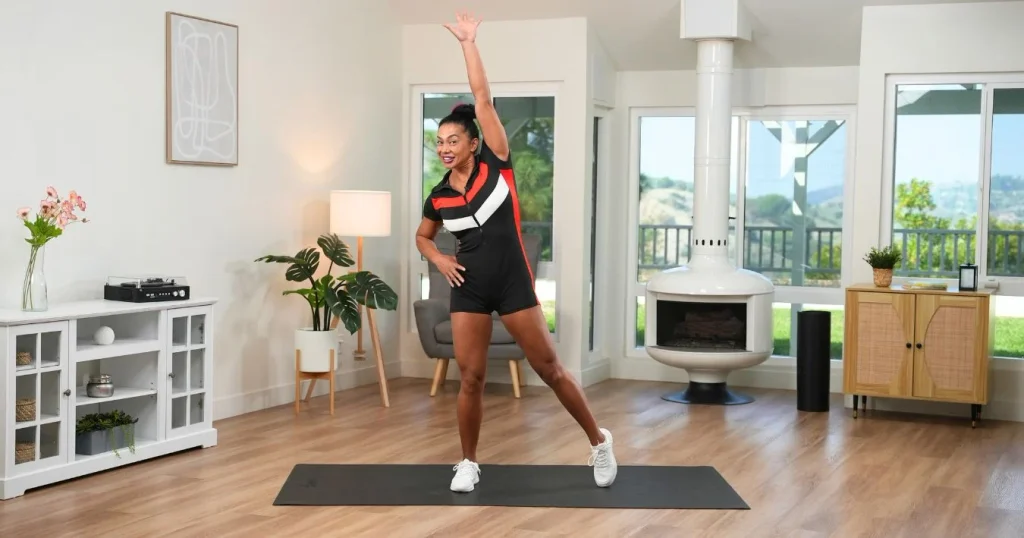
Instead, build each session around four movement patterns: a push, a pull, a squat or lunge, and a core or stability hold. That’s it. Four categories, one or two exercises per category, and the session is already balanced without needing to think about it too hard.
Here’s what that looks like in practice for a true beginner:
| Pattern | Example Exercise | Starting Volume |
|---|---|---|
| Push | Incline push-ups (hands on a couch or step) | 3 sets of 8-10 |
| Pull | Doorframe rows or towel rows | 3 sets of 8-10 |
| Squat/Lunge | Bodyweight squats | 3 sets of 12-15 |
| Core/Stability | Dead bug or plank hold | 3 sets, 20-30 seconds |
That table is the entire session. Nothing complicated, nothing that requires a piece of equipment you don’t own. What changes over the following weeks is the difficulty of each movement, not the number of things you’re doing.
3. Progress the Movement Before You Add Volume
This is where most beginner plans go wrong, and it’s worth pausing on directly. The instinct once push-ups start feeling manageable is to simply do more of them. Fifteen becomes twenty, twenty becomes thirty. That works for a while, then stalls hard, because endurance in a movement and strength in a movement are not the same thing, and high-rep bodyweight work eventually just trains you to be good at high-rep bodyweight work.
The better move is to make the exercise itself harder before making it longer. Incline push-ups become push-ups on the floor. Floor push-ups become push-ups with feet elevated. Bodyweight squats become slow-tempo squats, then single-leg variations. Each progression demands more from the same muscles in less time, which is closer to what actual strength training is supposed to do.
This is one of the more common mistakes worth flagging directly: people track progress by rep count alone and miss that the exercise has stopped being challenging long before the reps stop increasing. If a set of fifteen feels the same as a set of eight did three weeks ago, the exercise needs to change, not just the number.
4. Warm Up Like the Session Matters, Because It Does
Skipping a warm-up on a low-intensity bodyweight day feels harmless, and often it is, but not always, and that inconsistency is exactly why it trips people up. A five-minute warm-up of light movement, some hip circles, a few bodyweight squats at low intensity, and a couple of arm circles costs almost nothing and meaningfully reduces the odds of the kind of nagging joint irritation that quietly derails a routine in week four.
Shoulder discomfort in particular shows up more often in home routines than people expect, usually from push-up form breaking down under fatigue or from cold shoulders going straight into pressing movements. If that’s a pattern you’ve noticed in your own training, this article on why shoulder pain gets worse after every workout is worth reading before it becomes a bigger issue. And for the question of whether skipping the warm-up is ever actually fine, this breakdown gives a more nuanced answer than a flat yes or no.
5. Build the Week, Not Just the Session
A single good workout doesn’t make a routine. The week does. For a three-day beginner schedule, spacing matters more than most people assume. Monday, Wednesday, Friday works well because it leaves a full recovery day between sessions without letting too much time pass and losing momentum.
A simple progression across a four-week block might look like this:
- Week 1: Learn the movements. Focus on form over effort. Reps stay conservative.
- Week 2: Same exercises, slightly higher reps or a few extra seconds on holds.
- Week 3: Introduce one harder variation per movement pattern.
- Week 4: Consolidate. Same difficulty as week 3, but push closer to failure on the last set of each exercise.
That’s a full month of training built entirely around bodyweight work, no equipment required, and it follows the same underlying logic that any well-built program uses, whether it happens in a living room or a fully equipped gym. If you’re weighing whether to stick with home training long-term or eventually move to a gym setting, this comparison of home workouts versus gym training walks through the trade-offs honestly, including the ones people don’t like to admit.
Common Mistakes Worth Naming Directly
A few patterns show up again and again in beginner routines, and most of them are fixable once someone points them out:
- Treating every session as maximum effort, which leads to burnout by week two.
- Changing the routine every few days instead of letting one plan run for a full month.
- Ignoring core and pulling movements because push-ups and squats feel more familiar.
- Measuring progress only by soreness the next day, which is a poor and inconsistent indicator of whether training is actually working.
None of these mistakes are complicated to fix. They just require noticing them, which is harder to do alone than most people expect. This is a big part of why so many routines from fitnessupdates.org emphasize structure over intensity for beginners specifically. Enthusiasm gets people through week one. Structure is what gets them through month three.
A full beginner routine without equipment doesn’t need to be elaborate. It needs four movement patterns, a realistic schedule, a warm-up that actually happens, and a plan for making things harder that doesn’t just mean doing more of the same thing. Most of what derails people isn’t the training itself. It’s a plan that never accounted for how an actual week goes.
FAQs
Do I really not need any equipment at all to build strength as a beginner? For the first several months, no. Bodyweight training provides enough resistance to build real strength in someone who hasn’t trained consistently before. Equipment becomes more useful once bodyweight progressions start running out of room, which for most beginners is further out than they expect.
How long should a beginner bodyweight session take? Somewhere between 25 and 40 minutes, including the warm-up. Longer than that usually means either too much volume for a beginner or too much rest between sets, neither of which speeds up progress.
Is it normal to feel almost no soreness after a session? Yes, especially early on. Soreness isn’t a reliable measure of whether a workout worked. Consistency and gradual progression matter far more than how sore you feel the next morning.
Can I do this routine every single day instead of three times a week? It’s not recommended for a true beginner. Recovery is part of how the body adapts to new demands, and training the same movement patterns daily without experience usually leads to stalled progress or minor overuse issues before it leads to faster results.
What if a push-up is still too hard even on an incline? Wall push-ups are a legitimate starting point. There’s no rule that says you have to start on the floor. The goal is a version of the movement that’s challenging by the last couple of reps, whatever height that happens to be at.
For anyone looking to go deeper into the mistakes that tend to slow beginner progress in general, not just around equipment, the earlier piece on common workout mistakes that hold beginners back is a natural next read.





3 Comments