
Why Pickleball Is Beating the Gym for Busy Adults
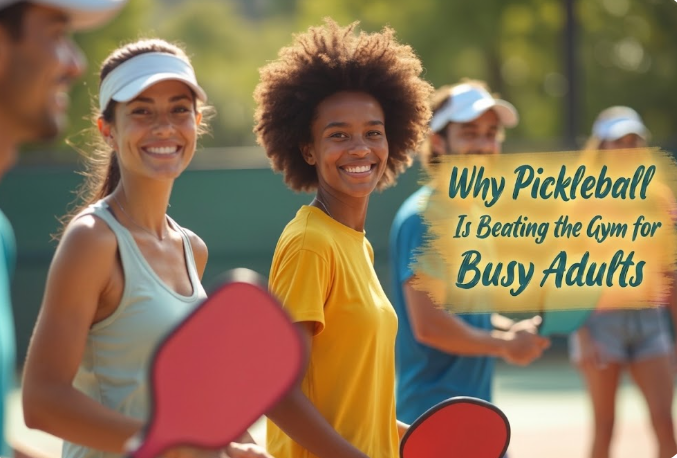
Why Pickleball Is Beating the Gym for Busy Adults
The courts near most suburban rec centers didn’t exist five years ago. Now they’re booked solid by six most evenings, while the cardio floor a few hundred feet away empties out well before then. That’s not a coincidence, and it’s not really about pickleball being trendy. It’s about what happens when a workout stops feeling like a chore.
I’ve spent close to three decades building equipment for gyms and training floors, so I notice this kind of shift before most people do. Gyms aren’t going anywhere. But for a specific type of person, the busy adult who has forty-five minutes and not much patience left over after work, pickleball is quietly winning. Here’s why, and where the comparison actually breaks down.
1. The Numbers Behind the Shift
This isn’t a vibe. It’s measurable. According to the Sports & Fitness Industry Association, <cite index=”11-1″>24.3 million Americans played pickleball in 2025, up 22.8% from the previous year and up roughly 479% since 2020</cite>. That kind of growth curve doesn’t happen with a niche hobby. It happens when something solves a problem people didn’t realize they had.
Meanwhile, gym membership tells a different story. <cite index=”12-1″>Nearly half of new gym members quit within the first six months, and most of that drop-off happens in the first 90 days.</cite> The industry has known this for years and still hasn’t fixed it, mostly because the problem isn’t marketing or pricing. It’s that a treadmill doesn’t ask anything of you socially, and for a lot of people, that’s exactly the missing ingredient.
| Pickleball | Traditional Gym Membership | |
|---|---|---|
| Learning curve | Playable within one session | Weeks to feel confident with equipment |
| Social structure | Built in, you play with others by default | Optional, requires effort to build |
| Average new-user drop-off | Low; core players grew 20%+ in a single year | Roughly 50% quit within six months |
| Time commitment per session | 45–60 minutes, fixed | Open-ended, easy to skip |
| Entry cost | Paddle plus court access, often under $100 | Monthly membership, often $40–$100+ |
If you’ve read our piece on why new gym goers quit so fast, you already know that the biggest predictor of whether someone sticks with a fitness habit isn’t willpower. It’s whether the activity has a natural reason to show up again. Pickleball has that built in. A gym membership, for most people, does not.
2. Why the Social Piece Matters More Than Anyone Admits
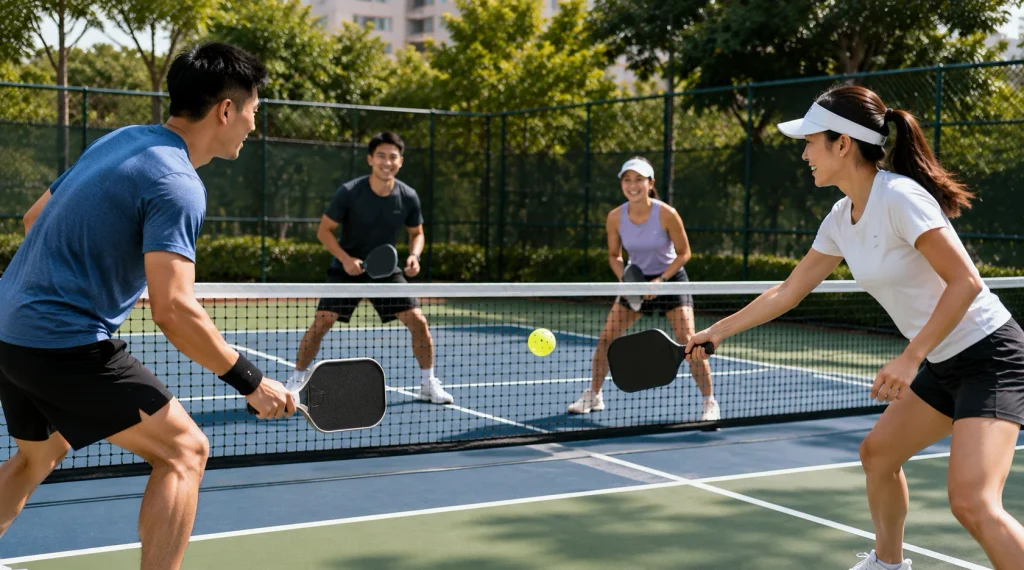
Nobody plays pickleball alone. That single fact does more for adherence than any app, tracker, or accountability partner a gym can offer. You show up, you’re paired with three other people, and for the next hour you’re not thinking about form cues or rep counts. You’re just playing.
Compare that to a typical strength session. Most gym-goers, especially beginners, work out solo with headphones in, following a plan they may not fully understand. There’s nothing wrong with that approach on paper. In practice, it’s fragile. Motivation has to come entirely from within, and motivation is an unreliable fuel source on a Tuesday evening after a long week.
This is where a lot of newer gym members go wrong, actually. They assume the workout itself is the hard part. It usually isn’t. The hard part is walking through the door a second and third time without any external pull keeping them accountable. We covered some of the more common versions of this in 7 workout mistakes that slow beginner progress, and the pattern shows up again and again: people optimize the workout and ignore the habit.
3. The Physical Demand Is Real, Just Different
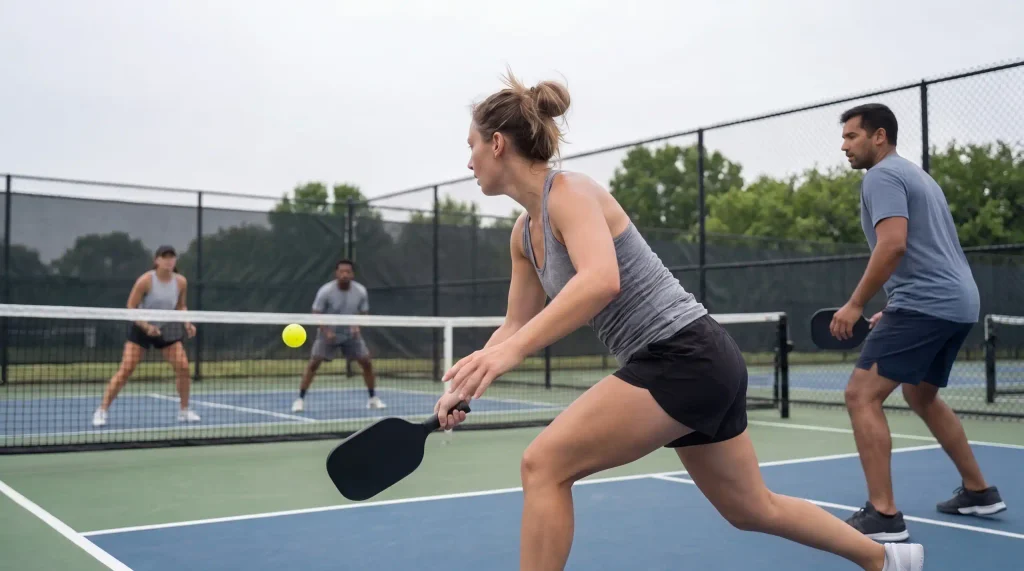
I want to be direct about something, because it gets glossed over constantly. Pickleball is not a lightweight activity. It involves quick lateral movement, sudden stops, rotational power through the trunk, and enough cardiovascular demand to leave most first-timers winded within twenty minutes. It’s not a replacement for structured strength training, and anyone telling you it builds the same kind of muscle a barbell does is stretching the truth.
What it does extremely well is deliver a real cardio and agility workout in a format that doesn’t feel like exercise while it’s happening. That distinction matters more than people give it credit for. Adherence beats optimization almost every time. A moderately effective workout you do three times a week outperforms a perfectly programmed one you do three times a year.
Where fitnessupdates.org tends to push back on the pickleball-only crowd is durability. Lateral, high-impact sports without any strength base underneath them are exactly how you end up with the kind of nagging joint pain we discussed in why shoulder pain gets worse after every single workout. Pickleball players who skip strength work entirely tend to see overuse injuries creep in around month four or five, usually in the shoulder or knee. The sport rewards people who pair it with even minimal resistance training on the side.
4. Where the Gym Still Wins
None of this means the gym has lost its purpose. For anyone chasing a specific strength goal, rehabbing an injury, or trying to build muscle in a measurable, progressive way, there’s no substitute for structured resistance training. Pickleball can’t replicate progressive overload. It can’t target a lagging muscle group. It won’t fix posture issues from a desk job the way a well-designed mobility and strength program can.
And warm-ups matter more in pickleball than most players assume, precisely because the movements are so explosive and unpredictable. If you’re wondering whether you can skip that part, our answer in is skipping a warm-up ever actually okay is a fairly firm no, especially for a sport built on sudden direction changes.
The honest answer, and the one I’d give anyone who asks me directly, is that the best setup for most busy adults isn’t pickleball instead of the gym. It’s pickleball for the part of fitness that keeps people showing up, and two short strength sessions a week to keep the body durable enough to keep playing. We break down that trade-off in more detail in home workouts vs gym training, which one wins, and the same logic applies here almost exactly.
5. What This Actually Means If You’re Time-Starved
If you’ve got maybe four hours a week for fitness and a job that eats the rest, here’s roughly how I’d split it. Two pickleball sessions for the cardio and social piece, one strength session, maybe forty minutes, focused on the big patterns: squat, hinge, push, pull, carry. That’s it. Not glamorous, not complicated, and far more sustainable than a five-day gym split most people abandon by February.
The mistake I see constantly, and this applies well beyond pickleball, is treating fitness as an all-or-nothing identity. You’re either a gym person or you’re not. Reality doesn’t work that way. The people who stay consistent for years are almost always the ones who built a mix of activities they actually looked forward to, not the ones who found the theoretically optimal program and forced themselves through it.
Common Questions People Actually Ask
Is pickleball enough exercise on its own, or do I need to add anything? For general cardiovascular health and agility, it holds up well on its own. If you care about maintaining muscle mass or bone density as you age, you’ll want at least some resistance training alongside it. Two sports without a strength base tend to catch up with joints eventually.
How many times a week should a beginner play before adding strength work? Start with one or two sessions a week to let your body adapt to the lateral movement demands. Most people can safely add a light strength routine within two to three weeks, assuming no existing joint issues.
Is pickleball actually lower impact than running, like people claim? It’s lower impact in terms of repetitive vertical loading, but the lateral and rotational stress is significant. Don’t mistake “lower impact than running” for “no impact.” Ankles and knees still take real load.
Why does pickleball feel easier to stick with than a gym routine? Mostly the social structure and the fixed time commitment. You show up, you play for an hour, you leave. There’s no ambiguity about what to do once you’re there, which removes a lot of the friction that kills gym habits.
Can older adults really keep up with the pace of the game? Yes, and this is a big part of why the sport grew the way it did. The court is small, the ball moves slower than a tennis ball, and the format naturally suits a wide range of ages and fitness levels playing together.
Fitness doesn’t need to be complicated to work. It just needs to be something you’ll actually do again next week. For more on building a routine that survives contact with real life, fitnessupdates.org has a growing archive worth digging through.


One Comment