Is the Fitness Industry Finally Taking Recovery Seriously?
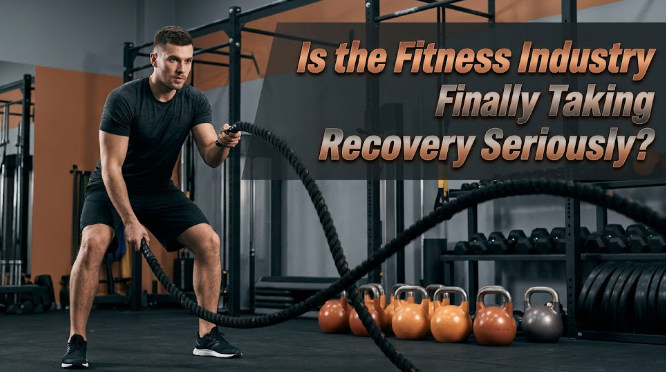
Is the Fitness Industry Finally Taking Recovery Seriously?
Five years ago, if you asked a gym owner what they were investing in, the answer was almost always more equipment on the training floor. Ask that same question today and you’ll hear about compression boots, cold plunge tubs, and square footage set aside for members to lie down and do nothing. That shift didn’t happen because gyms suddenly got soft. It happened because the data on overtraining, injury, and member churn finally caught up with what a lot of people in this industry had been saying quietly for years.
I’ve spent close to three decades on the equipment and facility side of fitness, watching what gyms buy and why they buy it. Recovery going mainstream is one of the more interesting shifts I’ve watched happen in real time, and it’s worth being honest about which parts of it are genuinely useful and which parts are just a new coat of paint on an old sales pitch.
1. The Recovery Boom Nobody Priced In a Decade Ago
Go back to around 2015 and recovery was an afterthought on most gym floors. A foam roller bin near the stretching mats, maybe a sauna if the facility had the budget. Recovery wasn’t a category. It was a courtesy.
What changed wasn’t a single breakthrough. It was a slow accumulation of pressure from a few directions at once. Wearable data started making overtraining visible to members instead of just something their coach warned them about, and that shift alone reshaped a lot of buying decisions, something we’ve tracked in detail in how wearable trackers are reshaping workouts in 2026. At the same time, boutique studios built entire business models around high-intensity classes, which meant members were training harder and more often than gym programming had historically assumed. Something had to give, and for a lot of people it was their joints, their sleep, or their motivation to keep showing up.
Manufacturers noticed the demand shift before most owners did, honestly, because we saw it in what facilities were requesting in their build-outs. Recovery zones went from a nice-to-have line item to something owners were asking for by name. That’s not a small pivot for an industry that spent decades measuring success in squat racks per square foot.
2. What’s Actually Backed by Something Real, and What’s Just Marketing
Here’s where I’ll be blunt, because this is where a lot of gyms and a lot of members get it wrong. Not everything sold under the recovery umbrella deserves to be there.
Percussion massage guns have decent support for short-term muscle soreness relief and range-of-motion benefits. Cold water immersion has real evidence behind reducing perceived soreness, though the research on whether it blunts long-term strength adaptations is genuinely mixed, and any gym telling you it’s a settled question is overselling it. Compression boots help with the sensation of recovery more reliably than they’ve been shown to speed up actual tissue repair. None of that makes these tools useless. It just means the marketing language around them tends to run ahead of what the research supports.
The mistake I see constantly, in owners and in members both, is treating recovery tools as a replacement for the basics instead of an addition to them. Sleep, protein intake, and appropriately programmed rest days still do more heavy lifting than any device on the market. A member who skips sleep and then spends twenty minutes in a cold plunge is patching a leak with a piece of tape. We’ve written about why rest days feel harder than workouts for a lot of people, and that resistance is usually the actual problem, not a lack of recovery gadgets.
And I’ll admit something here. Early on, I underestimated how much of this trend was about psychology rather than physiology. Members weren’t just recovering better with these tools. They were being given permission to rest without feeling like they were falling behind, which turned out to matter just as much as any measurable physical benefit.
3. How Gyms Are Actually Using the Space
The physical layout of a gym floor tells you a lot about what an industry actually believes, not just what it says in a press release.
| What Gym Floors Looked Like (2015) | What Gym Floors Look Like Now |
|---|---|
| Recovery corner: foam rollers, maybe a stretch mat | Dedicated recovery zone, 200 to 800+ sq ft |
| Sauna as a premium add-on feature | Sauna, cold plunge, and compression as standard membership tiers |
| Recovery framed as optional and passive | Recovery scheduled like a class, with time slots and coaching |
| No recovery-specific staff | Recovery attendants or coaches booking sessions |
| Recovery tools rarely tracked or measured | Recovery paired with wearable data and readiness scores |
That shift toward scheduling recovery like a class is probably the single biggest behavioral change. When something has a time slot, people show up for it the same way they show up for a workout. When it’s just a corner of the gym with equipment sitting there, most members walk past it.
fitnessupdates.org has covered the member side of this shift extensively, particularly around how burnout creeps in without people noticing it happening. If you haven’t read 5 signs your fitness routine has quietly turned into burnout, it pairs well with everything in this section, because the facility trend and the member behavior trend are really the same story told from two angles.
4. What This Actually Means for the Average Gym-Goer
You don’t need a gym with a full recovery suite to benefit from any of this. That’s the part that gets lost when recovery gets marketed as a premium tier.
The practical version looks like this. Pay attention to soreness that peaks later than expected, since muscle soreness sometimes peaks two days after a workout rather than the next morning, and that timing catches a lot of people off guard when they’re deciding whether to train again. Treat sleep as a non-negotiable part of your training plan rather than something separate from it. If your gym has a recovery zone, use it on a schedule rather than only when you’re already in pain, because reactive recovery tends to get skipped the moment life gets busy.
Budget matters here too. A foam roller and a consistent sleep schedule will outperform an expensive gadget used inconsistently, every single time. If you’re deciding where to spend money first, spend it on whatever you’ll actually use three times a week, not whatever looks most impressive in a gym tour.
One more thing worth saying plainly. Recovery isn’t the same thing as doing nothing, and treating a rest day as a day where you’re not allowed to move at all is its own kind of mistake. We get into that distinction in is doing nothing on a rest day actually okay, and it’s worth a read if you tend to swing between overtraining and total shutdown.
So is the industry finally taking recovery seriously? Mostly, yes. Not because gyms had a change of heart, but because the members demanding it were the ones renewing memberships and the ones churning out. That’s usually how real shifts happen in this business. Not through a philosophy change, but through what people vote for with their membership dollars.
Frequently Asked Questions
Is a cold plunge actually necessary, or is it just trendy right now? It’s not necessary for most people chasing general fitness goals. It has real, if modest, support for reducing perceived soreness after intense training blocks, but it’s an addition to good recovery habits, not a substitute for them.
How do I know if I’m actually recovering or just resting? Recovery should leave you feeling more capable in your next session, not just less sore. If you’re consistently tired, unmotivated, or plateauing despite adequate rest days, something in your recovery approach isn’t matching your training load.
Do I need a gym with a dedicated recovery zone to see results? No. Sleep, nutrition, and appropriately spaced training still account for most of the benefit. A recovery zone is a convenience, not a requirement.
Why do some people recover faster than others doing the same program? Genetics, sleep quality, stress levels outside the gym, and training age all play a role. Two people on identical programs can have meaningfully different recovery timelines, and that’s normal rather than a sign either person is doing something wrong.
Should beginners worry about recovery tools at all? Not really, not at first. Beginners typically need less recovery intervention because their training intensity is naturally lower. The basics matter far more in the first several months than any device does.
If you want to go deeper on the member side of this shift, why rest days feel harder than workouts is a natural next read.