Why Eating Clean Does Not Always Mean Eating Enough
Why Eating Clean Does Not Always Mean Eating Enough
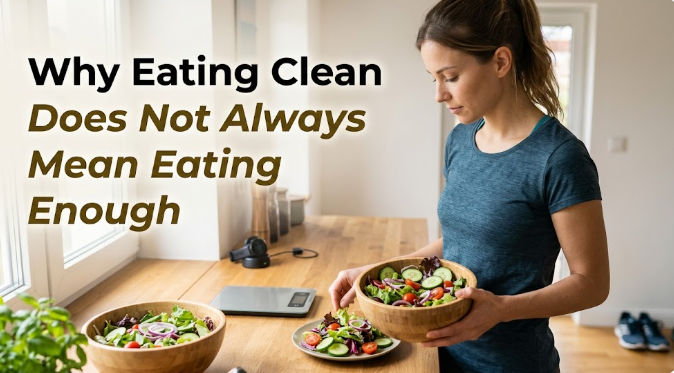
There’s a version of “eating clean” that quietly turns into eating too little, and after nearly three decades around gyms, training floors, and equipment showrooms, it’s one of the most consistent problems I keep watching people walk into without realizing it. They cut out the processed stuff, they start reading labels, they feel proud of the plate in front of them, and somewhere in that process their actual calorie intake drops without anyone deciding it should.
The mistake isn’t ambition. It’s math. And nobody warns people about it because “eating clean” sounds like the responsible choice, not a risk.
1. What “Clean” Actually Does to a Plate
Whole foods are, almost across the board, less calorie-dense than processed ones. A cup of steamed broccoli holds a fraction of the calories of a handful of chips, and that’s exactly the point when the goal is fat loss. But when the goal shifts, whether that’s building muscle, training for an event, or just getting through a demanding week without crashing at 3pm, that same low density becomes a liability nobody accounts for.
Someone swaps their usual lunch for a big salad, grilled chicken, and some fruit. It looks like a win. It often is, nutritionally. But if that plate has half the calories of what they were eating before, and they’re still training four or five times a week, they’ve created a gap between what their body needs and what it’s getting. That gap doesn’t announce itself. It shows up two or three weeks later as fatigue, irritability, and a strength plateau that seems to come from nowhere.
I’ve watched this happen with beginners and with people who’ve been training for years. It’s not a knowledge problem. It’s a visibility problem. Whole foods hide their calorie deficit well.
2. Where This Usually Goes Wrong
The mistake people make most often is treating “clean” and “sufficient” as the same word. They aren’t. A diet can be built entirely from unprocessed, nutrient-dense foods and still leave someone chronically underfed, especially if they’re also training hard, walking a lot, or dealing with a physically demanding job on top of workouts.
This overlaps with a pattern we’ve written about before at Fitness Updates, where new gym-goers burn out fast partly because their bodies simply aren’t recovering (see why new gym goers quit so fast). Under-fueling is rarely the only cause of that kind of burnout, but it’s one of the most overlooked ones, because it hides behind what looks like discipline.
There’s also a subtler version of this mistake: people eating enough total calories but timing them badly, skipping breakfast, training fasted without a plan for it, then trying to make up the deficit in one evening meal. The number on paper might work out. The way the body experiences it doesn’t.

3. What Adequate Fueling Actually Looks Like
This isn’t a call to abandon whole foods or start eating processed convenience meals. It’s a call to stop assuming that “clean” automatically equals “enough.” A few things I tell people directly, without hedging:
- Add calorie-dense whole foods deliberately. Nuts, olive oil, avocado, whole grains, and dairy can raise intake without undoing the quality of the diet.
- Eat before and after training, not just whenever it’s convenient. Timing matters more than most people give it credit for.
- Track intake honestly for a week if progress has stalled. Not forever, just long enough to see the real number instead of the assumed one.
- Treat hunger as information, not a failure of willpower. Constant hunger on a “healthy” diet is usually a sign the diet is under-built, not that the person needs more discipline.
Here’s a quick reference for spotting the difference between normal training fatigue and the kind that comes from simply not eating enough:
| Signal | Normal Training Fatigue | Likely Under-fueling |
|---|---|---|
| Timing | Fades within a day or two | Persists for weeks, doesn’t improve with rest |
| Strength | Dips after hard sessions, recovers | Steadily drops across weeks |
| Mood | Occasional low-energy days | Irritability, flatness, low motivation most days |
| Sleep | Generally stable | Restless, frequent waking, poor recovery feel |
| Hunger | Comes and goes | Constant, or oddly absent despite low intake |
That last row surprises people. Chronic under-eating doesn’t always show up as hunger. Sometimes appetite flattens out entirely, which people mistake for their body “adjusting” when it’s actually a warning sign.
4. The Mistake Nobody Wants to Hear
Here’s where people usually go wrong, and where I tend to get pushback: they assume that if they feel fine right now, the plate must be fine too. But under-fueling is cumulative. It rarely shows up in week one. It shows up in week four, as a training plateau, a mood dip, or an injury that seems to come from nowhere but was actually building the entire time.
This connects to something we’ve covered before on the site, the way rest days can end up feeling harder than workouts once someone is running a real deficit. The body isn’t lazy on those days. It’s underfed and trying to recover from a hole that food never quite filled.
And this is where guilt tends to creep in too. People assume the answer to feeling worse is training harder or eating even “cleaner,” when the actual answer is eating more of the right things. We’ve written separately about why guilt is a bad reason to exercise, and the same logic applies here. Guilt is a bad reason to under-eat, too.

5. Recognizing the Pattern Before It Becomes a Habit
The people who catch this early tend to share one habit: they pay attention to performance, not just appearance. If lifts are stalling, if recovery feels slower than it used to, if motivation has quietly dropped off without an obvious cause, food is one of the first places worth checking, not the last.
This is also, frankly, one of the quieter signs listed in 5 signs your fitness routine has quietly turned into burnout, because burnout and under-fueling often travel together. Fixing one without addressing the other rarely holds.
None of this means abandoning intentional eating. It means building a plate that’s both clean and sufficient, which takes slightly more planning than either goal on its own.
At some point, most people training seriously run into this exact wall. The fix usually isn’t complicated. It’s just less exciting than the diet change that caused the problem in the first place. Eat more of the good stuff. Pay attention to how training actually feels, not just what the plate looks like.
Frequently Asked Questions
How do I know if I’m under-eating instead of just adjusting to a new diet? Give it two to three weeks. Normal adjustment periods involve some low-energy days that improve. If fatigue, mood, or strength keeps declining past that window, the plate likely needs more food, not more patience.
Can this happen even if I’m not trying to lose weight? Yes, and it happens often. Anyone eating mostly low-calorie-density whole foods can end up under-fueled regardless of their goal, simply because the food itself takes up more space on the plate than it does in the calorie count.
Is it possible to eat “clean” and still stall on my goals if I’m under-fueling? Yes. It’s possible to plateau in a way that feels backwards, where the body holds onto fat stores and struggles to build muscle because it senses a shortage. Consistent under-eating tends to work against body composition goals, not toward them.
What’s the fastest way to fix this without overhauling my whole diet? Add calorie-dense whole foods to existing meals rather than adding new meals. A handful of nuts, an extra tablespoon of olive oil, or a serving of whole grains can close the gap without changing the structure of what someone’s already eating.
Should I just eat more of everything, including processed food? No. The goal is closing the calorie gap with foods that still support training and recovery, not abandoning food quality. Processed convenience foods aren’t the fix, they’re just a different problem.
Matthew Januszek is the President of Escape Fitness USA and Co-Founder of Escape Fitness, a company he’s helped grow from a startup into a global fitness brand over nearly three decades in the industry. He hosts the Escape Your Limits podcast.