How FitnessUpdates Approaches Meal Timing for Beginners
How FitnessUpdates Approaches Meal Timing for Beginners
Every few weeks, someone asks the same version of the same question in our inbox: “I started working out, so when am I actually supposed to eat?” It’s not a dumb question. It’s just one that gets answered badly, usually by someone selling a supplement or an app with a countdown timer attached to it.
The truth is less exciting than the marketing. Meal timing matters, but it matters far less than total intake, and it matters even less than most beginners assume in their first few months of training. What follows is how we think about it at FitnessUpdates, and what we’ve seen actually work for people who are new to structured exercise.
1. What Meal Timing Actually Controls
Meal timing affects energy availability, digestion comfort, and — for a smaller group of people — performance in a single session. It does not meaningfully change fat loss or muscle gain on its own. Total calories and protein intake across the day do that work. Timing is the fine print, not the headline.
This distinction matters because beginners tend to treat timing like it’s the lever that will make or break their results. It isn’t. If someone eats all their calories in a six-hour window or spreads them across five meals, the difference in body composition outcomes is small enough that other factors, like sleep and training consistency, swamp it entirely. We’ve written before about why new gym goers quit so fast, and food anxiety is one of the quieter reasons. People get so worried about eating at the “right” time that they stop enjoying meals altogether, and burnout follows.
Where timing does matter: how you feel during a workout. Eating too close to training, or not eating at all beforehand, is the single most common cause of the lightheaded, nauseous feeling people mistake for being “out of shape.”

2. Before a Workout
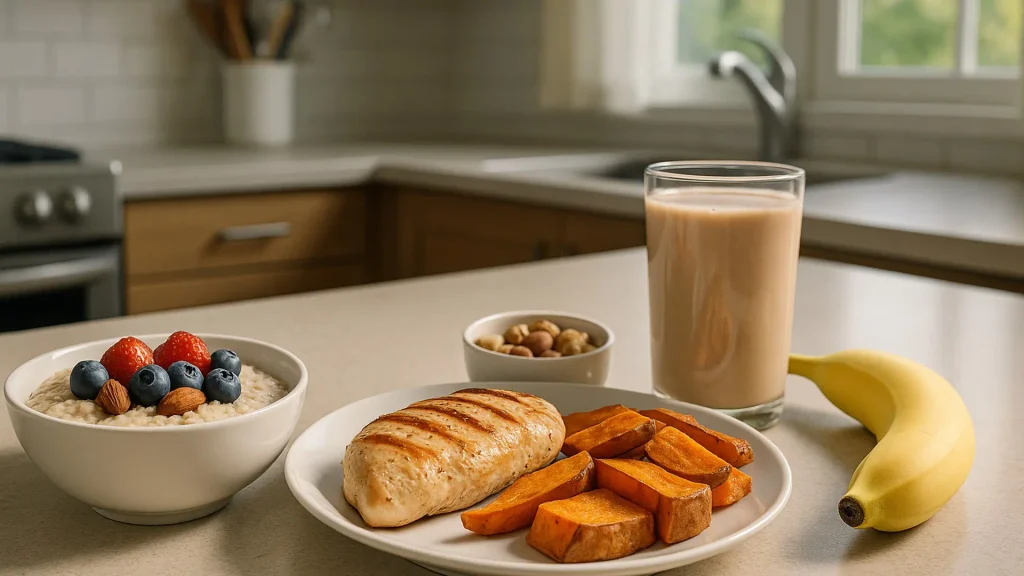
For most beginners training in the morning or midday, a small meal 60 to 90 minutes before exercise works well. Something with carbohydrate and a bit of protein, low in fat and fiber, sits easiest. Oatmeal with a banana. Toast with eggs. A protein shake with fruit if there’s less time.
If training happens first thing in the morning and there’s no appetite, that’s fine too. A small snack, even just a piece of fruit, is enough to prevent the low-energy crash mid-session. Full-blown fasted training works for some people and wrecks others; there’s no universal rule here, and anyone who insists otherwise is probably guessing.
One thing we notice constantly, and this is where people usually go wrong: eating a large, heavy meal within 30 minutes of a workout. Blood flow gets pulled toward digestion right when it’s needed for muscles, and the result is cramping or nausea that has nothing to do with fitness level. It’s a timing problem, not a conditioning problem.
3. After a Workout
The old “anabolic window” idea, the belief that protein has to be consumed within 30 minutes of finishing a workout or the session is wasted, has mostly been walked back by the people who originally popularized it. The real window is closer to several hours, not minutes. What matters more is getting enough total protein across the day.
That said, there’s a practical reason to eat reasonably soon after training: hunger tends to spike, and skipping that window often leads to overeating later, or under-eating in a way that leaves someone drained the next day. A meal with protein and carbohydrate within a couple of hours of finishing works well for most people. It doesn’t need to be precise.
Here’s a simple reference for how this tends to break down depending on training time:
| Training Time | Pre-Workout Approach | Post-Workout Approach |
|---|---|---|
| Early morning | Small snack or fasted, based on tolerance | Full meal within 1-2 hours |
| Midday | Light meal 60-90 min prior | Regular lunch/dinner as normal |
| Evening | Normal dinner timing, avoid heavy meal right before | Light snack if dinner was earlier, or normal dinner after |
4. Common Mistakes We See With Beginners
The biggest one isn’t about timing at all, it’s about using timing rules as a substitute for actually eating enough. Someone hears “don’t eat right before bed” or “fast until noon” and follows it strictly while quietly under-eating for the week. Then progress stalls, and they assume they need an even stricter rule, when what they actually needed was more food.
The second common mistake is treating every workout like it requires the same fueling strategy. A 20-minute walk and a 90-minute strength session are not the same event. We’ve covered this kind of mismatch before in 7 workout mistakes that slow beginner progress, and meal timing rigidity is a close cousin of that pattern. Shorter, lighter sessions often don’t need dedicated pre- or post-workout meals at all. Just eat according to your normal schedule.
And a smaller one, but worth saying: caffeine before training is not a meal, and it is not a substitute for one. It can mask hunger and low energy just long enough to get through a warm-up before things fall apart. If you’re someone who skips the warm-up entirely, running on caffeine alone tends to make that worse, not better.
5. Building a Realistic Routine
For someone just getting started, we’d suggest not overengineering this. Pick one or two eating patterns around training that feel manageable, and stick with them for a few weeks before adjusting. If mornings are tight on time, a shake before and a real meal after is a reasonable default. If training happens after work, eating a normal lunch and having dinner afterward usually covers it without needing separate “workout meals” at all.
The goal in the first few months isn’t optimization. It’s consistency. Someone who eats reasonably well and shows up three times a week will outperform someone chasing a perfect nutrient-timing protocol who burns out in six weeks. If you’re still working out your broader weekly structure, FitnessUpdates tested 5 beginner routines and found that the routines people actually stuck with mattered more than the ones that looked best on paper. Food timing follows the same logic.
Eventually, patterns emerge naturally. Some people find they train better fasted. Others need something in their stomach or the whole session feels off. Neither is wrong. The rules matter less than paying attention to what your own body is telling you after a few weeks of trying.
FAQs
Do I need to eat protein within 30 minutes of finishing my workout? No. That window is closer to a few hours, and total daily protein intake matters far more than hitting a narrow post-workout timeframe.
Is it bad to work out on an empty stomach? Not inherently. Some people train well fasted, especially for lower-intensity sessions. Others feel weak or lightheaded and do better with a small snack beforehand. It comes down to personal tolerance.
What should I eat before an evening workout after a full day of meals? Usually nothing extra is needed if your regular meals were reasonable. A light snack an hour or so before is fine if you’re hungry, but forcing food in isn’t necessary.
Can bad meal timing stop me from losing fat or building muscle? On its own, no. Total calories and protein across the day drive those outcomes. Poor timing can make workouts feel worse or lead to overeating later, but it’s not the main lever.
How long should I wait to eat after training before bed? There’s no strict rule. A normal dinner or a light snack after an evening session is fine. What matters more for sleep is avoiding a very heavy, high-fat meal right before lying down.
If you want a closer look at how training schedule and energy levels interact beyond just meal timing, our piece on home workouts vs gym training is a reasonable next stop.