
Why Protein Advice Online Is So Confusing and Mixed

Why Protein Advice Online Is So Confusing and Mixed
There’s a version of this that plays out in gym locker rooms constantly. One person swears by one gram of protein per pound of bodyweight. Another says that’s overkill and the government guidelines are all you need. A third is somewhere in between, quoting a podcast they half remember. All three sound confident. All three can’t be fully right, and yet none of them are exactly wrong either.
That’s the real problem with protein advice. It isn’t that people are making things up. It’s that different sources are answering different questions, using different assumptions, and nobody bothers to say which question they’re actually answering.
1. The Baseline Number Everyone Quotes Is Answering a Narrow Question
The Recommended Dietary Allowance of 0.8 grams of protein per kilogram of bodyweight gets cited constantly, usually as if it’s a ceiling. It isn’t. It was set as the minimum amount needed to prevent deficiency in a mostly sedentary population. That’s a very different goal than optimizing muscle retention, recovery, or performance.
So when someone lifting weights four times a week reads that number and assumes they’re covered, they’re applying a floor built for inactivity to a body doing something much more demanding. The number isn’t wrong. It’s just answering “what keeps you from getting sick,” not “what helps you build or hold onto muscle.”
This mismatch is probably the single biggest source of confusion online. Two people can quote the exact same figure and mean completely different things by it.
2. Sports Nutrition Research and Government Guidelines Rarely Talk to Each Other
Most sports nutrition researchers who study resistance-trained individuals land in a range closer to 1.6 to 2.2 grams per kilogram of bodyweight for people actively trying to build or preserve muscle, especially while in a calorie deficit. That range shows up again and again across strength and physique-focused research, and it’s a long way from the RDA figure.
Neither range is “the truth” in some universal sense. They’re built for different populations with different goals. A public health guideline written for an entire country needs to be conservative and broadly applicable. A recommendation for someone training seriously and trying to hold onto muscle while losing fat needs to account for the actual physical demand being placed on the body. The gap between them isn’t a scandal. It’s just two different tools built for two different jobs, and most articles never explain that part.
Here’s where people usually go wrong: they see one number in a headline, assume it applies to them specifically, and never check what population or goal that number was actually built around.
3. Marketing Has Muddied the Middle Ground
Somewhere between legitimate research and public health guidance sits a third category, and it’s the loudest one. Supplement companies, influencers, and diet programs all have a reason to push protein numbers in whatever direction sells more product or more clicks. Higher numbers sell more protein powder. Lower numbers support certain diet philosophies that market themselves as more “natural” or restrictive.
None of that is necessarily dishonest, but it isn’t neutral either. A brand recommending 1 gram per pound isn’t lying, but they’re also not disclosing that the number sits well above what most research suggests is actually necessary for the average lifter, and that eating a bit less protein than that ideal won’t meaningfully hurt someone’s results.
This is one of the recurring themes on fitnessupdates.org: a lot of nutrition advice that sounds scientific is really commercial framing wearing a lab coat.
4. Individual Variables Change the Right Answer More Than People Expect
Bodyweight alone doesn’t determine protein needs. Someone at 15% body fat and someone at 30% body fat weighing the same amount have very different amounts of lean mass to support, and protein targets that use total bodyweight without accounting for that can overshoot significantly for people carrying more body fat.
Activity type matters too. A powerlifter doing low-rep heavy work has different recovery demands than someone doing high-volume hypertrophy training or long endurance sessions. Age plays a role as well, since older adults generally need more protein per kilogram to achieve the same muscle-protein synthesis response as younger adults, a pattern often referred to as anabolic resistance.
None of this fits neatly into a single number, which is exactly why so much online advice defaults to one anyway. A single number is easier to write a headline around than a paragraph of caveats.
| Population or Goal | Typical Protein Range (g/kg bodyweight) | What It’s Actually Built For |
|---|---|---|
| General public, sedentary | 0.8 | Preventing deficiency, not performance |
| Recreational exerciser | 1.2–1.6 | Basic recovery support |
| Resistance-trained, muscle building | 1.6–2.2 | Maximizing muscle protein synthesis |
| Dieting while preserving muscle | 2.0–2.4 | Reducing muscle loss in a calorie deficit |
| Older adults (65+), active | 1.2–1.6+ | Countering anabolic resistance |
Numbers are general ranges drawn from commonly cited sports nutrition guidance, not a substitute for individual assessment.
5. Timing and Distribution Get Oversold Almost as Much as Total Amount
A lot of confusion also comes from how protein should be spread across the day, not just how much total. The “anabolic window” idea, the notion that protein has to be consumed within some tight window after training or it’s basically wasted, has been walked back considerably by more recent research. Total daily intake and consistent distribution across meals matter more than hitting a precise post-workout minute.
That doesn’t mean timing is irrelevant. Spreading protein across three to four meals a day, rather than eating almost none until dinner and then a huge amount at once, does appear to support muscle protein synthesis better throughout the day. But the framing that a missed 30-minute window ruins a workout is not well supported, and it’s exactly the kind of oversimplified claim that spreads fast because it sounds urgent.
For anyone rebuilding a routine from scratch, it helps to pair protein habits with the training basics covered in how to build a full beginner routine without gym equipment, since nutrition advice in isolation, without a training context, tends to get applied incorrectly.
Common Mistakes Worth Naming Directly
A few patterns show up constantly among people trying to sort through protein advice:
- Treating the RDA as a target instead of a floor for sedentary people
- Copying a bodybuilder’s protein intake without accounting for body composition or training volume differences
- Assuming more protein automatically means more muscle, regardless of training or total calories
- Ignoring that a lot of “expert” content is really product marketing with research-flavored language
- Panicking over missing a post-workout shake by a few hours
Most of these mistakes aren’t about intelligence. They’re about absorbing a lot of fragmented content without a framework for sorting which piece of advice applies to which situation. This same fragmentation shows up in training advice too, which is part of why 7 workout mistakes that slow beginner progress keeps getting shared. People aren’t lacking information. They’re drowning in unsorted information.
Where This Leaves Someone Trying to Actually Eat Right
Start with lean bodyweight, not total bodyweight, if body composition is meaningfully different from “lean.” Land somewhere in the 1.6 to 2.2 gram per kilogram range if training seriously, closer to the lower end if just getting started and the higher end if dieting hard while trying to hold onto muscle. Spread it across three or four meals instead of trying to front-load or back-load the day. And treat any single number pulled from a headline as a starting point to adjust, not a rule to follow exactly.
The confusion online isn’t going away, mostly because there’s no incentive for it to. Clear, boring, “it depends on your situation” advice doesn’t perform well compared to a bold claim and a big number. That’s just the environment. Anyone building a routine can browse the beginner programs the fitnessupdates.org team has tested and compared in fitnessupdates.org tested 5 beginner routines for a sense of how nutrition and training questions tend to overlap in practice, and go from there.
FAQs
Do I really need 1 gram of protein per pound of bodyweight? Not necessarily. That’s a popular round number, but most research supports a range closer to 0.7 to 1 gram per pound depending on training status, goals, and body composition. It’s a reasonable ceiling for most lifters, not a strict requirement.
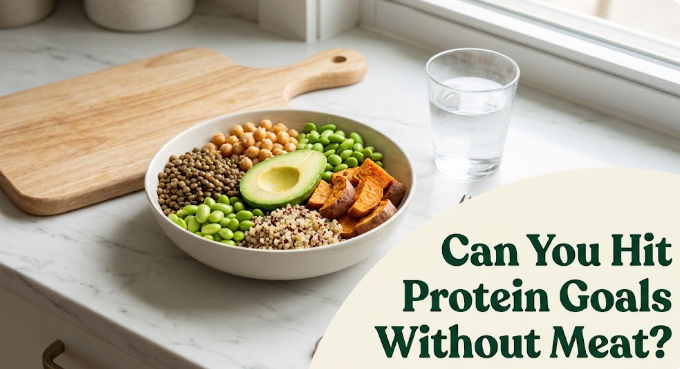
Can I hit my protein target through food alone, or do I need shakes? Food alone works fine for most people and is often more filling and nutritionally complete. Shakes are a convenience tool for people who struggle to hit their numbers through meals alone, not a requirement for results.
Is too much protein actually harmful? For someone with healthy kidney function, research hasn’t shown clear harm from higher protein intakes within the ranges typically discussed for athletes. People with existing kidney disease should follow guidance from their doctor, since that’s a different situation entirely.
Why do some diets recommend way less protein than fitness sources do? Because they’re optimizing for different outcomes, sometimes ideological ones, sometimes based on different research traditions. A diet built around minimizing animal product intake will frame protein differently than one built around maximizing muscle retention.
Does plant protein work as well as animal protein for building muscle? It can, though plant sources are often lower in certain essential amino acids and typically need to be eaten in slightly larger total amounts or combined across sources to match the same effect. It’s a solvable gap, not a dealbreaker.
Anyone who wants a deeper look at how nutrition numbers interact with actual training progress can find more breakdowns like this one at https://fitnessupdates.org/.

One Comment