Why ‘Eat Less, Move More’ Oversimplifies Weight Loss

Why “Eat Less, Move More” Oversimplifies Weight Loss
“Eat less, move more” is one of those pieces of advice that’s technically correct and almost useless at the same time. It’s a bit like telling someone to “drive slower” when they ask why they keep getting into accidents. Sure, the math checks out. But it skips over everything that actually determines whether a person can follow through, which is the part that matters.
Anyone who has spent real time coaching people through fat loss knows the calorie equation isn’t wrong. Energy balance is real. But treating it as the whole strategy, rather than the starting point, is where so many well-intentioned plans quietly fall apart.
1. The Math Isn’t Wrong, It’s Just Incomplete
Calories in versus calories out is a real physical law, not a myth. Nobody loses fat while eating well above their maintenance needs for months on end. That part of the advice holds up.
What it leaves out is everything that determines whether someone can actually stick to a deficit long enough for it to matter. Hunger isn’t constant. It shifts with sleep quality, stress levels, hormonal cycles, and even how restrictive a diet felt the day before. Someone who cuts calories aggressively often finds their appetite fighting back within a week or two, which is a big part of why hunger shows up even after eating something that should feel satisfying.
There’s also metabolic adaptation to account for. When intake drops, the body doesn’t just sit still and burn fat at the same rate indefinitely. Non-exercise movement tends to quietly decline too. Someone eats less, then without noticing, they take the stairs less, fidget less, walk a little slower through the grocery store. The “calories out” side of the equation shrinks right along with the “calories in” side, and the net deficit ends up smaller than the spreadsheet suggested.
2. Where People Actually Go Wrong
The mistake I see most often isn’t a lack of willpower. It’s picking a deficit that’s too aggressive for the person’s actual life, and then treating the inevitable slip-up as a personal failure instead of a planning error.
Someone drops 700 calories a day, feels great for ten days on motivation alone, and then a stressful week at work collides with low blood sugar and poor sleep. They overeat, feel like they ruined everything, and either quit or swing to an even stricter plan the next Monday. That cycle is far more common than outright laziness, and it has almost nothing to do with willpower. It has to do with a target that was never sustainable in the first place.
This is also where fitness routines start to shift from something supportive into something that feels obligatory or punishing. If exercise becomes the way someone tries to “earn back” calories or manage guilt from a missed diet day, it stops functioning the way it should. That pattern shows up more than people expect, and it’s worth reading through the signs that a fitness routine has quietly turned into burnout if any of this sounds familiar.

3. What Actually Predicts Whether Someone Keeps the Weight Off
Two people can be in an identical calorie deficit and have completely different outcomes six months later. The difference usually comes down to a handful of factors that never make it onto a simple slogan.
| “Eat Less, Move More” Approach | What Actually Tends to Work |
|---|---|
| Focuses only on total calories | Prioritizes protein intake to protect muscle and manage hunger |
| Treats all deficits as equally sustainable | Matches deficit size to the person’s stress, sleep, and schedule |
| Adds more cardio when progress stalls | Looks at sleep and recovery before adding more training volume |
| Assumes motivation will carry the plan | Builds in flexibility for bad weeks instead of demanding perfection |
| Measures success only on the scale | Tracks strength, energy, and consistency alongside weight |
Protein is probably the single most underrated variable in this whole conversation. It affects satiety, preserves lean mass during a deficit, and makes the whole process feel less like deprivation. If someone is cutting calories without paying attention to protein targets, they’re making the process harder than it needs to be. We’ve broken down how much protein most people actually need day to day, and the number tends to surprise people who assumed they were already eating enough.
4. The “Move More” Half Gets Oversimplified Just as Badly
More exercise sounds like an obvious win, and sometimes it is. But past a certain point, adding more training volume to a body that’s already under-recovered doesn’t accelerate fat loss. It just adds stress on top of stress.
There’s also a psychological trap hiding in “move more” advice. Movement gets treated as a mood fix, a stress release valve, and a calorie offset all at once, which puts a lot of pressure on a single behavior. It’s worth being honest that exercise doesn’t instantly fix a bad mood the way it’s sometimes marketed to. It helps, often meaningfully, but expecting a workout to solve an emotional problem sets people up to feel like they failed twice when the workout doesn’t fix everything.
And here’s a pattern worth sitting with for a second: some of the people who struggle most with this advice aren’t under-exercising at all. They’re already training five or six days a week and eating less on top of it, wondering why progress has stalled or reversed. Their bodies are compensating for the stress, not responding to it the way a slogan promises they should.

5. What This Looks Like in Practice
Instead of starting with “eat less, move more,” a better starting question is “what’s actually sustainable for this specific person’s week.” That usually means a moderate calorie deficit rather than an aggressive one, a protein target that’s actually being hit, strength training two to four times a week rather than daily cardio sessions, and sleep treated as a non-negotiable rather than an afterthought.
None of that fits neatly on a poster. But it’s the version of the advice that actually holds up when real life gets involved, which is most of the time.
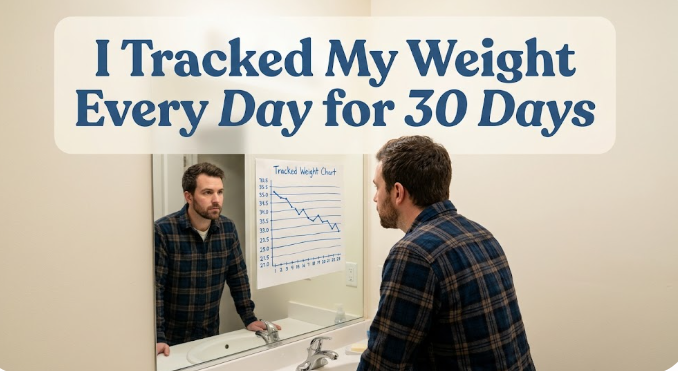
Progress also isn’t linear, and weight fluctuates for reasons that have nothing to do with fat gain or loss. Water retention, sodium intake, hormonal timing, even a hard training session the day before can shift the number on the scale by a pound or two. Judging success purely by daily weigh-ins is one more way the simple version of this advice sets people up to feel discouraged over noise.
At Fitness Updates, this is a theme that comes up constantly across different topics, because the underlying issue is always the same. Broad, one-size-fits-all advice ignores the fact that different people are working with completely different constraints. What works for someone with a flexible schedule and low stress rarely translates directly to someone juggling shift work, poor sleep, and a stressful home life.
Frequently Asked Questions
Is “eat less, move more” completely wrong then? No. The underlying physics of energy balance is accurate. The problem is that it’s presented as a complete strategy when it’s really just one variable among several that determine whether someone can sustain the process long enough to see results.
Why do I feel hungrier when I’m trying to eat less? Cutting calories affects hunger hormones like ghrelin and leptin, and the effect tends to get stronger the more aggressive the deficit is. A more moderate approach with adequate protein usually keeps hunger more manageable than a steep cut.
Does adding more cardio speed up weight loss? Sometimes, but only up to a point. Once training volume outpaces recovery, non-exercise movement and energy expenditure tend to drop elsewhere, which can offset the extra calories burned during the workout itself.
Why did I lose weight quickly at first and then stall? Early weight loss often includes water weight and is easier because the deficit hasn’t triggered metabolic adaptation yet. As the body adjusts, both hunger and energy expenditure shift, which is why plateaus are normal rather than a sign that something is broken.
What should I focus on instead of just cutting calories? Protein intake, consistent strength training, sleep quality, and setting a deficit small enough to maintain for months rather than weeks. Those four things predict long-term success far more reliably than the size of the calorie cut alone.
For more on how beginner routines and training structure fit into this, Fitness Updates has a breakdown worth reading alongside this one.