Wearable Tech Topped 2026 Fitness Trends
Wearable Tech Topped 2026 Fitness Trends
Twenty years running the same survey, and this is the first time a piece of hardware has landed at number one.
That’s the part most people glossed over when the American College of Sports Medicine released its 2026 Worldwide Fitness Trends report. The headline everyone expected was AI coaching apps, or maybe another wave of home gym equipment. Instead, wearable technology took the top spot, based on responses from roughly 2,000 clinicians, researchers, and exercise professionals surveyed for the report. Lead author Cayla McAvoy, an ACSM-certified exercise physiologist, framed it as a long overdue acknowledgment of where the industry’s attention has actually been going for years. Fitness programs for older adults, exercise for weight management, mobile apps, and balance and core work rounded out the rest of the top five, but wearables sat clearly ahead of all of them.
If you spend any time reading fitness coverage, you’ve probably seen a version of this headline a dozen times already. Most of it skips the more useful question, which is what actually changed. A step counter clipped to your waistband in 2015 and a ring on your finger in 2026 both technically count as “wearable tech,” and treating them as the same trend misses the point entirely.
1. What People Get Wrong About This Trend
The common assumption is that “wearable technology” means smartwatches got a little better at counting steps. That’s not really it, and it’s worth clearing up before going further.
The shift that pushed wearables to number one is less about step counts and more about what the devices are now cleared to detect. Consumer wearables carrying actual medical device designations, the kind that used to be reserved for hospital equipment, are no longer the exception. Roughly 42 percent of purchase decisions are now influenced by whether a device has some form of regulatory validation behind it, up sharply from under 20 percent just a few years ago. Manufacturers noticed. That’s why you’re seeing white papers and clinical partnership announcements attached to product launches that would have just shipped with a press release a decade ago.
Older adults have been a big part of that shift. Atrial fibrillation detection, fall detection, medication reminders, these are the features driving adoption among people who never cared about a Strava leaderboard. Health monitoring has genuinely overtaken fitness tracking as the primary reason people buy this stuff, which is a bigger deal than it sounds like on paper.
We’ve written before about why wearable trackers are reshaping workouts in 2026, and the pattern holds here too. The device isn’t the trend. What the device is now trusted to tell you is the trend.
2. The New Form Factors Actually Matter
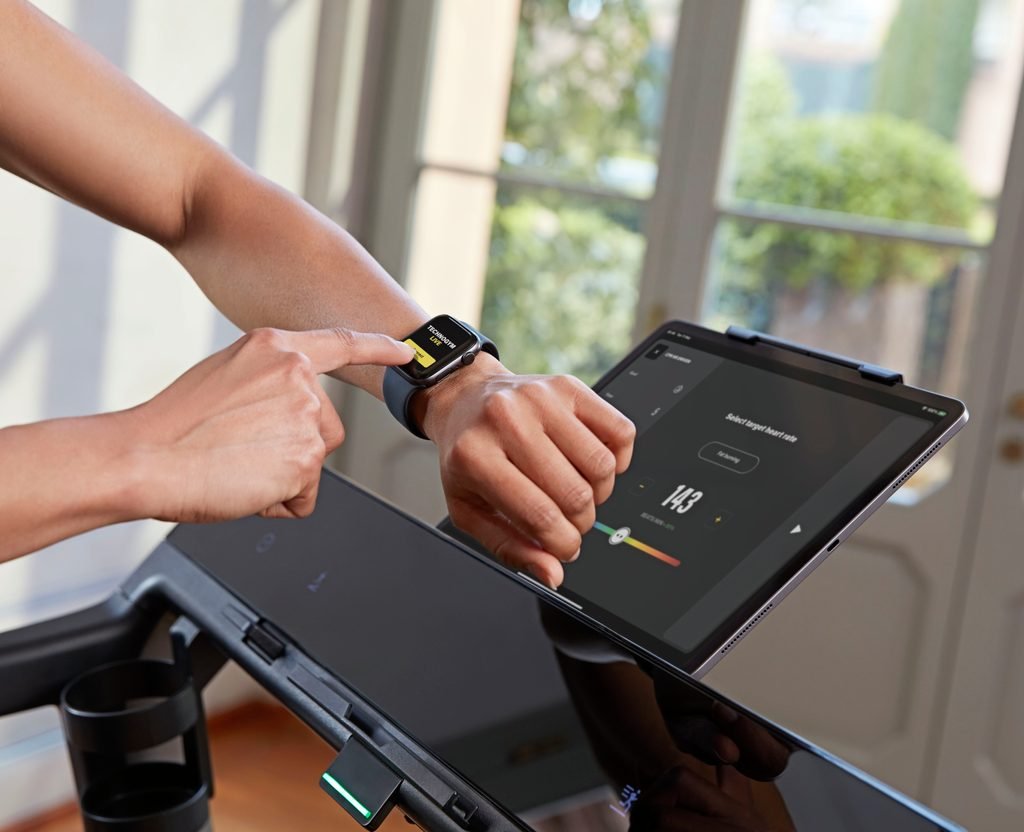
Smartwatches aren’t the whole story anymore, and that’s changing how people actually wear this stuff day to day.
Smart rings picked up real momentum this year, mostly because people got tired of charging a watch every night and strapping something bulky to their wrist during sleep. Flexible patches and modular wristbands followed a similar logic. So did hearables, which is a strange word until you realize it just means hearing aids that also happen to monitor your vitals around the clock. None of this is gimmicky for its own sake. Comfort turned out to be a real adoption barrier, and once companies solved for it, usage numbers moved.
Here’s a rough breakdown of where each format tends to land, for anyone deciding what’s actually worth buying:
| Form Factor | Best For | Weak Point | Typical Battery Life |
|---|---|---|---|
| Smartwatch | Real-time workout metrics, GPS, notifications | Bulkier for sleep tracking | 1 to 2 days |
| Fitness Ring | Sleep and recovery data, all-day comfort | No screen, limited in-workout feedback | 4 to 7 days |
| Patch or Hearable | Continuous passive monitoring, medical alerts | Narrower feature set, newer category | Varies widely |
None of these is objectively “better.” A marathoner tracking pace splits mid-run needs something different than someone mainly trying to understand why they wake up tired. Match the format to the question you’re actually trying to answer, not to whatever a friend is wearing.
3. What The Data Can Actually Predict Now
Sensor accuracy improved enough this year that the AI layered on top of it stopped being a novelty.
Brands like WHOOP and Garmin are now flagging overtraining before it shows up as a nagging injury, and suggesting rest days based on actual recovery markers instead of a generic weekly template. That lines up with research linking consistent activity tracking to better long-term health outcomes, and it’s a meaningfully different experience than the early versions of this feature, which were basically glorified guesswork dressed up as insight.
On-device processing is a quieter part of the story but it matters. More of the number-crunching happens on the device itself now rather than getting shipped off to a server somewhere, which is better for both speed and privacy. It’s also why the algorithms feel like they adapt to you specifically over a few weeks of wear, rather than spitting out the same advice to everyone.
The genuinely exciting stuff, non-invasive glucose monitoring, continuous blood pressure without a cuff, is still sitting in FDA review. Realistically that’s two to three years out for most people, not this year’s story despite how often it gets mentioned in the same breath as everything else.
4. Where People Usually Go Wrong With The Data
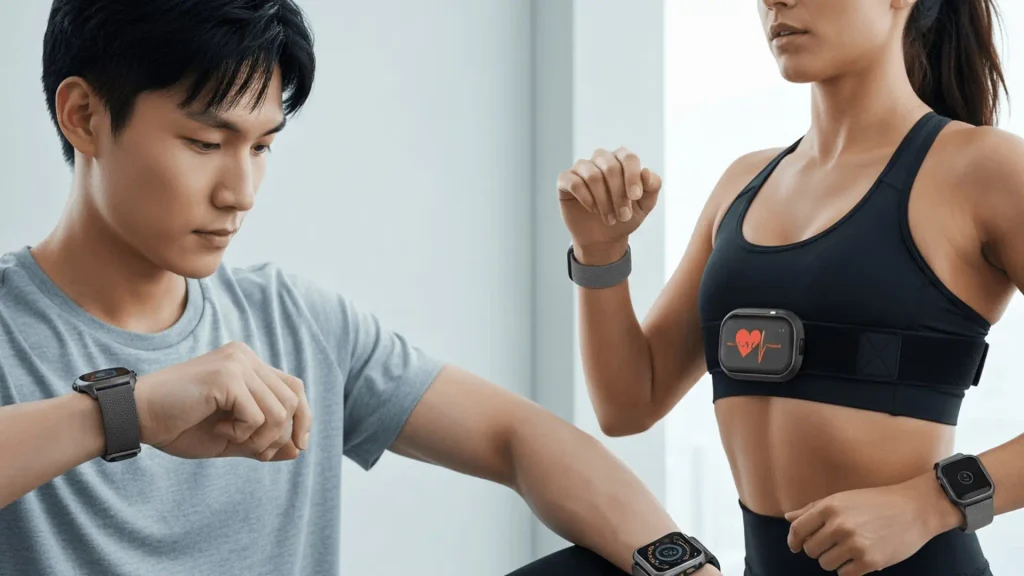
Owning the device is the easy part. Knowing when to ignore it is where most people struggle, and it’s the section of this trend that gets the least attention.
We see this constantly with new gym-goers especially, and it connects to something we’ve covered before around why new gym goers quit so fast. A bad “recovery score” on a Tuesday morning shouldn’t be the reason someone skips a workout they were otherwise looking forward to. These scores are directionally useful, not gospel. Treating a single low reading as a hard stop is how a helpful tool turns into a source of anxiety, and that pattern shows up a lot in what we’ve written about fitness routines quietly turning into burnout.
And the flip side happens just as often. People see a “green” recovery score and push through a workout they had no business doing, ignoring the very real soreness or fatigue their body was already telling them about. The device is a data point. It’s not a substitute for judgment, and it was never designed to be one.
If your recovery data is consistently poor for more than a few days running, that’s worth paying attention to. A single off morning usually isn’t. Somewhere between those two extremes is where the actual value of this technology lives, and most people never quite land there.
5. What This Means If You’re Buying One This Year
Skip the feature checklist and start with the question you’re trying to answer.
Trying to fix your sleep? A ring or a comfortable band you’ll actually wear overnight beats a bulky watch you take off before bed out of habit. Training for something specific with real pace and heart rate zone targets? A GPS-forward smartwatch still wins that comparison, full stop. Managing a chronic condition or just want passive monitoring in the background without thinking about it? Look at the medical-grade devices with actual regulatory backing rather than the flashiest marketing page.
Subscription models are also worth a second look before you buy. Some brands now bundle the hardware in essentially for free and make their money on the ongoing data insights instead, which changes the real cost of ownership in ways a lot of buyers don’t clock until the second or third billing cycle.
None of this replaces the fundamentals. A good tracker paired with poor sleep habits and inconsistent training still produces poor results, it just produces better documented poor results. The device measures what you’re already doing. It doesn’t do the work for you, and treating it like it might is probably the single most common mistake we see people make with this whole category.
FAQs
Do I need a full smartwatch, or is a basic fitness tracker good enough? It depends entirely on what you’re tracking. If you want in-workout metrics like pace, GPS routes, or heart rate zones in real time, a smartwatch is worth the extra cost. If you mainly care about sleep, recovery, and daily trends, a simpler tracker or ring covers that without the bulk or the daily charging.
Are wearables actually accurate, or is it mostly marketing? Heart rate and step tracking are generally reliable at this point, especially from established brands. Sleep staging and recovery scores are more of an estimate than a diagnosis, useful for spotting trends over weeks rather than trusting any single night’s number.
Will health insurance ever cover fitness wearables? Some early programs already offer premium discounts or partial reimbursement for wearables, particularly tied to chronic condition management. Broader coverage is expected to expand as more devices pick up formal medical device designations, but it’s not universal yet.
Is a smart ring really better than a watch for sleep tracking? For most people, yes, mainly because comfort drives consistency. A ring you barely notice at night gets worn every single night. A watch that feels bulky in bed often gets left on the nightstand, and a tracker only works if it’s actually on your body.
Should I trust my daily “recovery score” over how I actually feel? Neither one alone. Use the score as a second opinion, not a final verdict. If your body and the data disagree, that mismatch is usually worth paying attention to rather than automatically siding with either one.
If this is the direction your training setup is headed, it’s worth pairing whatever device you land on with a routine that’s actually built for how you train, which is something FitnessUpdates has broken down in more detail in our wearable tracker deep dive.