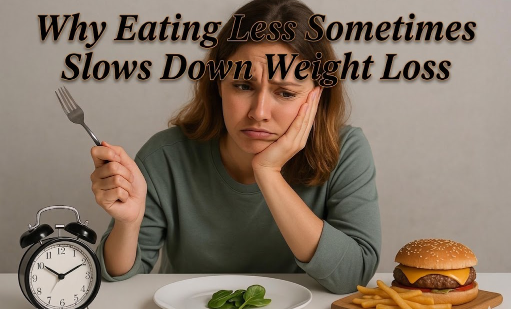
What Happens to Your Metabolism After a Long Diet

The most striking result I ever saw on a client’s metabolic rate assessment wasn’t from someone who’d been sedentary for years. It was from a woman who had been dieting consistently, carefully, and by most measures successfully, for about sixteen months. She’d lost over thirty pounds. She looked healthy. But her resting metabolic rate was running nearly 400 calories below what her body composition predicted it should be.
Four hundred calories. That’s not a rounding error. That’s a significant portion of a day’s intake that her body had quietly stopped burning, and nobody had told her to expect it.
I’ve worked in fitness for over 28 years. That number sat with me because it made something very concrete out of a pattern I’d been watching for a long time: the person who does everything right on a diet, gets results, keeps going, and then slowly discovers that the approach that worked in month two has completely stopped working by month eight. They eat the same. They train the same. Nothing moves.
And then they blame themselves.
- The Belief Most People Are Carrying
The assumption, when progress stalls, is usually one of two things. Either the person is secretly eating more than they think, or their metabolism is “broken.” The first one is worth checking honestly. But the second one is what I want to address here, because the word “broken” frames this all wrong.
The metabolism isn’t broken. It is adapted.
There’s an enormous difference, and getting that distinction right changes what you do about it. A broken thing needs fixing from the outside. An adapted thing responded intelligently to the conditions it was given, and what it needs is different conditions.
If you’ve spent time reading through the weight loss content on fitnessupdates.org, you’ll know that the body is not a passive calorie calculator. It responds. It compensates. After months of eating less than it needs, it recalibrates in several specific ways that are measurable, predictable, and very real.

- What Is Actually Happening Biologically
The term researchers use is adaptive thermogenesis. The idea is that total daily energy expenditure, the full number of calories the body burns across all functions, drops beyond what weight loss alone would explain.
This isn’t theoretical. A well-known study tracking participants from The Biggest Loser found that contestants who had lost significant body mass were burning hundreds fewer calories per day than their new weight would predict, and that suppression persisted years later. Similar findings have come out of controlled feeding studies on people in sustained deficits.
So what’s driving the drop? Three main mechanisms.
Muscle loss is first. Skeletal muscle is metabolically expensive tissue. It burns calories at rest. When aggressive caloric restriction isn’t paired with adequate protein intake and resistance training, the body draws on muscle mass as an energy source, and every pound of muscle lost lowers the baseline calorie burn.
NEAT is second. This is non-exercise activity thermogenesis, which includes everything that isn’t deliberate exercise: walking around the house, standing, fidgeting, gesturing while talking, taking the stairs without deciding to. Research suggests NEAT can drop by 200 to 300 calories per day during prolonged deficits, almost entirely below the level of conscious awareness. People simply become less spontaneously active.
The thyroid is third. T3, the active form of thyroid hormone that regulates cellular energy metabolism, tends to decrease during sustained low-calorie periods. Not dramatically enough to register as clinical hypothyroidism in most people, but enough to meaningfully slow how efficiently the body processes fuel.
All three happening together produces a very different metabolic environment than the one you started the diet in.
- The Hormonal Shift Nobody Prepares You For
The biological adaptation isn’t just about how many calories get burned. It’s also about how intensely the body wants to regain what it lost.
Leptin, the hormone responsible for signaling satiety and communicating that energy stores are adequate, falls significantly during extended caloric restriction. The drop tracks with how much fat mass has been lost and how long the restriction has been in place. When leptin falls, hunger doesn’t just get slightly louder. It changes in character. Food becomes more rewarding neurologically. The effort required to resist it increases. This isn’t a willpower failure; it’s a hormonal state that makes restraint genuinely harder than it was at the start.
And then ghrelin, the appetite-stimulating hormone, moves in the opposite direction. It tends to rise. So you’re operating with more hunger signals and fewer fullness signals at the same time, which is part of why people coming off long diets describe a relationship with food that feels almost compulsive compared to how they felt before they started.
Cortisol is worth mentioning too. Prolonged caloric restriction is a physiological stressor, and the body responds with elevated cortisol over time. Chronically elevated cortisol accelerates muscle protein breakdown and can increase fat storage, particularly around the midsection. The same thing, by the way, that poor sleep does, which is why people trying to recover their metabolism while sleeping five hours a night are stacking problems.
For those tracking energy levels during this phase, this article on energy and daily habits from fitnessupdates.org goes into some of the behavioral side of recovery worth reading alongside this.
- How Long Recovery Takes and What Actually Moves the Needle
Here’s what I want to be clear about: the adaptation is not permanent. The metabolism can recover. The hormones do normalize. But it requires deliberate effort, not just waiting.
Reverse dieting is one of the most practical approaches available. Rather than jumping immediately to maintenance or unrestricted eating after a diet ends, the idea is to increase caloric intake gradually, typically 50 to 100 calories per week, over a period of several months. The goal is to give the body time to upregulate metabolic rate without triggering rapid fat regain.
It requires patience, and I’ll be honest, not everyone has it. People who’ve been restricting for a long time often want to eat freely the moment the diet is over, which is understandable. But the hormonal environment post-diet is set up to prioritize fat restoration, and moving too quickly makes regain very likely.
Metabolic Recovery: What Changes and When
What’s AffectedApproximate Recovery TimelinePrimary DriversLeptin levels4–8 weeks at adequate caloriesGradual calorie increase, sufficient dietary fatGhrelin (appetite)6–12 weeksConsistent meal timing, protein-dense mealsT3 thyroid function4–8 weeksAdequate total calories, especially carbohydratesNEAT (daily movement)2–4 monthsStaying active, avoiding further restrictionMuscle massSeveral months, ongoingResistance training + 1.6–2.2g protein per kg bodyweightResting metabolic rate3–6+ months depending on starting pointBuilding lean mass, progressive overload
One thing that often gets overlooked in this conversation is the nutritional side of recovery, specifically how protein intake during the recovery phase protects and rebuilds the lean mass that was lost during dieting. More muscle means a higher metabolic rate at rest. Getting that back is where the long-term gains are.
Sleep, as mentioned, isn’t optional. During poor sleep, leptin drops and ghrelin rises, which is exactly the direction those hormones already moved during the diet. Stacking sleep deprivation on top of hormonal disruption from dieting is one of the most effective ways to stay stuck.

- The Three Mistakes That Keep People in This Loop
The first mistake is treating a stalled plateau as a reason to cut more calories.
This feels logical. Progress has stopped, so you eat less. But when the body is already adapted, deepening the deficit often just deepens the adaptation. NEAT drops further. More muscle is lost. Leptin falls lower. The calorie reduction you’re making with your fork is being partially offset by a body burning even less. Eating less is not always the answer, and the people who keep going smaller eventually eat themselves into a corner.
The second mistake is treating the end of the diet as the end of the process.
People hit their goal weight, remove all structure, eat freely, and then watch a significant portion of the weight come back, often 50 to 70 percent within a year or two. This is documented across research on weight maintenance after significant loss. It’s not weakness. It’s a predictable biological response. The metabolism adapted down during the diet. The appetite hormones are still pushing toward a prior set point. Without a deliberate transition strategy, the conditions for regain are almost perfectly in place. Knowing that in advance changes how you plan.
The third mistake, and this one I see constantly, is relying entirely on cardio during a fat loss phase while skipping resistance training. Cardio helps create a caloric deficit. It doesn’t protect muscle. If someone is losing one pound of muscle for every two pounds of fat they lose, they’re making post-diet metabolic recovery significantly harder. Building regular strength training into any fat loss plan is not optional if you care about what the metabolism looks like on the other side.
The metabolism after a long diet is not the same as it was before. That deserves to be said plainly rather than glossed over. But the changes are understandable, they’re measurable, and with the right approach they are reversible.
The people who handle this best are the ones who build the transition phase into their original plan. Who know from the start that going from a caloric deficit to a healthy maintenance is its own phase of the process, with its own strategy, not just the absence of dieting.
It’s slower. It’s less dramatic than the initial weight loss. But it’s the work that actually lasts.
FAQs
Does your metabolism ever fully recover after a long period of dieting?
For the majority of people, yes. The extent and speed of recovery depend on how long the diet lasted, how severe the deficit was, and whether the recovery approach prioritized muscle preservation and gradual caloric adjustment. People who combine resistance training, adequate protein, and a structured reverse diet tend to see the most complete restoration of metabolic rate. It is rarely an overnight reset, but with consistent effort over several months, the body does respond.
How can I tell if my metabolism has slowed because of dieting?
The most reliable signs are maintaining your current weight at a caloric intake that previously produced fat loss, persistent cold sensitivity (often tied to thyroid changes), a noticeable drop in spontaneous daily movement and energy, and hunger that feels disproportionately intense for the amount you’re eating. If fat gain is occurring without meaningful changes to intake, that’s worth taking seriously. A resting metabolic rate test conducted by a sports dietitian gives actual numbers rather than estimates.
Is “starvation mode” a real thing, or is it a myth?
The term is imprecise, which is why it sometimes gets dismissed entirely. The underlying physiology is real. Prolonged caloric restriction causes the body to reduce energy output through multiple pathways simultaneously, and the combined effect can make eating very little produce no measurable fat loss. Calling it metabolic adaptation is more accurate than “starvation mode,” but the result, that continuing to eat less stops working and may worsen the situation, is genuinely happening.
What calorie level triggers meaningful metabolic adaptation?
There’s no universal threshold, since body composition, activity level, and individual variability all factor in. Generally, sustained intake below 1,200 calories per day for women or below 1,400 for men, maintained over more than a few weeks, substantially increases the likelihood of adaptive thermogenesis and accelerated muscle loss. Very low-calorie diets used in clinical settings use protein-sparing modified fast protocols specifically to minimize these effects, and those protocols shouldn’t be replicated without medical oversight.
Can eating more actually speed up a slowed metabolism?
Yes, and this surprises people. Diet-induced thermogenesis means that eating more, particularly protein, causes the body to burn more energy in the processing of food itself. Over weeks of eating at or above maintenance, leptin levels rise, NEAT typically recovers, and with resistance training, lean mass can be rebuilt. The process isn’t instant and it requires patience, but the metabolic rate does respond upward when given the right inputs consistently over time.
Browse the full library of health, fitness, and nutrition content at fitnessupdates.org for more research-informed articles on training, recovery, and long-term body composition.