Fat Loss vs Weight Loss: What Most People Get Wrong

I’ve been in this industry for 28 years. And one pattern that hasn’t changed, despite everything else that has, is the way people collapse two very different things into one word: “weight.”
Clients, gym members, athletes preparing for competition, people who’ve been training consistently for years. All of them, at some point, asking the same thing: “Why isn’t the scale moving?” And buried inside that question is an assumption that the scale should be moving. That if it isn’t, something has gone wrong.
That assumption is the problem.
Fat loss and weight loss are not the same process. They don’t always produce the same result. And chasing one when you actually want the other is one of the most reliable ways to spend months working hard and feeling like you’re getting nowhere.
1. Why the Scale Is an Unreliable Narrator
The scale measures total body mass. Full stop. It doesn’t distinguish between fat, muscle, water, food in transit, or anything else. A kilogram is a kilogram to a bathroom scale.
And here’s where it creates real problems for people. Body weight fluctuates by 1 to 3 kilograms across a single day, sometimes more, purely because of hydration levels, sodium intake, hormonal shifts, and digestion. Nothing changed about your actual body composition. The scale just reflects a different moment in time.
I had a client, a trainer actually, who tracked his weight every morning for three weeks. By mid-morning on day two, he was already questioning whether his entire protocol was wrong. By week two he was talking about switching everything. But his measurements were down, his strength was up, and anyone looking at him could see the difference. The scale was just moving in that infuriating non-linear way that physiological change tends to move.
So we took it away for four weeks. And he made, what he later described as, his best progress ever. Not because anything changed in his training or nutrition. Because the daily data point that was distorting his perception was gone.
This is the foundational issue. When “weight loss” is the stated goal, every measurement becomes about a single, unreliable number. And that’s not a measurement problem, it’s a goal-definition problem.
2. What Fat Loss and Weight Loss Actually Mean
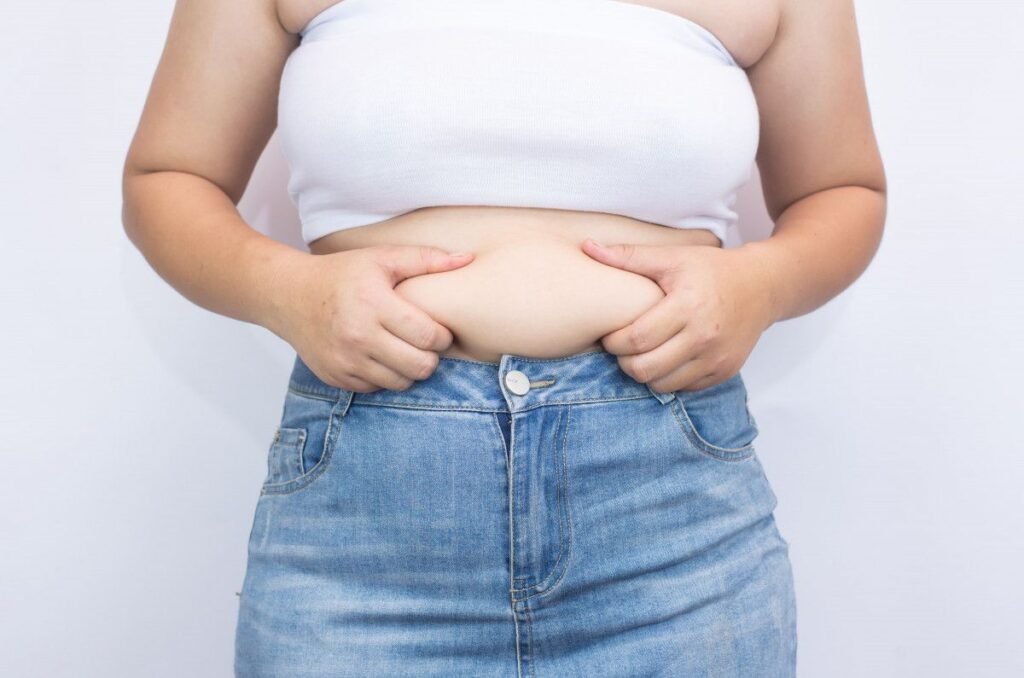
Weight loss is a reduction in total body mass. That’s it. No specification of what’s being lost.
Fat loss is specifically a reduction in stored body fat while maintaining, or ideally increasing, lean muscle tissue. The two can happen together, but they don’t automatically go together, and the conditions that produce one aren’t always the conditions that produce the other.
The practical difference becomes obvious once you look at what each approach typically produces:
| Metric | Weight Loss Focus | Fat Loss Focus |
|---|---|---|
| Scale number | Drops, often quickly at first | May move slowly or plateau |
| Muscle mass | Frequently decreases | Maintained or increased |
| Resting metabolic rate | Usually slows | Maintained or improves |
| Body composition | May worsen (less muscle, similar fat %) | Consistently improves |
| Strength levels | Often declines | Maintained or increases |
| Long-term sustainability | Low, prone to regain | Significantly higher |
| Daily energy levels | Often poor, fatigue common | Generally stable or better |
The middle column describes what happens on crash diets, very low calorie approaches, or cardio-dominant programs without adequate resistance training or protein. People lose weight in those scenarios. But a meaningful portion of what they lose is muscle. And that matters enormously for what happens next.
Less muscle means a slower resting metabolic rate. A slower metabolic rate means the calorie deficit that was producing results no longer produces results. And then comes the frustrating plateau that leads people to cut calories even further, which accelerates the muscle loss further. I’ve seen people cycle through this for years, sometimes decades, always confused about why the same approaches keep delivering the same dead-end results.
For people who want to understand what this looks like nutritionally, the nutrition content at fitnessupdates.org covers the science in a way that’s actually applicable rather than theoretical.
3. The Specific Mistakes That Keep People Stuck
The most common error is aggressive caloric restriction paired with excessive cardio and no meaningful resistance training. It looks like serious effort. It is serious effort. But it’s pointed in entirely the wrong direction for body composition change.
The body responds to a large, sustained calorie deficit by doing two things: burning stored fuel (good) and breaking down muscle tissue for energy (not good). The technical term for the second process is gluconeogenesis, the conversion of amino acids from muscle into glucose. The body is good at this. It does it efficiently, particularly when protein intake is low and the deficit is large.
And protein intake is consistently, almost universally, too low in people trying to lose weight. General dietary guidelines still recommend around 0.8 grams per kilogram of bodyweight. That number, frankly, isn’t designed for someone in an active training program trying to preserve lean mass. Research from sports science and muscle physiology is fairly consistent on this, something closer to 1.6 to 2.2 grams per kilogram per day produces meaningfully different outcomes in terms of muscle retention during a calorie deficit. The difference between those two ranges, in practice, can be the difference between losing fat and losing muscle.
There’s also a psychological dimension I want to flag, because it tends to be skipped in most discussions of this topic. Tying your entire sense of progress to a single daily number creates a fragile relationship with training. A bad week on the scale, even if you’ve genuinely been consistent and the physiology is moving in the right direction, can produce a response that’s wildly disproportionate to what’s actually happening. People abandon protocols that are working. They add more cardio when the problem is too little food quality, not too little calorie burn. They switch approaches every few weeks, never giving any of them long enough to actually demonstrate results.
The daily habits content on fitnessupdates.org addresses this well. Building consistent behaviors rather than chasing daily feedback is, genuinely, most of the job.
4. How to Shift Your Approach From Weight Loss to Fat Loss
None of this is complicated. The principles are well established. The difficulty is mostly in letting go of the scale as the primary feedback mechanism and building in other signals.
Resistance training is non-negotiable. Not optional, not supplementary, central. Muscle is metabolically active tissue. The more of it you carry, the more calories your body burns at rest. Building and preserving it during a calorie deficit is the primary lever for improving body composition over time. Cardio contributes to a deficit and has genuine cardiovascular benefits, but it doesn’t replace the role of resistance work in maintaining lean mass.
Protein first, before anything else. Before you optimise carb timing, cycle calories, or stress about meal frequency, get protein to an appropriate level. Somewhere between 1.6 and 2.2 grams per kilogram of bodyweight, depending on training volume and body composition goals. It supports muscle retention, increases satiety, and has a higher thermic effect than either carbohydrate or fat, meaning the body burns more calories processing it. It’s the most underused lever most people have access to, and it’s not even close.
Use a moderate deficit, not an aggressive one. A 300 to 500 calorie daily deficit is sufficient to drive fat loss without creating the conditions for significant muscle loss. Larger deficits might look appealing because the scale moves faster, but that speed comes with a cost to lean mass that shows up in how you look and feel months later.
Track things that actually tell you something. Body measurements, waist and hip circumference at minimum. A key strength indicator, can you lift slightly more, or do the same load with better quality movement. Progress photos every four to six weeks under consistent lighting. Energy levels and sleep quality as general markers. The scale can stay in the mix, but as one input among several, not the only one.
For the practical side of building these habits week to week, the fat loss habits guide at fitnessupdates.org is worth spending time with.
5. What Progress Actually Looks Like
Real progress in fat loss is rarely linear. That’s worth stating clearly because the expectation of linear progress is what causes most people to abandon approaches that are actually working.
In a given week, you might hold water, you might be slightly more glycogen-loaded from a heavier training session, your hormones might be at a point that drives temporary retention. None of that is fat gain. But it registers on a scale and it triggers a response as if it were.
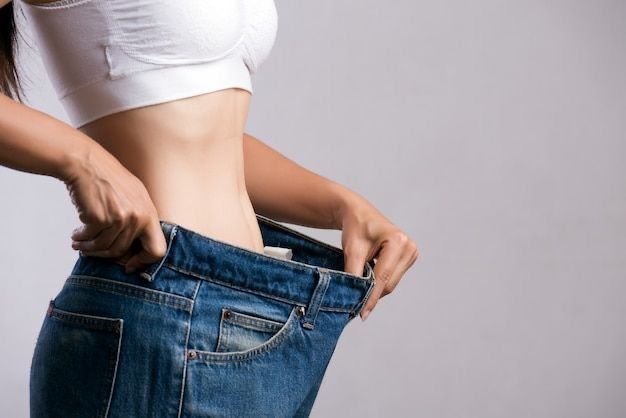
Actual fat loss shows up in how clothes fit. In waist measurements going down over months, even if week to week the data is noisy. In strength going up, or at least holding steady, while body weight changes. In not feeling as depleted, because muscle is being preserved and the deficit isn’t so aggressive that recovery is compromised.
I want to be clear about something, though. If someone needs to hear it plainly: the goal for most people shouldn’t be the lightest possible version of themselves. It should be the most functional, capable, healthy version. And those goals don’t always align. A person who’s lost 8 kilograms of fat and added 3 kilograms of muscle has had a better result than someone who’s simply lost 10 kilograms of combined fat and muscle, even though the second number sounds better.
That’s the conversation worth having. And it starts by redefining what we’re measuring.
FAQs
Can you lose body fat without the scale moving at all? Yes, and this is more common than people expect. When someone begins resistance training while eating enough protein, fat loss and muscle gain can happen simultaneously. The scale stays flat or moves minimally because the fat being lost is roughly offset by the muscle being added. Body composition improves substantially. This is called body recomposition and it’s particularly evident in people new to training, returning after a long break, or carrying a higher initial body fat percentage.
How do I know if I’m losing fat or muscle? Strength is your most accessible signal. If you’re maintaining or improving in the gym while your waist measurement decreases, the weight you’re losing is predominantly fat. If strength is declining noticeably alongside the scale, it’s a sign the deficit is too large, protein is too low, or both. Regular body measurements give you better information than the scale alone.
Does cardio help with fat loss or just weight loss? Cardio contributes to a calorie deficit, which matters. But cardio alone, particularly at the expense of resistance training, tends to produce weight loss rather than focused fat loss. The most effective approach for improving body composition combines resistance work with moderate cardio, not one or the other. And protein intake matters in either case.
Why do I lose weight quickly at first on a new diet, then stop? The first one to two weeks of weight loss on a reduced-calorie or lower-carbohydrate diet is largely water. Glycogen stores in muscle and liver drop, and each gram of glycogen holds roughly three grams of water. When glycogen goes down, water follows. Once the body adapts to the new intake level, glycogen stabilises and that water-driven drop stops. What’s left is the actual work of losing fat tissue, which is slower and less dramatic on the scale.
Is it realistic to build muscle and lose fat at the same time? For most people, yes, particularly if they’re new to training, returning after time away, or in a higher body fat range. The body is more efficient at recomposition in these scenarios. For someone already advanced and already lean, doing both simultaneously becomes harder and usually requires more deliberate periodisation across training blocks. But for the majority of people asking about fat loss, recomposition is not just possible, it should be the actual target.
Twenty-eight years in this industry. And the scale confusion is still the most persistent obstacle between people and results they’re actually capable of getting. The tools exist. The knowledge exists. The shift that needs to happen is mostly about changing what counts as progress.
Start there.