
Stanford Regrows Cartilage Fast
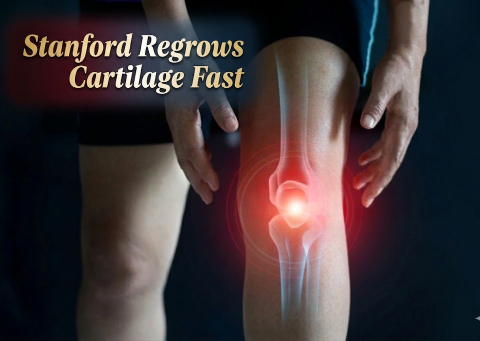
For most of my career, the answer to “can cartilage come back?” was a polite but firm no. Articular cartilage, the smooth tissue cushioning your joints, lacks a blood supply, and that biological detail was treated as a verdict. No blood supply meant no circulation of repair cells. No repair cells meant no regeneration. End of conversation.
I’ve sat through enough sports medicine presentations over twenty-eight years to know how deeply that belief embedded itself. Athletes were told to manage damage, not expect recovery. Clients in their forties and fifties dealing with knee pain or hip discomfort were essentially given permission to accept decline as permanent. The message wasn’t malicious. It was just what the biology appeared to say.
Researchers at Stanford have spent the better part of the last decade challenging that conclusion. And what they found complicates the old picture enough that anyone in the fitness community, whether they’re managing their own joints or advising clients on long-term health, should understand what actually changed.
1. Why Cartilage Was Always Considered a Dead End
The reason cartilage has such a poor reputation for healing is specific and anatomical. Articular cartilage is composed primarily of type II collagen and proteoglycans, maintained by chondrocytes embedded within the matrix. Unlike bone, cartilage has no direct vascular network. When it’s damaged, the body has no route to deliver progenitor cells from the bloodstream to the injury site. There’s no vascular highway for the repair crew to travel.
What typically happens instead is fibrocartilage formation. Bone marrow has some access to the joint space, and under the right conditions, it can produce fibrocartilage, a fill-in tissue that’s structurally inferior to the original. It works as a patch. It doesn’t function the same under sustained mechanical load and degrades faster. Most microfracture surgeries, where a surgeon perforates the subchondral bone to encourage marrow access, produce this type of repair tissue.
Better than nothing. Not actually cartilage.
The other issue is that chondrocytes don’t replicate well. They’re terminally differentiated cells in a very stable microenvironment. Damage disrupts that environment, but the surviving cells don’t proliferate enough to fill the gap. That combination, no vascular access and limited cellular proliferation, is what the old clinical consensus was built on.
2. What the Stanford Research Actually Found
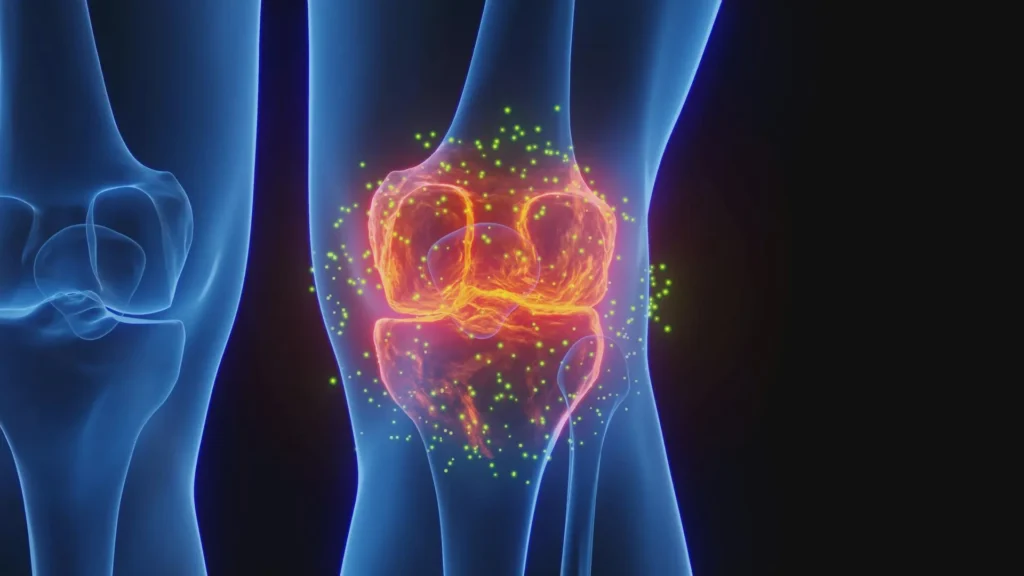
The shift began when researchers at Stanford, particularly from the labs of Michael Longaker and Charles Chan, asked a different question. Instead of looking at how to deliver new cells to damaged cartilage from outside, they asked whether the body already had cells capable of making cartilage, ones that had simply never been properly identified or activated.
In 2018, Chan, Longaker, and colleagues published a landmark paper in Cell identifying human skeletal stem cells, or hSSCs. These are cells present in adult bone that retain the ability to generate three types of tissue: bone, cartilage, and stromal cells. That was a significant finding because it established, clearly, that the adult human body does carry cells with genuine chondrogenic potential. The question became how to activate them.
Subsequent work from the Stanford group focused on growth factor signaling. Specific proteins, including bone morphogenetic proteins (BMPs) and parathyroid hormone-related peptide (PTHrP), were found to influence whether skeletal stem cells differentiated toward bone or cartilage. By modulating these signals, researchers could direct resident stem cells to produce hyaline cartilage rather than the fibrocartilage alternative that surgical approaches typically generate.
The “fast” element refers to what was observed in preclinical models. When skeletal stem cells were properly activated and directed, cartilage formation happened on a timeline considerably shorter than what surgical approaches achieve. Meaningful cartilage regeneration was observed within weeks in animal studies, compared to the twelve to eighteen months typical of standard autologous chondrocyte implantation.
That’s not a clinical guarantee. Most of this work is still in preclinical or early human trial phases. But the underlying biology, the existence of activatable resident cells that can produce genuine hyaline cartilage, has been established. That part is not speculative.
Here’s where different cartilage approaches currently stand:
| Approach | What It Produces | Typical Timeline | Availability |
|---|---|---|---|
| Microfracture surgery | Fibrocartilage (inferior) | 6-12 months rehab | Standard clinical practice |
| ACI / MACI procedures | Hyaline-like cartilage | 12-18 months recovery | Specialist centres, costly |
| Stanford hSSC activation | Hyaline cartilage | Weeks (preclinical models) | Research and trials stage |
| PRP and growth factor injections | Variable, often modest | Weeks to months | Clinically available, inconsistent outcomes |
| Nutrition and load management | Supportive, not regenerative | Ongoing | Immediately accessible |
3. The Gap Between the Research and What You Can Actually Access
This is where a lot of health content goes wrong. A university press release describes a promising finding, and by the time it’s been rephrased a few times across different websites, it reads as though a cure is available next Tuesday.
It isn’t.
The Stanford hSSC research is genuinely compelling, but translating preclinical results into something a person with knee osteoarthritis can receive at a clinic takes years. Regulatory approval, clinical trial design, and the practical challenges of delivering biologics reliably to joint tissue all sit between the lab and a patient’s appointment. The honest estimate for meaningful clinical availability, for most people, is somewhere in the range of five to ten years.
What’s already accessible is the growth factor injection space. PRP and BMP-based approaches are available through sports medicine and orthopedic practices in most major cities. The evidence for PRP is mixed. It works meaningfully for some people and shows modest effects for others, and the variability comes largely from inconsistency in how the preparation is done. BMPs have a stronger mechanistic basis but delivering them to cartilage tissue in a controlled, lasting way remains technically difficult.
The practical takeaway: the biology that makes cartilage regeneration possible has been identified. The clinical tools to exploit it reliably at scale are still being developed. Knowing that, the question for any active person right now is what can actually be done to protect joint tissue and slow degradation while the research catches up to clinical practice.
4. What Actually Helps Joint Tissue Between Now and Then
There are specific approaches with real evidence behind them. None as dramatic as what the Stanford research eventually promises, but some are underused to a surprising degree.
Collagen peptides with vitamin C. The research on hydrolyzed collagen has strengthened considerably in the past five years. A study in the American Journal of Clinical Nutrition found that 15g of gelatin combined with vitamin C, consumed before exercise, increased collagen synthesis markers in joint tissue. Vitamin C is a required cofactor for collagen production, so supplementing collagen without adequate vitamin C undershoots the potential benefit. Timing matters. Consuming collagen peptides 30-60 minutes before activity, when blood flow to the joint increases during exercise, improves tissue delivery.
Load management as a genuine priority. Cartilage stays healthy partly through mechanical stimulation. Immobility causes degradation; so does sustained high-impact loading without recovery windows. The sweet spot is moderate load with adequate rest, which is where cartilage gets the mechanical signal to maintain its structure without progressive breakdown. The relationship between rest days and physical adaptation applies to joint tissue as directly as it does to muscle fiber repair.
Low-impact movement as default maintenance. Walking, cycling, and swimming provide the mechanical loading joint cartilage needs without the high peak forces of running or jumping. For someone managing early wear, swapping some high-impact sessions for lower-impact alternatives is biology-informed programming, not regression. Cartilage is avascular and gets its nutrients from synovial fluid, which circulates through movement. Immobility starves the tissue. The evidence for walking as an effective training tool is more robust than most people in fitness circles give it credit for, and for joint health specifically, it’s a first-line recommendation worth taking seriously.
Anti-inflammatory nutrition. Cartilage breakdown is accelerated in a high-inflammation environment. Chronically elevated cytokines like IL-1 and TNF-alpha directly suppress chondrocyte activity and upregulate matrix-degrading enzymes called MMPs. Foods that modulate the inflammatory environment, omega-3s, tart cherry, ginger, curcumin with piperine, don’t regenerate cartilage but they reduce the rate of its degradation. The anti-inflammatory foods guide on fitnessupdates.org covers those mechanisms at the compound level.
Sleep. Growth hormone secretion peaks during slow-wave sleep, and it has direct effects on collagen synthesis and cartilage matrix maintenance. Chronic under-sleeping, consistently less than seven hours, suppresses the hormonal environment that connective tissue repair depends on. No supplement protocol fully compensates for that gap.
5. Where the Usual Advice Goes Wrong
The most common mistake I see is treating cartilage problems as a pain management issue and nothing else. Once pain appears, people focus on reducing the symptom rather than the load patterns, nutritional gaps, and recovery deficits driving the underlying degradation. Pain arrives late. By the time a joint hurts consistently, meaningful cartilage loss has already occurred.
The second mistake is the rest-or-train binary. Joints don’t recover through complete rest. Movement circulates synovial fluid, which is how cartilage gets its nutrients. The right answer is modified loading, not elimination of loading, and most people aren’t told that clearly enough.
And there’s the supplement trap. Glucosamine and chondroitin have dominated the joint supplement market for three decades. The GAIT trial, a large NIH-funded randomized controlled trial with over 1,500 participants, found no statistically significant overall benefit for either compound on the primary outcomes studied. Collagen peptides and omega-3s have a stronger and more recent evidence base for supporting joint tissue than either of those two. Most people dealing with joint concerns are spending money on the wrong shelf.
The fitnessupdates.org coverage of daily health habits and their effect on long-term physical resilience runs through the same underlying principle: the consistent, unglamorous decisions accumulate. For joint health, that means sleep, anti-inflammatory eating, appropriate movement volume, and giving the body the structural raw materials it needs before problems compound.
The Stanford findings matter. Not because a solution is imminent, they matter because they establish that the biology of cartilage regeneration is possible in the adult human body. That’s a different paradigm than what I trained under, and it changes how seriously we should take joint health as something that can genuinely be influenced, not just managed.
The practical work right now is protecting what you have and creating the conditions in which future therapies can do more. That isn’t complicated. It’s just consistent.
Frequently Asked Questions
Is the Stanford cartilage research available as a treatment yet?
Not as a mainstream clinical option. The skeletal stem cell findings established the biological foundation, but translating that into a reliable clinical procedure requires completed human trials, regulatory approval, and scalable delivery methods. Meaningful clinical availability is likely five to ten years away for most patients. Some early-access trials may be accessible through academic medical centres for specific candidates.
Does cartilage grow back at all on its own?
Not in any meaningful way under normal conditions. The tissue is avascular and the cells that produce it don’t replicate well once mature. Fibrocartilage, a structurally inferior fill-in tissue, can form in some injury scenarios through marrow access, but it functions differently under load and degrades faster. The Stanford research identified cells that can produce genuine hyaline cartilage if properly activated, but that activation requires specific biological signals that don’t occur spontaneously from the body’s usual injury response.
What’s the best supplement for joint cartilage right now?
Hydrolyzed collagen peptides combined with vitamin C have the strongest recent evidence for supporting cartilage and connective tissue. Omega-3 fatty acids at meaningful doses, 2-4g combined EPA/DHA daily, reduce the inflammatory environment that accelerates cartilage breakdown. Glucosamine and chondroitin, which have dominated the joint supplement space for decades, have a considerably weaker evidence base than most people realise. The GAIT trial, which ran for over two years with more than 1,500 participants, found no statistically significant overall benefit for primary outcomes, which is not what the marketing suggests.
Can exercise help cartilage or does it cause more damage?
Moderate, appropriately loaded movement is essential for cartilage health. Cartilage gets its nutrients from synovial fluid, and that fluid circulates through movement. Immobility starves the tissue. The problem comes with sustained high-impact loading without adequate recovery. For someone managing cartilage wear, a combination of low-impact movement and controlled strength training is more protective than either full rest or unchecked high-impact training.
What does the Stanford research mean for someone not eligible for trials right now?
Create the best possible biological environment using what’s currently accessible. Collagen peptides with vitamin C before activity, consistent anti-inflammatory eating, adequate sleep, and load management that keeps joints moving without overloading them repeatedly without recovery. None of this replicates what growth factor-directed stem cell activation may eventually offer, but it preserves tissue and slows degradation while the research catches up to clinical availability.
For a closer look at the specific foods that modulate joint inflammation and support connective tissue recovery at the compound level, the anti-inflammatory nutrition guide on fitnessupdates.org covers the mechanisms and practical timing behind each one.