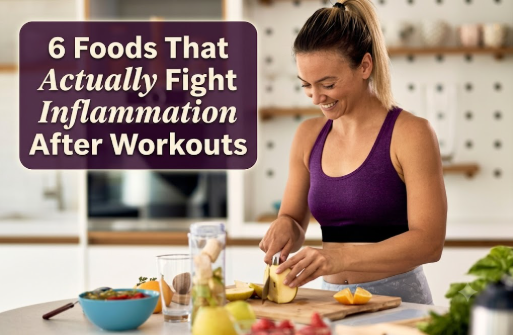
6 Foods That Actually Fight Inflammation After Workouts
I’ve watched this pattern play out hundreds of times. Someone finishes a solid session, muscles feel destroyed in the good way, and the first thing they reach for is two ibuprofen and an ice pack. Because that’s what you do for inflammation, right?
Not exactly. And that misunderstanding costs a lot of people their progress.
Post-workout inflammation is not the enemy. The acute inflammatory response triggered by resistance training or intense cardio is part of the signaling cascade that drives adaptation. Block it entirely and you blunt the gains. But there’s a second phase, a resolution phase, where the body has to bring that response back down efficiently so repair can actually happen. That’s where food genuinely matters, and where most people are reaching for the wrong tools.
Twenty-eight years in the fitness industry means a lot of conversations about recovery. Everyone trains hard. Most people eat enough protein. But the dietary choices that support resolution-phase recovery stay underused, often because they don’t feel “scientific” enough. They’re just food. The research behind several of them, though, is as solid as anything on the supplement shelf.
1. What Post-Workout Inflammation Actually Is
When you exercise intensely, muscle fibers sustain micro-damage. The immune system responds by increasing blood flow to the area, sending white blood cells, and triggering a release of cytokines including interleukin-6 and tumor necrosis factor-alpha. This is the acute phase. It hurts. It’s also necessary.
The problem most active people face isn’t the acute phase. It’s when that inflammatory response lingers. Chronically elevated CRP (C-reactive protein), ongoing muscle soreness days after training, and poor session-to-session recovery are signs the resolution phase is lagging. That’s the gap where diet makes a real difference.
And it’s worth being clear about what “fighting” inflammation means here. The goal isn’t to shut it down. The goal is to help the body resolve it faster, without the kind of adaptation-blunting that comes from habitual NSAID use. These are different objectives, and the distinction matters.

2. Six Foods That Actually Do the Work
Each of these has a specific compound and a specific mechanism. Not vague benefit claims. Specifics, because “blueberries are good for you” is not useful information.
Tart Cherry
Tart cherries, particularly the Montmorency variety, are one of the better-researched foods for exercise recovery. They’re high in anthocyanins, which inhibit both COX-1 and COX-2 enzymes — the same enzymes targeted by ibuprofen, but without the gastric damage that comes with NSAID overuse. A study in the British Journal of Sports Medicine found that marathon runners consuming tart cherry juice before a race reported significantly less post-race muscle pain compared to a placebo group.
Practical application: 240-480ml of tart cherry concentrate daily in the 48 hours before a hard session and the 48 hours after. The concentrate form has far higher anthocyanin content than fresh cherries. Fresh fruit is pleasant but functionally different.
Fatty Fish
This one is well established but still underconsumed. Salmon, mackerel, sardines, and herring are high in EPA and DHA, the omega-3 fatty acids that directly modulate the NF-kB signaling pathway — one of the primary drivers of inflammatory gene expression. EPA and DHA also compete with arachidonic acid for metabolic enzymes, which reduces prostaglandin and leukotriene production downstream.
Two or three servings per week shifts the omega-6 to omega-3 ratio in a meaningful direction. Most people eating a standard Western diet run at a ratio of roughly 15:1 or higher. The research points toward something closer to 4:1 for better inflammatory control. Fatty fish is the most bioavailable way to get there, more so than flaxseed, more so than most plant-based sources.
Turmeric with Black Pepper
Curcumin, the active compound in turmeric, inhibits NF-kB and suppresses COX-2 in a dose-dependent manner. The research on curcumin is extensive. There’s an important caveat, though, one most people miss: bioavailability from raw turmeric is poor. Curcumin makes up roughly 2-5% of turmeric by weight and is poorly absorbed without piperine, the compound in black pepper that increases curcumin absorption by approximately 2,000%.
Turmeric in a smoothie without black pepper is doing very little. Turmeric in a curry with black pepper, or a standardized curcumin extract with piperine, is a different story entirely. A study in the European Journal of Applied Physiology showed curcumin supplementation reduced DOMS and muscle damage markers following downhill running. The dose used was 400mg daily — not a casual sprinkle on eggs.
Ginger
Ginger gets less attention than turmeric but the evidence is strong. Gingerols and shogaols, ginger’s primary bioactive compounds, inhibit prostaglandin synthesis and reduce several pro-inflammatory cytokines including IL-1 and TNF-alpha. Research from the University of Georgia showed that 2g of raw ginger consumed daily reduced muscle pain by 25% following eccentric exercise. Notably, cooked ginger showed similar effects, and heating can actually increase shogaol content.
Two grams is roughly a teaspoon of fresh grated ginger, or a strong ginger tea made from a decent-sized knob. Stir it into a post-workout shake, make it into tea, add it to stir-fries. The delivery method matters less than consistency over time.
Blueberries
Blueberries are dense in polyphenols and anthocyanins, similar compounds to tart cherry but with a distinct phenolic profile. A study published in the Journal of the International Society of Sports Nutrition found that cyclists consuming blueberry smoothies before and after exercise showed significantly better oxidative stress markers and recovery outcomes compared to a control group.
The key is volume. A small handful on yogurt is pleasant but probably not moving the needle mechanistically. The study used around 375g per smoothie. Frozen blueberries work equally well, and the polyphenol content doesn’t degrade meaningfully through freezing. From a practical standpoint, frozen is often the smarter default.
Watermelon
Watermelon rarely appears in these conversations, which is a missed opportunity. It contains L-citrulline, an amino acid that converts to L-arginine in the body, which supports nitric oxide production. Nitric oxide plays a direct role in blood flow and nutrient delivery to muscle tissue, accelerating the recovery process. A Spanish study found that athletes who consumed natural watermelon juice before exercise reported meaningfully less muscle soreness at the 24-hour mark.
Around 500ml of natural watermelon juice provides approximately 1.5-2g of L-citrulline. Useful on its own. Combine it with a protein source post-workout and the recovery effect compounds.
Here’s a quick-reference table to make the practical decisions clearer:
| Food | Key Compound | Main Mechanism | Best Timing |
|---|---|---|---|
| Tart Cherry | Anthocyanins | COX-1/COX-2 inhibition | 48h pre and post hard sessions |
| Fatty Fish | EPA, DHA | NF-kB modulation, PG reduction | 2-3x per week, ongoing |
| Turmeric + pepper | Curcumin + piperine | COX-2 suppression, NF-kB | Daily with meals |
| Ginger | Gingerols, shogaols | IL-1, TNF-alpha reduction | Daily, minimum 2g |
| Blueberries | Polyphenols, anthocyanins | Oxidative stress reduction | Pre and post workout, 200-375g |
| Watermelon | L-citrulline | NO production, blood flow | Pre-workout or immediately after |
3. The Timing Issue Nobody Talks About
The research on post-workout nutrition centres heavily on protein timing. And that’s appropriate. But most of the anti-inflammatory foods listed above are at their most effective when they’re already present in circulation before the inflammatory response peaks.
Tart cherry works best when consumed in advance. Curcumin’s effects are cumulative and dose-dependent — you can’t take it once and expect results. Ginger works consistently when used as a daily habit, not as a post-session intervention.
This is actually good news from a practical standpoint. If the goal is reducing post-workout inflammation over time, you don’t need a complicated protocol or an exact 30-minute post-workout window. What you need is a dietary pattern that includes these foods consistently, and a willingness to eat them before heavy training days not just after. The broader approach to building nutrition habits that support ongoing training is something the fitnessupdates.org nutrition library covers in depth, particularly in articles covering how food timing interacts with training outcomes.

4. Where People Usually Go Wrong
The most common mistake is treating ibuprofen as a routine part of recovery. NSAIDs taken habitually after training do reduce acute inflammatory signalling, yes, but they also suppress the mTOR pathway and impair muscle protein synthesis. A study published in the American Journal of Physiology found that ibuprofen and acetaminophen taken post-resistance training actually blunted the normal protein synthesis response. People train consistently, eat well, and still wonder why progress stalls. Sometimes this is why.
The second mistake is high-dose antioxidant supplementation immediately post-workout. Reactive oxygen species produced during exercise function as signaling molecules. Quench them entirely and you interfere with adaptation. Research has shown that high-dose vitamin C (above 1g) and vitamin E (above 400 IU), taken together around training, can blunt both strength and endurance adaptations. The foods in this article don’t carry that risk. They modulate resolution, they don’t suppress the initial signal.
There’s also the consistency problem. People treat anti-inflammatory eating the way they treat a post-workout shake, something done for ten minutes after a session. The foods that actually shift chronic inflammatory markers do so because they’re part of a regular dietary pattern. Not because they were consumed once after leg day on a Friday. For a broader look at how daily nutrition interacts with training performance, the 12 powerful nutrition health updates backed by science is worth reading alongside this.
And one more thing, sleep. Food choices affect inflammatory markers. Sleep deprivation affects them far more dramatically. IL-6 and CRP both spike with chronic under-sleeping, and no amount of tart cherry juice fully compensates for five nights of six-hour sleep. These foods are part of a recovery system, not a standalone fix. They work best alongside adequate sleep, managed training volume, and proper hydration. If recovery is consistently poor despite the right food choices, it’s usually a sleep or training load problem. The 10 essential health updates for a stronger body covers those other recovery levers in detail.
The body is remarkably effective at resolving inflammation when it has the right inputs. These six foods aren’t miracle interventions — they’re reliable tools with real mechanistic support behind them. Add them to the rotation consistently, and across 8-12 weeks the difference in how you recover between sessions becomes hard to ignore.
Frequently Asked Questions
Should I eat these foods before or after a workout?
Both, depending on the food. Tart cherry and watermelon show benefits when consumed before as well as after training. Turmeric and ginger work best as ongoing daily habits rather than acute post-workout choices. Blueberries and fatty fish are most effective as part of your overall dietary pattern, though consuming them around training adds benefit. For most of these, pre and post together outperforms either one alone.
How long does it take to notice a difference in recovery?
Most studies showing meaningful results use 7-14 day minimum protocols. Turmeric and omega-3 research typically runs 6-12 weeks. For tart cherry and ginger, measurable reductions in DOMS markers can appear within 48-72 hours of consistent use. Realistic expectations: a few days for noticeable changes in soreness, several weeks for shifts in systemic inflammatory markers like CRP.
Can these foods replace ibuprofen after a hard session?
For routine soreness following normal training loads, they’re a better default than habitual NSAID use. The mechanisms are real, and they don’t impair muscle protein synthesis the way ibuprofen does at chronic doses. For a genuine acute injury, that’s a separate conversation. Anti-inflammatory foods don’t replace appropriate medical management of actual tissue damage.
Are there foods that make post-workout inflammation worse?
Refined sugar and highly processed vegetable oils high in omega-6 content, corn oil, soybean oil, sunflower oil, are consistently associated with elevated pro-inflammatory markers. The timing is especially relevant because insulin sensitivity is elevated post-exercise, making that window both an opportunity and a vulnerability. A post-workout meal built around those ingredients likely offsets some of what the beneficial foods are trying to do.
Do supplements work as well as whole food sources?
For curcumin specifically, a standardized extract with piperine is more effective than turmeric in food because bioavailability is controlled at the point of manufacture. For omega-3s, high-quality fish oil at meaningful doses (2-4g combined EPA/DHA daily) can match or exceed what’s achievable through fish alone for people who don’t eat fish regularly. But for tart cherry, blueberries, ginger, and watermelon, the whole food or juice forms are where the research has been done, and they’re generally the more reliable recommendation. Supplement versions in this category tend to lag behind the food-based evidence considerably.
For a broader look at building a recovery-focused nutrition approach around your training, the 12 proven fitness health updates that deliver results on Fitness Updates is worth working through alongside this one.