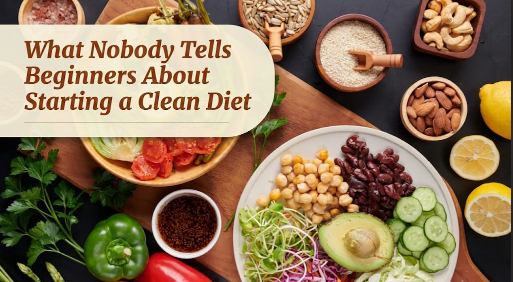
What Nobody Tells Beginners About Starting a Clean Diet
The first thing most people do when they decide to start eating clean is throw out half their kitchen. I’ve watched it happen more times than I can count, sitting across from people at industry events, on podcast interviews, in follow-up conversations after a workshop. Someone gets fired up, buys a juicer, empties the fridge, and eats nothing but grilled chicken and steamed broccoli for eight days straight. Then a stressful Tuesday at work happens, and the whole thing collapses.
Here’s what I actually think is going on. The problem isn’t willpower. It’s the word “clean” itself.
1. The Word “Clean” Is Setting You Up to Fail
Clean eating, as most beginners understand it, is a binary. Food is either clean or it isn’t. Quinoa is in. Bread is out. A homemade smoothie is virtuous. A slice of birthday cake is a moral failure. And once you accept that framing, every meal becomes a test you’re either passing or failing.
But that is not how nutrition actually works.
What the evidence consistently shows, and it’s something I’ve had reinforced across dozens of conversations with researchers, coaches, and clinicians on the podcast over the years, is that dietary quality is better understood as a spectrum and a pattern, not a pass/fail event. A single meal doesn’t make you unhealthy. A hundred consecutive meals might. Context matters enormously.
The trouble with “clean” as a concept is that it attaches moral weight to food. And moral weight, over time, creates guilt, restriction cycles, and eventually the kind of all-or-nothing thinking that ends with somebody ordering three pizzas because they already had a bag of crisps and decided they’d “ruined the day.” That’s not a character flaw. That’s the natural psychological result of treating food like a test you keep failing.
The misconception I see most often among people starting out is that they believe the strictness is the point. That if it doesn’t feel punishing, they must not be trying hard enough. They’re wrong. And nobody seems to tell them that before they start.
2. What You’re Actually Trying to Do, and Why Most Beginners Miss It
Strip back the language and here’s what eating well actually means: give your body enough protein to maintain and build lean tissue, enough whole food carbohydrates and fats to fuel daily activity, enough micronutrients to keep your hormones, immune system, and cognitive function running properly, and enough consistency over time that all of those things compound into something real.
That’s the whole project.
None of that requires eating only organic produce, cutting out every processed food ever made, or following a plan so rigid that a work lunch at a restaurant sends you into a spiral.
Something that comes up repeatedly when I talk to practitioners about long-term health outcomes, and it’s one of those things that sounds obvious until you really sit with it: the biggest predictor of dietary success over months and years is adherence, not perfection. People who eat an 85% whole food diet consistently for twelve months get dramatically better results than people who eat 100% perfectly for three weeks and then abandon the whole thing entirely. The numbers on this aren’t close.
And yet every beginner comes in thinking they need to be perfect or they might as well not bother.
The table below captures what I see most often. Two columns: what beginners assume clean eating requires, and what the actual evidence and long-term practice suggests.

What Beginners Think vs. What Actually Works
| What Beginners Assume | What Actually Matters |
|---|---|
| All processed food must go immediately | Minimally processed food makes up the majority of meals — not all of them |
| Carbohydrates are the problem to cut | Carb quality and timing matter far more than elimination |
| One “bad” meal means the diet is ruined | A single meal doesn’t change your health trajectory in any meaningful way |
| Eating clean means feeling restricted | Satiety and satisfaction drive sustainable habits, not restriction |
| You need to start at 100% or not at all | A consistent 80–85% approach outperforms short bursts of perfect compliance |
| Supplements will fill whatever gaps remain | Supplements support a solid diet, they don’t replace one |
| You’ll feel significantly better within days | Metabolic and gut adaptation takes 3–6 weeks before energy really stabilises |
That last row matters more than most people expect. A lot of beginners quit in the first two to three weeks because they feel worse before they feel better. Your gut microbiome shifts when you significantly change your diet. Blood sugar regulation adapts. Sleep can temporarily fluctuate. Expecting to feel great on day four is like expecting your legs to stop being sore after your first week back training. The body doesn’t adapt that fast, and expecting it to sets people up to interpret normal adaptation as failure.
3. The Protein Baseline Nobody Mentions at the Start
If there is one piece of information I’d want every beginner to have before they do anything else, it’s this: before you cut anything out, get your protein intake right.
Most people starting a clean diet focus almost entirely on what to remove. Out with the biscuits, the takeaway, the midweek crisps. But they don’t put anything in their place. So they end up eating less overall, which might work short-term on the scale, but they’re getting nowhere near enough protein to preserve lean muscle tissue during that process.
The research around muscle-centric nutrition has become substantially more robust over the past decade. We know now that protein synthesis, the process by which your body builds and repairs skeletal muscle, requires a regular supply of essential amino acids throughout the day. Not just at dinner. Research published in the Journal of the International Society of Sports Nutrition places optimal protein intake for active individuals between 1.6 and 2.2 grams per kilogram of bodyweight per day, spread across meals rather than loaded into one sitting.
For a 75kg person trying to clean up their diet and lose some body fat, that means somewhere around 120 to 165 grams of protein daily. From real food. Chicken, fish, eggs, Greek yoghurt, legumes, quality protein powders if needed to bridge the gap.
If you’re not hitting that, the weight you lose while eating “clean” is more likely to be lean tissue than fat, which is precisely the opposite of what most people are after. The nutrition habits backed by science piece on fitnessupdates.org goes into practical detail on building these baselines, and it’s worth reading alongside this.
4. Where Beginners Go Wrong, Specifically
There are patterns I’ve seen repeat so many times I could predict them at this point. Not because people are doing anything unusual, but because nobody told them these things before they started.
The first is the intensity problem. People launch too hard. Three big meal preps on Sunday, pre-planned snacks for every day, no going off-script, gym five mornings a week starting immediately. The habit load is overwhelming. When one piece of it falls apart — and one piece always falls apart — the perception is that everything has failed, so everything stops. A far better approach is to fix one meal first, usually breakfast, get that solid for two weeks, then build from there. Breakfast is the easiest to control and the one that sets the metabolic tone for the morning.
The second is the social cost calculation. Eating well often gets treated as a solo project, which means every dinner with friends or family becomes either an obstacle or a reason to take a “day off.” But a day off leads to two, leads to a week. Getting ahead of this means deciding in advance how you’ll handle eating out, social events, and travel. Not avoiding them. Deciding, specifically, how to handle them. The answer is usually much simpler than people think.
Third, and this one is consistently underestimated: sleep. The connection between sleep quality and food choices isn’t a soft lifestyle suggestion, it’s physiology. Poor sleep directly elevates ghrelin, the hunger hormone, and suppresses leptin, which signals satiety. After a bad night’s sleep, your body is chemically pushing you toward high-calorie, fast-energy food. Anyone who’s noticed they crave chips and pastries when they’re tired isn’t experiencing a weakness of character. That’s a hormonal response to sleep debt.
Sorting out your sleep is part of the nutrition project. It’s not separate from it.
The daily habits that help with fat loss guide on fitnessupdates.org covers this intersection of lifestyle factors well. If you’re building habits across multiple areas at once, it’s worth keeping as a reference.
5. What a First Month of Eating Cleaner Actually Looks Like
Not a transformation. Not a before-and-after. Just a month of building something that can actually hold.
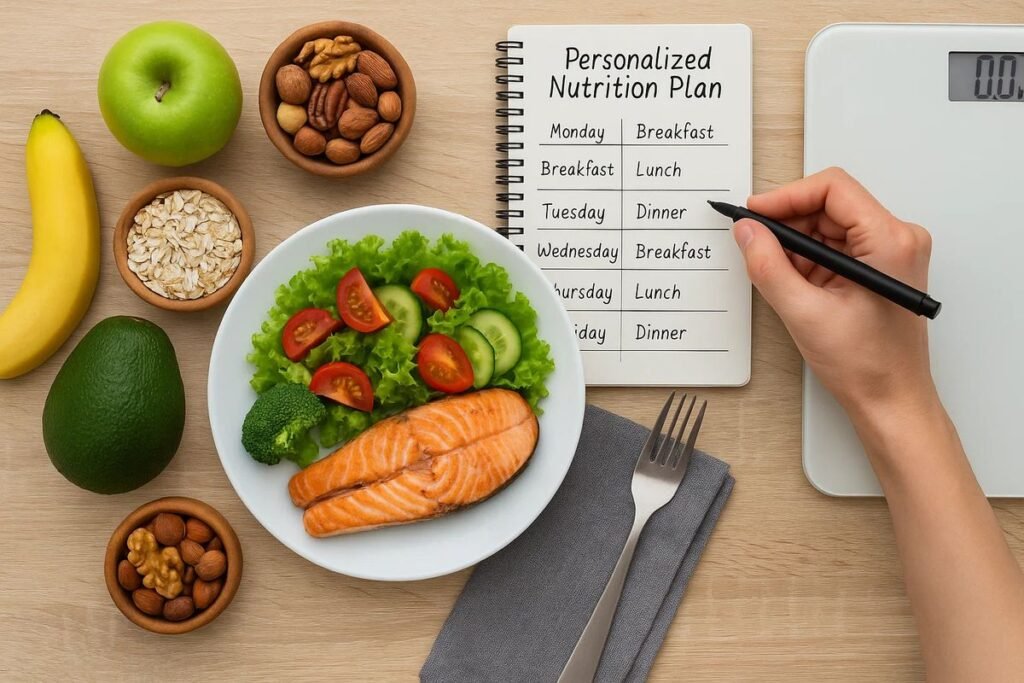
Week one: audit what you’re eating without changing anything. Just track it. Most people are genuinely surprised by how little protein they’re eating, how many calories are coming from drinks they barely register, or how often they’re eating out of convenience rather than hunger.
Week two: build a breakfast you’ll eat consistently. High in protein, easy to prepare. Eggs on toast with Greek yoghurt on the side. Oats with a scoop of protein powder. Something that takes five minutes and delivers 30 to 40 grams of protein before 9am. That’s it. That’s the only job for week two.
Week three: address the one meal that most often derails things. For most people in office or hybrid work environments, it’s lunch. Convenience usually wins over quality at midday. Preparing two or three lunch options in advance removes the decision point entirely, and good decisions become the easy ones by default.
Week four: add one thing rather than cutting more. A handful of vegetables at dinner. A piece of fruit in the afternoon. A glass of water before every meal. Addition feels better than restriction psychologically, and the habit sustains longer because it doesn’t come with a sense of loss attached.
By the end of that month, nothing dramatic will have happened. You’ll probably have steadier energy, sleep slightly better, and notice that your hunger is more predictable and easier to manage. The goal isn’t a transformation in thirty days. It’s a structure that can actually last, and the smart eating updates section at fitnessupdates.org is a useful ongoing resource as you build out each of those weekly habits in more detail.
FAQs
Do I have to cut out carbohydrates to start eating clean? No. Cutting carbs isn’t what makes a diet clean in any meaningful nutritional sense. The quality and type of carbohydrate matters more than the amount. Oats, sweet potatoes, rice, legumes, and fruit appear consistently in the diets of healthy, lean individuals across virtually every nutrition research database. What most people actually benefit from reducing is refined sugar and highly processed carbohydrates, not carbohydrates as a category.
How long before I notice any real changes? Most people feel some difference in energy and digestion within three to four weeks of consistent changes. Visible body composition shifts take longer, typically eight to twelve weeks of consistent effort before changes become clearly apparent. Anyone promising dramatic results in ten days is selling something, and what they’re selling rarely survives contact with real life.
Can I still eat at restaurants and do well nutritionally? Absolutely. The key is having a loose framework for eating out rather than treating it as a free-for-all or a full deviation from your habits. Anchor the meal around protein, choose vegetables where possible as the side, and don’t stress the rest. One restaurant meal in a week of otherwise solid eating changes very little in the grand scheme.
Is eating whole food significantly more expensive? It can be, if you’re comparing premium grass-fed fillet steak to a bag of crisps. But that comparison is rarely what people are actually making. Eggs, tinned fish, legumes, frozen vegetables, oats, and Greek yoghurt are among the most cost-effective foods in any supermarket. A diet built primarily around those things is not expensive. A diet built around premium health products, branded supplements, and exclusively organic everything — that gets expensive quickly.
I feel fine eating the way I currently eat. Why would I change anything? Feeling fine and being metabolically healthy are related but not the same thing. Insulin resistance, low-grade systemic inflammation, and suboptimal micronutrient status can be present for years without producing noticeable symptoms. How you feel is useful data, but it’s not the complete picture. Energy patterns over time, sleep quality, body composition trends, and markers like fasting glucose and triglycerides give a more accurate view of where things actually stand.
The shift from wanting to eat better to actually eating better is mostly a design problem. People build habits that can’t survive contact with real life — the stressful week, the travel, the social dinner — and then interpret the collapse as a personal failing rather than a system design flaw. Starting slower and more forgivingly than you think you need to is almost always the right call.
The bodies and health markers I’ve seen genuinely change over the long term belong to people who got consistent. Not perfect.
For a broader look at how these nutrition changes fit into an overall fitness and lifestyle approach, the Nutrition & Diet section at fitnessupdates.org is a good place to keep returning to as your habits develop and your understanding deepens.