Are Pickleball and Hyrox Here to Stay?
A question came up on our LIFTS podcast while I was sitting across from George Crook of HYROX Training Zones. We were deep into a conversation about the rise of competitive fitness, and at some point someone asked what actually separates a genuine movement from a well-marketed spike of interest. It sounds like a simple question. It is not.
I have been watching fitness trends for close to 28 years from a fairly specific vantage point. When you co-found a company that designs and equips training spaces for gyms across 80 countries, you start to notice patterns before they reach mainstream press. You also see plenty of things that looked like trends and went quiet by year three. CrossFit had its peak and plateau. SoulCycle changed urban fitness culture and then hit a wall. Zumba filled classes for a decade and then quietly faded from most studio timetables.
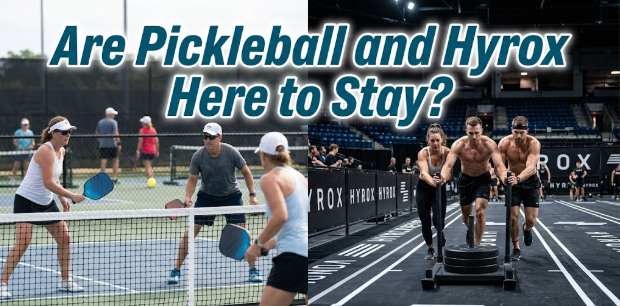
Pickleball and Hyrox are the two names I keep hearing now. Not just at industry events, but from gym owners, personal trainers, and people who have nothing to do with the fitness industry professionally but have suddenly started showing up to courts and starting lines for the first time in years.
That matters. But “people are excited about it” is not the same as “it will last.” So let me actually walk through both.
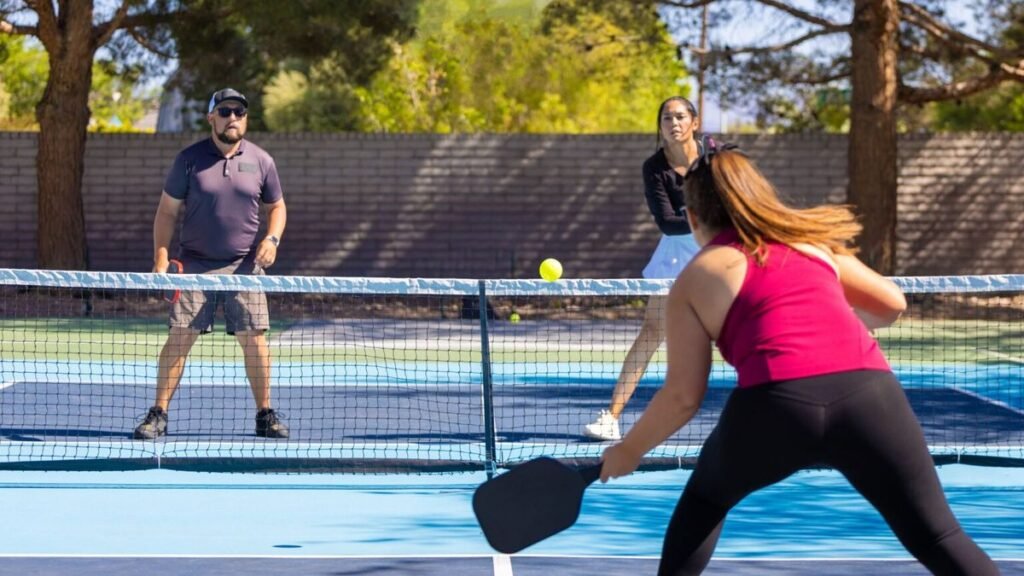
1. What Pickleball Has Actually Built
The numbers first, because they are genuinely striking.
According to the Sports and Fitness Industry Association, 24.3 million Americans played pickleball in 2025, representing a 171.8% increase over three years. The average player age has dropped from 41 in 2020 to 34.8 now. The 25-to-34 age group is currently the single largest demographic in the sport. The “retirement pastime” label that once attached itself to pickleball is simply wrong at this point, the data does not support it.
In July 2023, monthly pickleball participants surpassed monthly tennis participants in the United States for the first time. That crossover felt significant at the time. It looks even more significant now.
What interests me more than raw participation numbers is the infrastructure story. Over 82,600 dedicated courts now exist across the US, with more than 14,000 added in 2024 alone. Pickleball-only clubs and social venues are opening in suburban and urban markets simultaneously. Private investment crossed $225 million in May 2026 when Apollo Sports Capital led a major round into Pickleball Inc., which operates the PPA Tour and Major League Pickleball. When private equity commits nine figures to a sport, they have already concluded the business model is real, not speculative.
And that is what separates pickleball from, say, paddleboarding or indoor cycling at its peak. It has built actual physical infrastructure, professional leagues, television contracts with ESPN and CBS, and a demographic base that spans multiple age groups simultaneously. A 62-year-old and a 27-year-old can be on the same court, genuinely competing, enjoying the same game. That is a rare structural quality.
The social dimension also deserves more credit than it usually receives. If you are paying attention to what actually drives long-term exercise adherence, which I would encourage anyone tracking their fitness to look at, community consistently sits near the top of the list. You can read more about how steady exercise habits form over time and why social context tends to be the deciding factor for most people. Pickleball delivers that in a way that a treadmill never will. People show up because they are meeting someone. That is a fundamentally different retention mechanism.
The honest counterpoint: pickleball is primarily a recreational activity, not a structured fitness regimen. It gets people moving, which matters significantly. But it is not going to replace a periodised training plan for someone with specific body composition or performance goals. Both things can be true.
2. What Hyrox Has Actually Built
Hyrox began in Hamburg in 2017 with 650 people in a convention hall. For the 2025-26 season, over 1.5 million athletes competed across more than 100 events in 30-plus countries. London’s race held a ballot for 16,000 slots after receiving over 70,000 applications. New York sold out in 40 minutes.
Those are not trend numbers. Those are sport numbers.
The format is deliberate: eight one-kilometre runs, each followed by a functional workout station, sled pushes, rowing, wall balls, farmer’s carries, burpee broad jumps. Every race globally uses the identical structure, meaning you can compare your finishing time in Chicago directly against someone’s in Berlin. That standardisation gives the sport a competitive credibility that obstacle races like Tough Mudder could never quite achieve. It also builds a training culture, people spend months preparing for a specific measurable outcome, and that changes how they show up at the gym every week.
Revenue reportedly reached around £140 million in 2025, up from roughly £40 million the year before. The affiliated gym network grew from 2,500 partner facilities in early 2024 to over 8,500 by mid-2025. Orangetheory, F45, Gold’s Gym, and Peloton are now embedding Hyrox programming into mainstream offerings. Puma, Red Bull, and BYD are among the brand sponsors. This is well past boutique status.
What I pay close attention to at Escape Fitness, because it shapes how we think about equipment and space design, is whether a format generates consistent daily training behavior rather than just event-day excitement. Hyrox has invested specifically in this. Their stated goal is for their training to sit inside every fitness facility the way a HIIT class already does. The affiliate network growth suggests that strategy is working. It is worth knowing what high-intensity training actually does to your body over time before committing to a multi-month prep cycle, especially for first-timers.
The CrossFit comparison is worth making directly. One reason CrossFit plateaued, and it did plateau despite its genuine impact on functional fitness culture, is that its technical complexity created a ceiling on accessibility. Olympic weightlifting movements and gymnastics skills require coaching investment most casual gym-goers are not willing or able to make. Hyrox specifically avoided that trap. If you can push a sled and use a rowing machine, you have the skills to train for Hyrox. That difference in barrier to entry is enormous when you are trying to build a global mass-participation sport.
I will also say this: I have noticed in conversations at fitness industry events, and on fitnessupdates.org this theme comes up consistently, that people underestimate how much of Hyrox’s growth is being driven by operators rather than just participants. Gyms are actively building communities around Hyrox prep. That bottom-up club adoption is a much stickier growth mechanism than consumer marketing alone.

3. Where Most People Get This Wrong
The most common mistake I see is framing pickleball and Hyrox as rivals competing for the same person.
They are not.
They serve different needs, different fitness personalities, and often different life stages. Pickleball’s core growth is being driven by people who want social activity, light to moderate movement, and community. A significant number of these players have not exercised consistently in years. Pickleball is their re-entry point. That is valuable, and I want to be clear about that. Getting a previously sedentary adult moving several times a week, even in a relatively light physical activity, has real health benefits. You can find a solid breakdown of what actually happens to your body when you exercise regularly, including the systemic changes that accumulate over weeks and months.
Hyrox’s core growth is coming from people who already train consistently and are looking for a performance goal. These are gym members who needed something to train toward. The race-day experience is almost secondary to the three or four months of structured preparation leading up to it.
So when a gym owner asks me “should I invest in pickleball courts or Hyrox equipment,” they are actually asking two entirely different questions. The first is about member acquisition and community building for people who may not currently be active members. The second is about retention and performance programming for people who already are.
One thing I keep noticing, and I caught myself falling into this pattern too when I first started tracking both closely, is that people assign long-term viability based on current buzz rather than on structural foundations. Both of these formats have structural foundations that suggest staying power. Neither is built primarily on social media virality, though both benefit from it.
4. How They Compare, Side by Side
| Pickleball | Hyrox | |
|---|---|---|
| Core appeal | Social, accessible, fun | Competitive, performance-driven |
| Fitness demand | Light to moderate | High intensity, endurance-focused |
| Primary demographic | All ages, especially 25-54 | Active gym-goers, 25-45 |
| Infrastructure requirement | Court space, nets, basic equipment | Sled tracks, rowers, ski ergs, turf |
| Community structure | Casual drop-in, social leagues | Race prep groups, affiliated gyms |
| Revenue model for facilities | Court fees, memberships, F&B | Class fees, PT add-ons, memberships |
| Barrier to entry | Very low, beginner-friendly | Low, but base fitness helps |
| Long-term trajectory | Continuing mainstream expansion | Becoming an established global sport |
Neither format suits every facility or every market. A gym serving a younger, performance-oriented urban demographic is a different conversation than a community recreation center in a mid-sized city. The table above is not a verdict, it is a tool for honest self-assessment about where your members actually are right now.
5. The Honest Answer, and What Actually Determines Staying Power
Both are here to stay. But the reason has less to do with the formats themselves than with what they represent.
The fitness industry has spent decades selling health outcomes: lose weight, get fit, live longer. That messaging has worked for a specific segment of the population and left a large majority largely uninterested. What pickleball and Hyrox have both figured out, through completely different routes, is that outcomes matter less to most people than experience and community.
Pickleball gives people a reason to show up that has nothing to do with burning calories. Hyrox gives people a goal that is specific, measurable, and achievable without elite athleticism. Both create communities that people actively want to return to. That is a durable model, and it is genuinely different from the subscription-gym model that still dominates most commercial fitness thinking.
One thing that fitnessupdates.org covers often and I agree with: the biggest predictor of whether someone sticks to any exercise format is whether they feel like they belong in it. Both of these sports have got that right. Pickleball’s inclusive social culture and Hyrox’s welcoming event atmosphere serve the same psychological function, even though the physical experience looks completely different.
From where I sit, having watched this industry through every trend cycle since the late 1990s, what we are seeing with these two sports right now is not a peak. It is an establishment phase. The hype window is closing, the real, long-term growth is only getting started.
FAQs
Can I train for Hyrox even if I am not already very fit?
Yes, but you need an honest starting point. The format uses movements most gym-goers already know: rowing, lunges, sled work, wall balls. The approach is to build a base of aerobic conditioning and functional strength across several months before your first race. Most Hyrox affiliated gyms run beginner prep programs specifically for this. If you are new to structured training entirely, building a basic exercise foundation first is sensible before you commit to event prep. It is also worth reading up on what a home workout foundation looks like if you are starting from scratch before going anywhere near a sled.
Is pickleball actually good exercise, or mostly a social activity?
The honest answer is: it depends on how you play. Casual doubles will raise your heart rate moderately, roughly comparable to a sustained brisk walk with periodic bursts of effort. Competitive singles at a higher level is genuinely demanding. Research shows that regular pickleball play improves cardiovascular health markers, balance, and coordination, particularly in adults over 50. It is not a substitute for strength training or high-intensity conditioning, but as a recreational activity with strong health benefits and exceptionally high adherence rates, it more than earns its place in a weekly routine.
Are gyms actually making money from Hyrox programming?
Yes, when they approach it properly. Gyms that integrate Hyrox prep into structured class formats and multi-week training cycles report stronger retention among the members who engage with it. Revenue comes through class fees, personal training upsells, and in some cases branded merchandise. The upfront cost is in equipment: sled tracks, ski ergs, rowers, and open turf space. That is not a trivial investment. But the affiliated gym network growing from 2,500 to over 8,500 in a single year reflects an industry verdict that the economics work.
Who is actually playing pickleball now? Is it still mainly older adults?
No, that demographic picture is significantly out of date. According to SFIA’s 2025 data, the average player age is 34.8 years old. Adults aged 25 to 34 represent the single largest segment of the player base. Older adults still participate in meaningful numbers, roughly 15% of all players are 65 or above, but the sport has genuinely broadened across age groups. The demographic profile now looks less like a retirement community and more like a cross-section of the general active adult population.
Can you train for Hyrox and play pickleball in the same week without one hurting the other?
Practically, yes, and the two can actually complement each other well. Hyrox prep loads your aerobic system and functional strength heavily. Pickleball demands lateral movement, reaction time, and coordination, but at lower intensity. Placing pickleball on lighter recovery days while reserving serious Hyrox prep work for dedicated training sessions makes sense structurally. The main consideration is managing cumulative fatigue: if you are in a heavy Hyrox prep block several weeks out from a race, pickleball should be played lightly rather than competitively. Recovery is the variable most people underestimate in both formats.