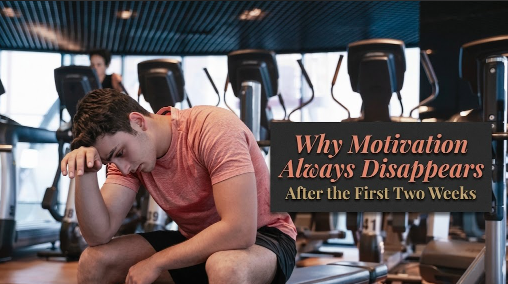
Why Doing More Workouts When Exhausted Makes Things Worse

There’s a pattern I’ve watched repeat itself across nearly three decades in this industry. Someone gets serious about their training, builds a real routine, starts seeing measurable results, and then the wheels quietly come off. Not because they stopped. Because they refused to.
They’re exhausted. Every session feels like dragging themselves through concrete. Performance has flattened, sleep is deteriorating, but they’ve convinced themselves this is just the hard part. Grit it out. That’s what progress looks like.
I believed this too, early on. The fitness industry spent a long time romanticizing exhaustion as proof that you’re doing something right. It’s a compelling story, and it caused genuine damage to a lot of people who trusted it.
- The Wrong Belief That Keeps People Stuck
The core misconception is this: that training effort compounds directly into results. That if one hard session is good, two is better, and pushing through fatigue shows mental strength rather than physical miscalculation.
But this is exactly backwards from how adaptation actually works.
Muscle is not built during training. It’s built during recovery. Training is the stimulus. Sleep, nutrition, and rest are the mechanism. When you consistently skip or compress that second half of the equation, you’re not accelerating progress. You’re canceling it.
Overreaching is a real and documented training state where accumulated fatigue temporarily outpaces the body’s capacity to recover. Managed deliberately, short-term overreaching followed by genuine recovery can produce meaningful adaptation gains. Sports scientists and coaches sometimes call this functional overreaching, and it’s a legitimate training tool when applied with intention. The problem comes when the fatigue compounds and recovery stays inadequate. At that stage, it transitions into non-functional overreaching, and eventually into overtraining syndrome. Performance doesn’t plateau. It regresses. The body starts breaking itself down faster than it can rebuild.
And the person inside that cycle almost never recognizes it. Because they’re still showing up.

- What Exhaustion Is Actually Doing to Your Body
When you’re running on genuine systemic fatigue, not the satisfying ache after a productive session but real deep tiredness, specific things are happening physiologically that make more training a poor decision.
Cortisol rises and stays elevated. Sustained high cortisol suppresses testosterone and growth hormone production, both of which are essential to tissue repair and muscle maintenance. Immune function drops, which is why overtrained athletes get sick more frequently and seem to catch everything going around. Sleep quality deteriorates even while fatigue deepens, because cortisol dysregulation interferes directly with the onset of slow-wave sleep stages, the stages where most physical recovery actually occurs.
The central nervous system is affected too. Neural drive, which is the signal strength from your brain to your muscles, gets blunted. Reaction time slows. Coordination suffers. Your capacity to recruit muscle fibers at maximum effort diminishes, and the injury risk rises considerably. A fatigued athlete moving under significant load, with reduced coordination and slower reaction time, is operating on much thinner margins.
The body is telling you something. Most people hear it. They just choose not to act on it.
- Reading the Signals Correctly
Here’s a plain-text reference guide to help distinguish where you actually are. These aren’t clinical diagnostic criteria, but they reflect patterns I’ve seen consistently across training populations at every level:
QUICK-REFERENCE: PRODUCTIVE FATIGUE VS. ACCUMULATED OVERTRAINING
| Signal | Productive Fatigue | Accumulated Overtraining |
|---|---|---|
| Morning resting heart rate | Normal or 2-3 bpm elevated | 7+ bpm above baseline, sustained |
| Motivation to train | Present, maybe reduced | Absent or actively dreaded |
| Sleep quality | Slightly disrupted | Consistently poor for weeks |
| Performance trend | Temporarily flat | Declining week over week |
| Mood | Normal range | Irritable, flat, or anxious |
| Appetite | Slightly increased | Suppressed or erratic |
| Soreness recovery | 24-48 hours | 72+ hours, doesn’t fully clear |
| Enjoyment of training | Low but present | Completely gone |
| Pay attention to that resting heart rate row. It’s one of the most reliable self-monitored indicators you have without any lab work. A consistent elevation of seven or more beats above your established baseline, on multiple consecutive mornings, is a signal worth taking seriously. A lot of serious athletes and coaches track this metric daily for exactly that reason. | ||
| And the motivation indicator matters more than most people acknowledge. There’s a real physiological difference between “I don’t feel like going today” and “I cannot make myself care about this anymore.” The second one is not a character flaw. It’s a hormonal and nervous system signal. Treating it like laziness and pushing through it anyway tends to make things worse faster. |
- Where the Most Committed People Go Wrong
The athletes and gym-goers who suffer most from this pattern aren’t the undisciplined ones. They’re the most dedicated. The ones who trained through exam periods, through relationship stress, through four hours of sleep and red-eye flights, and built an entire identity around never quitting. That resilience is real and it matters. But resilience applied in the wrong direction is still a mistake.
The error is in conflating discomfort with productive damage. Good training involves discomfort, that’s not negotiable. But there’s a threshold past which what the body is expressing isn’t a training response anymore. It’s a load management failure.
A lot of what gets labeled as a mental barrier in fitness is actually a physiological one wearing a different costume. And the distinction matters enormously, because the response to a genuine mental barrier is to push through it. The response to physiological overload is the exact opposite.
I should say, and this is maybe a slight detour from the main point but it matters, that this pattern is not unique to high-volume athletes. I’ve seen it just as often in people training four days a week with moderate volume, where the exhaustion is coming from everything outside the gym rather than the sessions themselves. Work pressure, chronic stress, inadequate sleep compounding over months. The training load might be reasonable in isolation but it isn’t isolated. The body doesn’t separate stress by category.
If performance has dropped for three or more consecutive weeks without an obvious explanation, if sleep is poor despite feeling chronically tired, if irritability feels uncharacteristic, those are not signs to add another training day. They’re signs to change the input entirely. The volume of evidence on this from sleep and recovery research is substantial, and the content on 12 Essential Sleep Health Updates for Deep Rest covers a lot of that ground clearly.
- Training Around Exhaustion Without Losing Progress
The question I hear most often isn’t “should I train when I’m exhausted?” but “what do I do instead?” That’s the right question.
There’s a meaningful difference between stopping entirely and modifying intelligently. Deload weeks are structured for a reason. Dropping volume by roughly 40 to 50 percent while maintaining or only slightly reducing intensity allows the nervous system to recover without losing the habit or the conditioning you’ve built. This isn’t a rest week. It’s active recovery with a specific purpose.
Zone 2 aerobic work, which is low-intensity cardio where you can hold a full conversation without effort, is genuinely useful during a recovery phase. It keeps blood moving through tissues, supports parasympathetic nervous system tone, and adds essentially no meaningful training stress. A 35-minute walk or a slow cycle doesn’t feel like training. But physiologically, it’s doing real work during a recovery window. This matters.
Nutrition is the other variable people consistently underestimate during exhausted periods. Carbohydrate availability is central to both training performance and tissue recovery. When someone is running on accumulated fatigue and simultaneously restricting carbohydrates, they’re asking the body to perform and repair with insufficient substrate. It won’t manage both. Cortisol steps in to mobilize energy instead, and that hormonal response works against recovery rather than supporting it. Protein timing and total daily intake are equally relevant here. These aren’t peripheral details. For anyone working through this practically, the foundation-level information at 10 Essential Health Updates for a Stronger Body is worth reading alongside this.
Sleep, of course, underpins all of it. Not just duration but quality. That distinction is important and something a lot of people don’t fully account for.

- The Real Cost of Getting This Wrong Repeatedly
Recovery isn’t passive. That’s worth repeating. It’s an active biological process that requires adequate sleep, appropriate nutrition, managed stress, and hydration. All four of those conditions have to be running reasonably well simultaneously for the body to rebuild effectively after hard training.
A single night of poor sleep reduces muscle protein synthesis measurably. Several consecutive nights reduces it substantially. Combine that with a calorie deficit, sustained psychological stress, and a training schedule that doesn’t account for any of it, and you can train consistently for several months while making close to zero progress, or actively losing ground.
That’s the hidden cost. Not one bad training day. A pattern of accumulated deficit that compounds quietly until something forces a stop. Usually that’s injury, illness, or a motivational collapse that the person mistakes for losing their drive.
Over the years on the Escape Your Limits podcast, the performance coaches, sports scientists, and practitioners I’ve spoken with have come back to a consistent theme: most recreational athletes would progress faster on less total volume, trained with higher quality, with real recovery treated as a structural part of the plan rather than something slotted in when convenient.
The body adapts when you give it the conditions to adapt. Consistently push past those conditions, and it stops adapting. It starts coping. And the plateau that comes from coping is the hardest one to get out of, because the instinct when progress stalls is always to add more. More sessions, more intensity, more hours. When what the situation actually requires is the opposite.
If you want a broader look at managing energy and output across the full week rather than session by session, the practical breakdown at 7 Powerful Health Updates to Boost Energy Fast addresses several of the daily-level factors that people consistently overlook.
Take the data your body is giving you seriously. It’s being straight with you even when your schedule isn’t willing to be.
Frequently Asked Questions
How long does it take to recover from overtraining syndrome, and is there any way to speed it up?
Recovery from established overtraining syndrome typically ranges from a few weeks to several months, depending on how long the state persisted and how consistently recovery conditions are managed. Mild non-functional overreaching often resolves within two to three weeks of genuine load reduction. True overtraining syndrome with measurable hormonal disruption and immune suppression requires longer, and pushing back into training too soon tends to restart the timeline. There isn’t a shortcut here. Sleep quality, caloric adequacy, and significant reduction of psychological stressors are the primary variables that actually accelerate it.
Is soreness a reliable indicator of how hard I trained or how fatigued I am?
Soreness alone is a poor indicator of either. Delayed onset muscle soreness is a normal training response and typically resolves within 48 to 72 hours under normal recovery conditions. What’s more telling is soreness that persists beyond that window consistently, soreness that doesn’t respond to movement or mobility work, or sessions where muscles feel flat and unresponsive rather than just tired. Resting heart rate, sustained mood changes, and performance trajectory over two to three weeks are far more reliable indicators of where you actually are.
Is it better to train lightly when exhausted or take complete rest?
For most people in most situations, structured light activity produces better outcomes than complete rest during periods of accumulated fatigue, provided there’s no underlying illness or injury. Easy walking, gentle cycling, mobility work, and similar activities maintain blood flow, support mood through gentle movement, and keep the routine intact without adding meaningful recovery debt. Complete rest is sometimes necessary, but it can also extend the psychological flatness that comes with overtraining. If you want practical approaches to managing daily energy output and keeping activity sustainable through exhausted periods, the guidance at 5 Smart Health Updates to Improve Daily Wellness gives a useful framework.
Why does my strength seem to drop even when I’ve had a few days off?
The subjective sense of feeling rested doesn’t always correlate with actual physiological recovery, particularly when cortisol levels remain elevated. Sleep quality, not just duration, plays a major role here. Someone sleeping eight hours with disrupted sleep architecture may feel subjectively rested but have had very limited slow-wave sleep, which is where most physical repair and hormonal restoration happen. If performance stays suppressed despite several days off, sleep quality is usually the first variable worth examining closely.
When should I see a doctor rather than just managing this myself?
If exhaustion has persisted for more than four to six weeks despite reducing training volume and actively managing sleep, nutrition, and overall stress, a medical conversation is worth having. Persistent fatigue can have thyroid dysfunction, iron deficiency, or hormonal components that have nothing to do with training load, and training harder into those conditions makes them significantly worse. Basic blood work covering ferritin, thyroid-stimulating hormone, and testosterone baselines is a reasonable starting point. It gives you actual numbers to work with rather than guesswork, and the cost of that information is far lower than the cost of continuing in the wrong direction for another six months.
The conversation about effort and discipline matters. It’s part of any serious approach to fitness. But it’s an incomplete conversation without equal attention to recovery, and for too long the industry has treated recovery as optional rather than structural.
At fitnessupdates.org, the aim is always to give people the full picture rather than the half that happens to be more motivating. Your training should be demanding. Your recovery should be treated with the same seriousness. When both sides of that are working, progress is consistent and sustainable. When only one side is running properly, you’re not training. You’re just wearing yourself out.