Building a Fitness Habit When Life Keeps Getting in the Way

Nobody’s life was designed with fitness in mind.
There’s no calendar event labelled “exercise window.” Your boss doesn’t schedule board calls around your recovery. Your kids’ school play doesn’t check your training block before picking a Thursday evening. After 28 years in this industry, the one thing I can say with complete certainty is this: the people who build lasting fitness habits aren’t the ones who found more time. They’re the ones who stopped waiting for it.
That distinction matters more than any training protocol I’ve ever seen.
- Why Consistency Breaks Down Before Motivation Does
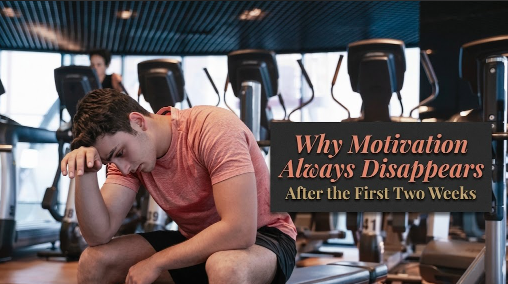
Motivation gets blamed for everything. But most people don’t quit because they stopped wanting results. They quit because their plan was built on assumptions that life dismantled within the first two weeks.
Think about what the typical fresh start looks like. Six sessions a week, home by six, meals prepped Sunday afternoon, in bed by ten. Week one works fine because nothing has gone wrong yet. Then a deadline lands. Or a child gets sick. Or a flight gets pushed to Monday morning. One session gets skipped, then two, and suddenly the whole thing collapses as if the skipped session was some kind of verdict.
Behavioral researchers call this “all-or-nothing thinking,” and it’s far more destructive than poor programming. The person isn’t failing to follow through. They’re following a system that was never designed to handle disruption. And life is, almost entirely, disruption.
This is fixable. It doesn’t require a personality overhaul or a productivity course. It requires a different kind of plan.

- What Actually Makes a Habit Lock In
Habits form through repetition in a consistent context. This isn’t a pep talk. It’s what the behavioral science says, and it’s worth taking seriously rather than skimming past.
Neuroscientist David Eagleman has written extensively about how the brain automates repeated behaviors that are tied to specific environmental cues. Over time, the behavior stops being a decision and becomes a default. You don’t deliberate about brushing your teeth. You do it because the cue (bathroom, morning, toothbrush in your hand) fires automatically and the behavior follows without negotiation.
The problem with fitness is that training programs are designed to be varied and progressive, which is what good programming should be but it doesn’t naturally lend itself to habit formation. Every session is different. Intensity fluctuates. Exercises rotate.
What doesn’t have to fluctuate is the anchor. The time of day. The location. The brief routine that happens before you train. These environmental cues are what move a behavior from decision-territory into automatic-territory. A person who does a 30-minute resistance session every Monday, Wednesday, and Friday at 6:30am for five months doesn’t think about whether to go on those mornings. The cue fires and the body follows.
The thread that runs consistently through the stronger content on fitnessupdates.org about energy and daily wellness is exactly this: behaviors that stick aren’t built on inspiration. They’re built on consistency of context. Same time, same place, same brief ritual before you start.
When you’re building a workout schedule, anchor it to specific days and a fixed time. Even if the session is short. You’re not just building conditioning. You’re building the cue.
- The Transformation-Mode Trap (Here’s Where Most People Go Wrong)
This is the mistake I’ve watched kill more fitness habits than any other.
People start fresh and treat that fresh start as an opportunity to change everything at once. New shoes, new meal plan, new sleep schedule, new mindset. The ambition is completely real and it isn’t the problem. The problem is that every behavior added to the stack increases the total friction. And friction, more than anything else, determines whether a habit survives a bad week.
The principle is simple: a behavior with very high friction gets done when motivation is high. A behavior with very low friction gets done even when motivation is low. You want your training to survive the low-motivation days, because those are the days that actually cement the habit.
This means your starting point should feel underwhelming.
Not four sessions a week for 45 minutes. Two sessions, 25 minutes each, at times you know you can protect most weeks. The goal for the first two months isn’t to transform your body. The goal is to still be training at month four, because month four is where real adaptation accumulates.
I’ve spoken to people on the Escape Your Limits podcast who’ve been training consistently for 15 or 20 years, and not one of them credits early intensity as the foundation. Every single version of that story describes something closer to: “I just kept showing up, even when the sessions were short and I didn’t feel ready.” That pattern, repeated enough times, becomes your identity.
- Building a Week That Actually Holds
Here’s what a sustainable starting framework looks like in real conditions, not ideal ones.
Minimum Viable Fitness Week
DaySession TypeDurationKey PrincipleMondayStrength / resistance25–30 minAnchor day. Same time, every week.WednesdayMovement / cardio20–25 minShorter session, easier to protect.FridayStrength / resistance25–30 minMirror of Monday. Repeat the anchor.WeekendActive rest or bonusOptionalWalk, stretch, play. Not mandatory.
The total committed training time across the week is around 75–90 minutes. That’s achievable for most people, most weeks. The sessions are short enough to happen even on difficult days. And the structure has only three fixed points, which means two days can absorb whatever life brings without touching the plan at all.
For the 25-minute strength sessions, keep the exercise selection simple and compound: squats, hip hinges, presses, rows, carries. You don’t need variety in the first three months. You need repetition of pattern. The home workout resources that produce consistent results aren’t complicated. They’re fundamental movements done with enough regularity to produce real adaptation.
The mistake people make is rotating exercises too quickly. A person who does the same three or four compound movements across eight weeks of consistent training will outperform, in strength and movement quality, a person who followed a different workout every session. Consistency of movement pattern builds motor learning. Motor learning builds confidence. And confidence is what keeps people coming back.
Protect the anchor days. Not at the expense of everything else in your life, but as the default. If Monday gets disrupted, reschedule to Tuesday. Don’t cancel. The week isn’t lost because an anchor shifts. It’s only lost if the session disappears entirely.

- After the Collapse: Restarting Without Drama
At some point, the routine will break. A holiday. An illness that lasts two weeks. A work project that takes over your evenings for a month. This is not evidence that you lack discipline. This is what a full life looks like.
The response to the collapse, and not the collapse itself, determines whether you have a lasting fitness habit.
What I consistently observe in people who train for years, decade after decade, is not that they never fall off. They fall off regularly. What separates them is how fast they restart, and how small they’re willing to go in order to do it. Someone who fell off for three weeks and comes back with a single 20-minute session on a Wednesday afternoon is not failing. They’re resetting the cue. They’re trusting that consistency is a skill that returns faster than fitness does.
And it does. Muscle memory is a real physiological mechanism, not a metaphor. Satellite cells in trained muscle retain additional myonuclei acquired through training, even after months of detraining. When training resumes, strength and muscle return considerably faster than they were first built. A three-week break doesn’t erase eight months of work.
The people who tie their identity to never missing a session are, somewhat paradoxically, the ones most likely to quit permanently after the first major disruption. The break becomes an identity threat rather than a scheduling reality. The more durable way to think about it: training is something you do, not a streak you’re maintaining.
One thing that rarely gets enough attention in fitness content: the stress-sleep-recovery triangle. A body under sustained stress, with poor sleep, recovers more slowly, performs worse, and makes training feel harder than it should. Managing the full system matters. If you’re going through a demanding period, it’s worth reading through what fitnessupdates.org covers on both stress and lifestyle management and the sleep side of recovery, because the difference between progress and stagnation often lives there.
Frequently Asked Questions
How long does it actually take to build a real fitness habit?
The 21-day figure is not supported by the research. A 2010 study by Phillippa Lally and colleagues, published in the European Journal of Social Psychology, found that habit formation took anywhere from 18 to 254 days depending on the behavior and the individual, with an average around 66 days. For physical training, which carries more cognitive and physical friction than most habits, assume three months before sessions start to feel automatic. That’s three months of consistent repetition in a consistent context, not three months of willpower.
Is working out twice a week actually enough?
Yes, particularly in the first year of training. Frequency is less decisive than most people assume at the early stages, because the body responds to novel stimuli quickly and doesn’t require high volume to adapt. Two well-structured resistance sessions per week, done consistently over six months, produce meaningful improvements in strength, body composition, and metabolic health. Three sessions is better than two. But two is substantially better than zero, and far more sustainable for most people with full-time schedules.
My problem isn’t starting. It’s weeks three and four where I always fall off. What’s actually happening?
This is extremely common and it has a specific name in behavioral research: the motivation dip. The early weeks are fueled by novelty and the anticipatory reward of expected results. Around weeks three to five, the novelty fades, visible changes haven’t yet arrived, and the friction of maintenance becomes the dominant experience. The solution isn’t to find new motivation. It’s to reduce friction so low that sessions happen even when you don’t want to be there. Shorter sessions, simpler programming, fixed times, same location. Make the default behavior as easy as possible.
Should I track my workouts, or does logging everything make it feel too much like a job?
This depends entirely on how you respond to data. For people who find visible progress motivating, a simple training log, even just a notes app on your phone, is genuinely useful. It shows you’ve done the work even on weeks that felt unproductive. For people who become anxious or perfectionistic around tracking, logging can increase the mental load enough to backfire. Know yourself before committing to a system. If the log becomes a source of guilt rather than confidence, drop it without guilt.
What do I do when I have only 10 or 15 minutes?
Do the 10 or 15 minutes. This sounds glib but it’s one of the most practically important points in habit formation. The value of a short session isn’t primarily the physical stimulus. It’s the behavioral reinforcement. A 12-minute session on a chaotic evening keeps the cue-routine loop intact. It keeps your self-image as someone who trains intact. Four consecutive weeks of nothing don’t get repaired by one long Sunday session. But four consistent short sessions do more than people expect, both physically and psychologically.
Building a fitness habit when life keeps getting in the way isn’t, ultimately, about discipline or willpower or finding the right program at the right moment. It’s about designing a system small enough to survive the weeks that don’t cooperate, and then trusting that small enough, repeated consistently enough, builds into something that actually holds.
That takes longer than the fitness industry tends to advertise. But it’s the only version that works.