
Why Your Body Gets Sore After the First Workout

A client called me on a Thursday morning, probably twenty years ago now, in what I can only describe as genuine alarm. She’d done her first proper session on the Tuesday, felt completely fine on Wednesday, then woke up Thursday morning unable to descend a flight of stairs without audibly expressing her displeasure. She thought she’d torn something. “Matthew,” she said, “I think the gym broke me.”
I told her she wasn’t broken. What she was experiencing had a name, a mechanism, and a very predictable recovery timeline. And the panic she felt, that particular combination of confusion and betrayal your body seems to dish out after a first workout, is one of the most reliably common experiences I’ve seen across twenty-eight years in this industry.
So let me explain what’s actually going on, because most of the things people believe about post-workout soreness are either partially wrong or completely backwards.
1. The Lactic Acid Myth and What Actually Causes the Soreness
Ask ten people on a gym floor why they’re sore and nine of them will say lactic acid. It’s the default explanation. You work hard, things burn, the burn must be the cause of the pain you feel two days later.
But lactate, which is the more accurate term, clears from your muscle tissue within roughly an hour of finishing exercise. It’s gone long before the soreness arrives. So whatever is happening when you wake up stiff on day two, lactic acid is not the culprit.
The actual cause is structural.
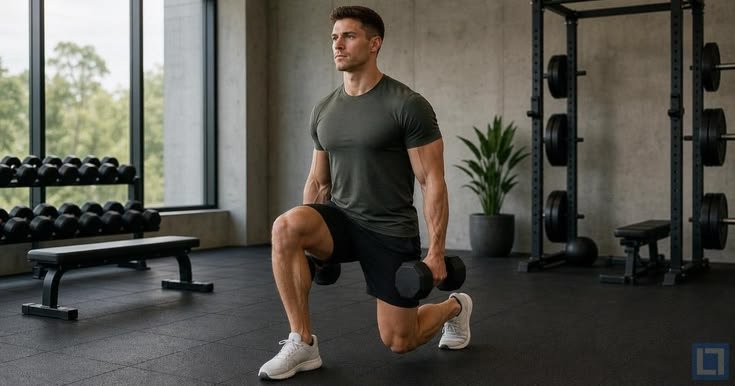
When you perform movements your muscles haven’t been trained for, especially ones that require the muscle to lengthen under load, things like squatting down, lowering yourself onto a chair slowly, walking downhill, you create microscopic damage to the muscle fibers themselves. Not injury. Just mechanical stress that the tissue wasn’t conditioned to handle.
Your body responds the way it responds to any tissue damage: inflammation. White blood cells move in, prostaglandins and cytokines are released, nerve endings that detect tissue stress start firing. That entire process takes time to build, which is why the soreness peaks not immediately after the session but somewhere between twenty-four and seventy-two hours later.
The clinical term is Delayed Onset Muscle Soreness. DOMS. The delay is the key feature, and it’s also the reason so many people misread it. You feel fine leaving the gym. Then you feel fine the next morning. Then the second morning arrives and you can’t lift your arms above your head.
That delay isn’t a sign something went wrong. It’s the expected timeline of the inflammatory repair process.
2. Why the First Session Hits Hardest
There’s a well-documented phenomenon in exercise science called the “repeated bout effect.” The short version: the second time you perform a novel workout, you experience significantly less soreness than the first time. The third time, less still. By the fourth session with the same movement pattern, most people report almost no DOMS.
This isn’t coincidence and it isn’t just fitness improving.
The first time your body performs an unfamiliar movement, your motor unit recruitment is inefficient. The neural pathways controlling that movement pattern haven’t been optimised yet, so certain muscle fibers end up absorbing disproportionate stress. The connective tissue around those fibers hasn’t adapted either. There are no protective structural changes in place because the body had no reason to build them yet.
After the first exposure, the body adapts rapidly. Not just the muscle tissue, but the neuromuscular coordination, the connective tissue, the whole system. The second session asks less of an unprepared structure, so the damage is less, the inflammation is less, and the soreness is less.
This is something I genuinely wish every person starting out understood before they ever walked into a gym. The first few sessions are disproportionately hard relative to what training will actually feel like once the body has adapted. At fitnessupdates.org, the consistent emphasis has always been that this early adaptation phase is not a preview of how training will feel permanently. It’s a very specific biological tax on novelty.
Most people quit right here. Not because they can’t train, but because they interpret the soreness as evidence that their body isn’t suited to exercise.
DOMS Recovery: Quick-Reference Timeline
| Stage | Timeframe | What You’ll Notice |
|---|---|---|
| During exercise | 0–60 minutes | Burn and fatigue, not soreness |
| Immediately after | 0–6 hours | Mostly fine, mild fatigue |
| Soreness begins | 12–24 hours | First stiffness, especially on movement |
| Peak soreness | 24–72 hours | Tenderness, reduced range of motion |
| Tapering phase | 3–5 days | Gradual easing, functional again |
| Full resolution | 5–7 days (beginners) | Back to baseline |
The timeline extends for beginners and for sessions involving heavy eccentric loading. Experienced athletes doing familiar work often sit at the lower end of this range.
3. Where People Go Wrong Once the Soreness Sets In
The most common response to DOMS is complete rest. Stop moving, let it heal, get back to it once the pain is gone.
This is understandable but counterproductive.
Passive rest doesn’t speed up DOMS recovery in most cases. What does is low-intensity movement, the kind that increases blood flow to sore tissue without adding new mechanical stress to it. A ten-minute walk. Gentle cycling. Swimming slowly. These aren’t workouts, they’re circulation tools, and they genuinely help. Some people find specific recovery-focused movement useful for this phase, and you can find some practical low-impact options in this guide on home workout health updates that translate well to active recovery days.
The second mistake is neglecting protein in the forty-eight hours following the session. Your body is literally repairing torn muscle fiber, and it needs amino acids to do that. If your intake is low, the repair process slows. Most people, when they start training, are already under-eating protein relative to their activity demands. That gap compounds when actual tissue damage is in the picture. The nutrition science around this is worth understanding properly, and the breakdown in this piece on nutrition updates covers the relevant research well.
Third mistake, and I’ll put this partly on programming culture, is training the same muscle group again while it’s still acutely sore. There’s a strain of thinking that more frequency is always better, and sometimes that leads coaches or self-programmed athletes to load damaged tissue before it’s repaired. Muscle in an active DOMS state has reduced contractile capacity. You’re not getting maximum output from that session anyway, and you’re slowing the repair cycle by adding new damage on top of incomplete recovery.
Let it recover. Then load it again. The adaptation still happens.
4. The “No Soreness, No Progress” Problem
This belief is everywhere and it causes real harm to people’s training.
The idea is that soreness is proof the workout worked. If you’re not sore the day after, you didn’t work hard enough. I’ve heard this from personal trainers, from gym cultures, from people who genuinely believe it.
Soreness is a marker of mechanical novelty, not training quality. A well-conditioned athlete performing a session within their adaptation window might train intensely, recover excellently, and feel almost nothing the next morning. Does that mean the session failed? It does not. It means their tissue is adapted to the demands.
A complete beginner doing a mild circuit for the first time might be floored for five days. Are they making more progress than the athlete? No. They’re encountering something unfamiliar, and their body is reacting accordingly.
The useful metrics for whether training is working are performance-based. You’re lifting more load for the same reps. You’re completing the same workout with lower perceived effort. Your recovery time between sessions is shortening. You’re not getting winded by things that used to wind you. These are real signals. Soreness is, at best, a rough proxy for novelty, and it’s a terrible thing to chase.
At fitnessupdates.org, the consistent message runs counter to the “pain equals gain” framing that still dominates a lot of gym culture. Train for progress. The soreness question mostly takes care of itself.

5. Sleep Does More Work Here Than Most People Give It Credit For
This is the part that tends to surprise people, and I mention it because I’ve seen it make a concrete difference many times.
Human growth hormone, one of the primary signals involved in muscle tissue repair, is released predominantly during deep sleep. Not mostly. Predominantly. If you’re sleeping five or six hours in the days following a hard session, you’re actively shortchanging the window where your body is doing its most significant repair work.
I worked with a senior executive some years back who was training hard and recovering terribly. He was convinced the problem was his program, or his diet, or some supplement gap we hadn’t identified yet. We went through all of it. Nothing obvious. Then I asked how much he was sleeping. Five and a half hours, he said. Most nights. Maybe six if it was a good week.
We didn’t change his training plan. We prioritized sleep. Within three weeks, his recovery visibly improved. Not because we fixed anything in the gym, but because we fixed the window outside it where the real repair happens. There’s a more detailed look at how sleep affects recovery in this guide on sleep health, which is worth reading if you’re consistently under-recovered.
Training, nutrition, and sleep aren’t ranked. They’re interdependent. Pull any one of them significantly below the minimum threshold and the other two can’t fully compensate. That’s not a philosophical statement, it’s just how the physiology works.
FAQs
Does stretching before a workout prevent soreness?
Static stretching before exercise, holding a stretch for thirty seconds or more, has not been shown to meaningfully reduce DOMS. A better pre-session approach is dynamic movement that warms up the patterns you’re about to train. Gentle static stretching in the twenty-four hours after a session can ease perceived stiffness, but it won’t significantly change the DOMS timeline.
How do I know if it’s DOMS or an actual injury?
DOMS is usually bilateral (both legs, both arms, wherever you trained), it starts several hours after the session and peaks one to two days later, and it tends to ease slightly once you’ve been moving for a few minutes. An injury is typically unilateral, often presents during or immediately after the movement that caused it, and doesn’t follow the delayed pattern. Sharp, localised pain that didn’t appear gradually is worth having assessed.
Why is going down stairs so much worse than going up?
Descending stairs is an eccentric movement for the quadriceps, meaning the quad is contracting while lengthening to control the lowering motion. Eccentric contractions produce considerably more mechanical damage than concentric ones. This is the same reason Romanian deadlifts and slow-negative squats tend to produce more soreness than movements dominated by the lifting phase.
Can I train while I’m still sore?
It depends on which muscles and how sore. Moderate soreness in your upper body doesn’t mean you can’t train legs. The general principle is to avoid loading a muscle group that’s still in active DOMS with high-intensity work, but low-intensity movement involving those muscles is generally fine and often helpful. If the soreness is severe enough to affect your range of motion significantly, give it another day.
Does what I eat actually affect how sore I get?
Yes, within limits. Adequate protein supports repair. Anti-inflammatory foods, fatty fish, berries, leafy greens, don’t eliminate DOMS but may moderate the intensity of the inflammatory response somewhat. Hydration supports cellular function. None of these are dramatic interventions, but they do add up, especially when training consistently. You can find more on the exercise-nutrition connection in this guide on exercise health updates.
That client who called me in a panic on Thursday? She came in that afternoon and walked on the treadmill for fifteen minutes at a pace that barely counted as exercise. By Saturday she was close to normal. The following Tuesday she trained again, and the soreness after that second session was noticeably smaller than what she’d been through. She went on to train consistently for years afterward.
The soreness wasn’t the problem. The confusion about what the soreness meant was.