7 Bodyweight Moves That Work Without Any Equipment
A client came to me a few years ago with a very specific frustration. He was traveling three weeks out of every month, hotel rooms across different time zones, and he’d slowly stopped working out. Not because he didn’t want to. Because he’d convinced himself that without his gym, without the machines, the cable stack, the dumbbells lined up in the right order, he couldn’t really train. The equipment had become the workout. Remove the equipment, and nothing was left.
This is more common than people realise.
Nearly three decades in this industry, and I keep running into the same version of that conversation. People tie their fitness to things. A gym membership. A specific machine. A treadmill they own but never use. And when that thing isn’t available, the whole plan unravels. But your body doesn’t actually need any of it. It never did. Your bodyweight is a training tool. A serious one, when you use it properly.
Here are 7 moves I come back to consistently, the ones I’ve recommended across coaching conversations and industry discussions for years, and the ones that genuinely produce results when executed correctly.
1. The Push-Up (and Why Most People Are Getting It Wrong)
Most people learned the push-up in school and never revisited the form. Elbows flaring out wide, hips sagging toward the floor, head dropping on the way down. What should be a compound pressing movement with full-body tension becomes a shoulder strain waiting to happen.
The fix is more specific than “go straighter.” The elbows should track at roughly 45 degrees from the torso, not pointing straight to the sides. The core needs to be actively braced throughout, as if you’re holding the bottom of your ribcage down. And full range of motion matters more than any rep count you might be chasing. Half-depth push-ups are basically cardio at this point.
When someone fixes all of this, push-ups stop feeling easy almost immediately. That’s usually the signal that they’ve been doing them wrong for years. And that’s fine. There’s nothing better than a familiar exercise suddenly feeling difficult again.
If you’re looking for variations to stack on top of this, the home workout guide over at fitnessupdates.org lays out a solid progression from the standard version through to more challenging variations.

2. The Squat Pattern That Actually Challenges Your Legs
Bodyweight squats get used as warm-ups. That’s the problem. Done properly, they’re a workout.
The variable that most people skip is tempo. Three seconds on the way down, a genuine pause at the bottom, then drive back up. Four sets of 20 at that speed. And then report back to me about whether it felt easy.
The eccentric phase, the lowering, is where the muscle actually works hardest. Rushing through the descent to get to the “effort” part of the squat misses most of the training value. This applies whether you’re using a barbell or not. Slow it down, feel the quads loading, and treat the descent like the exercise rather than the setup.
3. The Plank Done with Real Tension
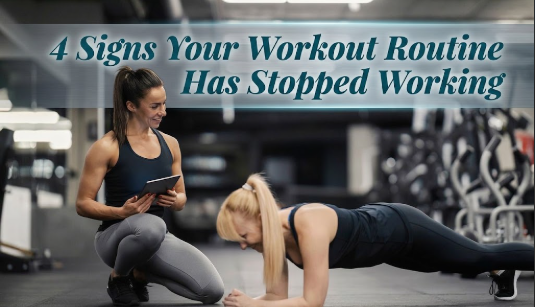
There’s the plank most people do, which involves lying facedown on the elbows and watching the clock. And then there’s the plank that’s actually difficult. These are not the same exercise.
The version that produces results requires full-body tension. Squeeze the glutes. Brace the abs hard. Contract the quads. Press the forearms into the floor actively rather than just resting on them. Think of it as a rigid hold, not a static rest. Most people who can hold a passive plank for two minutes will shake through an active one after 30 seconds.
That’s the gap where the real training lives.
4. Single-Leg Work That Almost Everyone Avoids
Pistol squats are the extreme end of this category, and I’m not starting anyone there without a foundation. But split squats using a sofa, slow step-ups onto a sturdy box or stair, or even a simple single-leg squat to a chair. All of these demand unilateral strength that bilateral exercises simply don’t develop.
The oversight in most home training is defaulting to two-legged movements because they feel familiar. Two legs down, two legs up. But almost everything physical in daily life happens on one leg. Running, walking, climbing stairs, pivoting quickly. Single-leg strength is where functional capacity actually lives.
And there’s another benefit. You’ll almost always find that one side is weaker than the other. That’s worth knowing. It’s also worth correcting before it becomes a compensation pattern that shows up somewhere else.
5. The Hip Hinge Without a Barbell
The hip hinge is probably the most undertrained pattern in bodyweight work. People know the squat, they know push-ups, they’ve heard of planks. But the hinge, that posterior chain loading that comes from driving the hips back while keeping the spine long and neutral, tends to disappear the moment the barbell isn’t there.
Without load, you can train this effectively with single-leg Romanian deadlifts. Stand on one foot, soft knee bend, and hinge at the hip while reaching forward with the opposite hand. You’re looking for a deep hamstring pull on the standing leg, not maximum forward lean. Come back to standing, slowly. The slower the better.
Building posterior chain strength is one of the things fitnessupdates.org covers well in this piece on stronger body development, especially for people who’ve been training front-dominant for too long. It’s worth reading alongside this if you’re structuring a full programme.
6. Glute Bridges (Not Just for Warm-Ups)
This one has a reputation problem. Glute bridges get filed under “activation” and then skipped once the real workout starts. That categorisation is wrong.
The glutes are the largest muscle group in the body. Undertraining them creates tight hips, lower back complaints, and a cascade of compensations that eventually shows up as pain somewhere unexpected. I’ve seen it enough times over the years that whenever someone walks into a conversation about back pain, glute activation is one of the first things I ask about.
Three sets. Single-leg variation. Two-second pause at the top with a real squeeze. This is a workout, not a prelude to one. It just needs to be treated as such.
7. Mountain Climbers as a Conditioning Tool
Done too fast, mountain climbers are noise. Quick alternating leg drives, the hips bobbing up and down, core barely involved. But slowed down until each rep is controlled, until you can actually feel the hip flexor driving the knee forward and the core resisting rotation, they become a legitimate training stimulus.
Build the controlled version first. Feel both things happening: hip flexion and core stabilisation working at the same time. Then, once that’s consistent, pick up the pace deliberately. The combination of core demand and cardiovascular output makes this one of the more efficient moves available to anyone training without equipment. It scales well too. Deliberate and slow for a beginner, continuous and demanding for someone in real condition.
8. How These Seven Moves Actually Cover the Body
The real value isn’t in each movement individually. It’s in what they cover together. Lay them out and you’ll see that this isn’t a collection of random exercises. It’s a complete training pattern.
| Movement | Primary Target | Why It’s Often Missed |
|---|---|---|
| Push-up | Chest, triceps, anterior core | Elbow position wrong, reduced to half-reps |
| Bodyweight squat | Quads, glutes | Used as warm-up, not as a workout |
| Active plank | Full core chain, shoulders | Done passively, no muscular engagement |
| Single-leg squat | Unilateral leg strength | Preference for bilateral movements |
| Bodyweight hip hinge | Hamstrings, glutes, lower back | Pattern not recognised without barbells |
| Glute bridge | Glutes, posterior chain | Categorised as activation, not training |
| Mountain climber | Hip flexors, core, conditioning | Done too fast to engage correctly |
Every major muscle group. Push and pull patterns through the hips. Core stability demanded throughout. This is a real training programme, and a solid starting point for anyone who tracks their results over at fitnessupdates.org and wants a consistent framework to measure against.
9. Where Most People Go Wrong with Bodyweight Training
Two patterns come up consistently.
The first is treating it as a lesser form of training. Equipment carries a psychological weight. The barbell looks imposing. The weight stack has numbers that go up. Bodyweight training can feel like playing at fitness rather than doing it properly. That gap in perception stops people from bringing the intensity that would make it actually work. If you walk into a bodyweight session expecting it to be easy, you’ll make sure it is.
The second mistake is ignoring progressive overload. Three sets of ten push-ups on day one, three sets of ten push-ups on day sixty, and then confusion about why nothing has changed. The body adapts to stress. Once a movement becomes comfortable, it’s no longer a training stimulus. You have to increase the difficulty. Add a pause. Increase the range. Shift to a harder variation. Add volume. Something has to change, or nothing will.
This principle applies regardless of whether there’s equipment involved. The fitnessupdates.org article on fitness results that actually deliver covers this well if you want a broader look at why progress stalls and how to restart it.
10. Energy and Consistency: The Piece That Ties Everything Together
Here’s something I’ve noticed over many years of working with people across very different fitness levels. The biggest predictor of whether bodyweight training works for someone is not the programme. It’s whether they maintain enough energy to stay consistent with it.
Skipping sleep, poor nutrition timing, chronic stress, all of these undermine the output of any session, equipment or no equipment. If you’re interested in understanding that side of the equation, there’s a useful breakdown on how physical activity feeds back into daily energy levels that’s worth reading in parallel with any new training approach.
FAQs
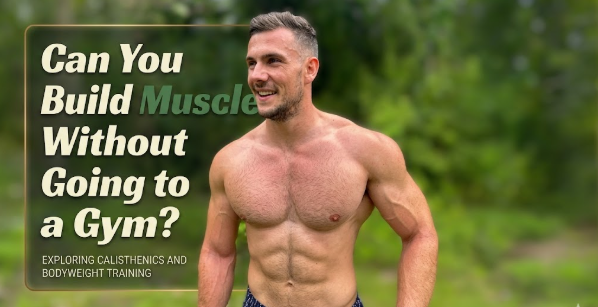
Can you genuinely build muscle with only bodyweight training?
Yes. The mechanism for muscle growth is mechanical tension, metabolic stress, and muscle damage, and none of those require a barbell to produce. What they require is sufficient load relative to your current capacity, and progression over time. Bodyweight training can deliver all three when it’s programmed with that intention.
How many sessions per week makes sense for this kind of training?
Three to four is a reasonable starting range, with at least one full rest day between sessions. The muscle adaptations that make you stronger happen during recovery, not during the session itself. More training sessions does not automatically mean better results, and this applies to bodyweight work as much as anything else.
I can do 50 push-ups without stopping. Is this even useful for me?
Probably not in that form. Fifty consecutive push-ups is an endurance test at this point, not a strength training stimulus. Try slowing the tempo to five seconds per rep, add a three-second pause at the bottom, or shift to a harder variation like an archer push-up where most of the load goes through one arm. The number goes down significantly, and the training stimulus comes back up.
Does the order of the exercises matter?
It does. Generally, put the movements that require the most neuromuscular control earlier in the session, when you’re fresh. Single-leg hip hinges and split squats tend to degrade with fatigue faster than push-ups or planks. Mountain climbers work well toward the end as a conditioning finisher. Use the exercise demands to sequence your order rather than just doing what feels familiar.
Is bodyweight training appropriate if you’re recovering from an injury?
That depends entirely on the injury and where you are in recovery. Some bodyweight movements can be regressed far enough to work around joint issues. Others load the same structures that are healing. This is genuinely a case where individual assessment matters, and working with a physiotherapist or qualified trainer before modifying a programme around an existing injury is the right call.
A principle that’s stayed with me through nearly three decades in this field: the best training programme is the one that actually gets done. I’ve spent my career designing and advocating for high-quality training environments through Escape Fitness, and I believe in the value of great equipment. But the body was always the original tool. And sometimes the most honest sessions are the ones where everything else is stripped away and you’re just working with what you have.
Start with these seven. Execute them properly. Progress them deliberately. That’s really all this needs to be.
For daily fitness content, workout guides, and health updates, visit fitnessupdates.org.