
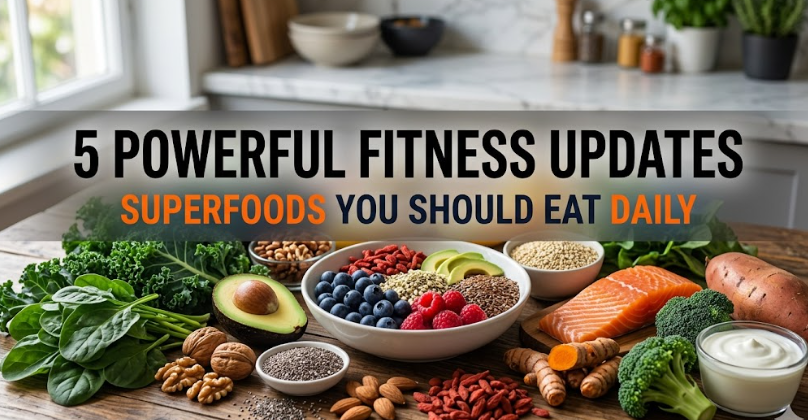

5 Powerful Fitness Updates: Superfoods You Should Eat Daily
There’s something quietly transformative about the moment you begin to care about what you put into your body. It rarely starts with a dramatic shift. More often, it’s subtle—a decision to drink more water, to skip overly processed meals, or to add one healthier ingredient to your plate. Over time, those small choices begin to shape not just your physical health, but your energy, your mood, and even your mindset.
Fitness today is no longer just about lifting weights or running miles. It’s about synergy—how movement, recovery, and nutrition work together. And at the center of that synergy lies something incredibly powerful: the foods you eat every day.
Superfoods aren’t magic, despite the hype surrounding them. But they are nutrient-dense, efficient, and deeply supportive of the body’s natural processes. When used consistently, they can enhance performance, speed up recovery, and improve overall well-being in ways that feel almost surprising.
Let’s explore five powerful fitness updates centered around superfoods that deserve a permanent place in your daily routine—not as trends, but as long-term allies.
- The rise of functional eating: food that works with your body
One of the biggest shifts in modern fitness is the idea that food should do more than just satisfy hunger. It should serve a purpose. This is where functional eating comes into play—choosing foods that actively support specific bodily functions like muscle repair, hormonal balance, or energy production.
Leafy greens, for example, are often underestimated. Spinach, kale, and arugula may seem basic, but they are packed with micronutrients that directly impact endurance and recovery. Magnesium helps with muscle relaxation, iron supports oxygen transport, and antioxidants reduce inflammation caused by intense workouts.
Then there are berries—small, vibrant, and incredibly potent. Blueberries, strawberries, and raspberries are rich in compounds that help combat oxidative stress. After a hard workout, your body experiences microscopic damage at the cellular level. Berries help your system recover faster, allowing you to train consistently without feeling constantly drained.
Adding these foods daily doesn’t require a complicated plan. A handful of berries in your breakfast or a side of greens with your main meals can gradually shift your baseline health upward.
- Protein is evolving beyond the basics
For years, protein has been the centerpiece of fitness nutrition, and for good reason. But the conversation has evolved. It’s no longer just about how much protein you eat—it’s about the quality, diversity, and timing.
Eggs remain one of the most complete sources of protein available. They contain all essential amino acids and are incredibly versatile. But what makes them even more valuable is their bioavailability—your body can actually use most of what they provide.
Greek yogurt has also gained popularity, not just for its protein content but for its probiotic benefits. A healthy gut plays a crucial role in nutrient absorption, immunity, and even mental clarity. Including yogurt in your daily routine can support digestion while contributing to muscle maintenance.
Plant-based proteins have stepped into the spotlight as well. Lentils, chickpeas, and quinoa are no longer seen as alternatives—they’re recognized as powerful staples in their own right. They bring fiber, minerals, and sustained energy, making them especially useful for those who want to avoid energy crashes throughout the day.
What’s interesting is how combining different protein sources can enhance their effectiveness. A meal that includes both plant and animal proteins often delivers a broader spectrum of nutrients, creating a more balanced intake overall.

- Healthy fats are no longer feared—they’re essential
There was a time when fats were avoided at all costs. Today, we understand that certain fats are not just beneficial—they’re necessary.
Avocados have become a symbol of this shift. Rich in monounsaturated fats, they support heart health and provide a steady source of energy. Unlike quick-burning carbohydrates, fats digest slowly, helping you feel fuller for longer.
Nuts and seeds also play a critical role. Almonds, walnuts, chia seeds, and flaxseeds are packed with omega-3 fatty acids, which help reduce inflammation and support brain function. For anyone engaged in regular physical activity, managing inflammation is key to staying consistent and avoiding burnout.
Olive oil deserves a mention as well. It’s not just a cooking ingredient; it’s a cornerstone of balanced nutrition. Drizzling a small amount over salads or cooked vegetables can enhance both flavor and nutrient absorption.
The key here is moderation and consistency. You don’t need large quantities—just regular inclusion. Over time, these fats contribute to more stable energy levels and improved overall health.
- Hydration is getting smarter
Hydration used to mean simply drinking water. While water remains essential, the modern understanding of hydration is more nuanced.
Electrolytes—minerals like sodium, potassium, and magnesium—play a crucial role in maintaining fluid balance, especially during and after exercise. Without them, even high water intake can leave you feeling fatigued.
Coconut water has gained attention as a natural source of electrolytes. It’s light, refreshing, and effective for replenishing lost minerals after workouts.
Fruits like watermelon and oranges also contribute to hydration while providing vitamins and natural sugars for quick energy. These foods are particularly helpful in warmer climates or during intense training sessions.
Herbal teas are another underrated addition. They provide hydration while offering additional benefits depending on the type—whether it’s calming effects or digestive support.
The idea is to think of hydration as a system rather than a single action. It’s about maintaining balance throughout the day, not just reacting to thirst.
- Recovery-focused nutrition is becoming a priority
Perhaps the most significant update in fitness thinking is the emphasis on recovery. Progress doesn’t happen during workouts—it happens afterward, when your body repairs and rebuilds.
Foods that support recovery are now taking center stage. Turmeric, for instance, contains compounds known for their anti-inflammatory properties. Adding it to meals or drinks can help reduce soreness and speed up recovery time.
Dark chocolate, in moderation, has also found its place in fitness nutrition. It contains antioxidants and can even improve blood flow, which supports muscle repair.
Bananas are another simple yet effective choice. They provide potassium, which helps prevent muscle cramps, and carbohydrates that replenish glycogen stores after exercise.
What’s interesting is how these foods fit naturally into daily life. They don’t require drastic changes—just mindful inclusion.

A broader perspective on daily eating
What ties all of these updates together is a shift in mindset. Instead of viewing food as a set of rules or restrictions, it becomes a tool—something that supports your goals and enhances your quality of life.
There’s no need for perfection. Consistency matters far more. Eating a variety of nutrient-dense foods regularly will always outperform short-term, extreme diets.
It’s also worth noting that everyone’s body responds differently. What works well for one person may need adjustment for another. Paying attention to how you feel—your energy, digestion, and performance—can guide your choices more effectively than any rigid plan.
Frequently Asked Questions
- Do I need to eat all these superfoods every single day?
Not necessarily. The goal is consistency over time, not perfection. Rotating these foods throughout the week can still provide excellent benefits. - Are superfoods expensive or hard to find?
Many are surprisingly accessible. Eggs, lentils, bananas, and leafy greens are affordable and widely available, making them easy to include in daily meals. - Can I rely on supplements instead of whole foods?
Whole foods are generally more beneficial because they provide a complex mix of nutrients that supplements often can’t replicate. Supplements can help, but they shouldn’t replace real food. - How quickly will I notice results from changing my diet?
Some changes, like improved energy, can be noticed within days. Others, such as muscle recovery and overall fitness improvements, may take a few weeks of consistent effort. - Is it okay to combine different superfoods in one meal?
Absolutely. In fact, combining foods often enhances their benefits. For example, pairing healthy fats with vegetables can improve nutrient absorption. - What if I don’t enjoy some of these foods?
There’s always flexibility. The key is to find alternatives with similar nutritional value that you genuinely enjoy. Sustainability matters more than forcing yourself to eat something you dislike.
In the end, fitness isn’t just about pushing your limits—it’s about supporting your body so it can meet those challenges. The foods you choose each day quietly shape that journey. And when those choices are rooted in nourishment rather than restriction, the results tend to last far longer than any temporary trend.