
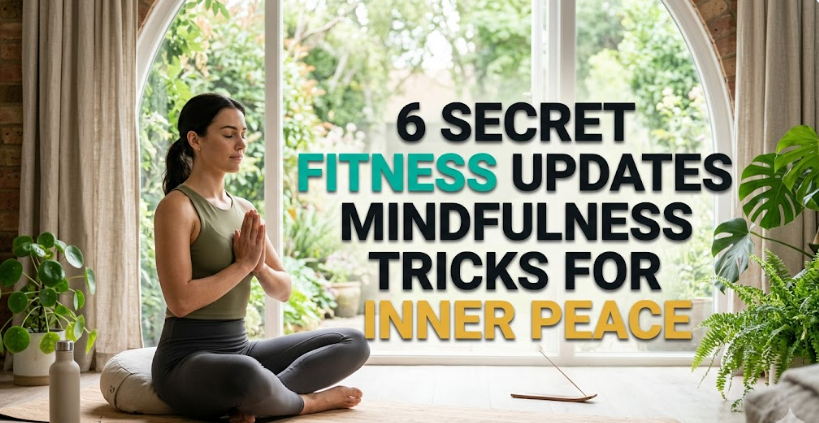

6 Secret Fitness Updates Mindfulness Tricks for Inner Peace
There is a quiet shift happening in the way people approach fitness. It is no longer just about visible strength, sculpted muscles, or the numbers on a scale. Something deeper has begun to take center stage: the connection between movement, awareness, and inner calm. Many people chase fitness as an external goal, only to discover that the real transformation happens internally. Peace, clarity, and resilience are becoming just as valuable as endurance and strength.
What if fitness was not only about pushing harder but also about listening more carefully? What if mindfulness was not something separate from exercise, but woven directly into it? These ideas are not always obvious, and often they remain hidden behind routines that focus solely on repetition and results.
The following six “secret” updates are not trends in the traditional sense. They are subtle shifts in perspective—ways of practicing fitness that deepen awareness and quietly cultivate inner peace.
- training the nervous system, not just the body
Most fitness routines focus on muscles: how to build them, strengthen them, and shape them. But beneath every movement is the nervous system, quietly coordinating everything. When this system is overloaded, even the best workout can feel draining instead of energizing.
A mindful fitness approach begins by paying attention to how the body responds, not just what it does. For example, two people might complete the same workout, but one feels calm and refreshed while the other feels agitated and exhausted. The difference often lies in how the nervous system was engaged.
Instead of constantly pushing intensity, try alternating between effort and deliberate relaxation. After a challenging set, pause. Notice your breathing. Let your heart rate settle before moving again. This creates a rhythm that mirrors natural cycles rather than fighting against them.
Over time, this practice teaches the body to recover more efficiently. More importantly, it reduces the underlying stress that many people carry into their workouts without realizing it. Fitness becomes less about survival and more about balance.
- the overlooked power of slow movement
In a culture that rewards speed, slowing down can feel counterintuitive. Yet some of the most profound changes in both strength and mental clarity happen when movement is intentionally slowed.
When you perform an exercise slowly, every detail becomes noticeable. The way your foot presses into the ground, the slight tremor in a muscle, the rhythm of your breath—these small sensations often go unnoticed during fast-paced routines.
Slowing down transforms exercise into a form of moving meditation. It requires attention, and attention anchors the mind in the present moment. This is where mindfulness naturally emerges, not as an added task but as a byproduct of deliberate movement.
There is also a psychological shift. Instead of rushing to finish, you begin to experience the process itself. The workout stops being something to get through and becomes something to explore.

- breath as the bridge between body and mind
Breathing is often treated as an automatic function, something that takes care of itself. But in reality, it is one of the most powerful tools for influencing both physical performance and mental state.
Many people unconsciously hold their breath during effort or breathe in a shallow, rapid way. This can increase tension and reduce efficiency. By bringing awareness to breathing patterns, you can change the entire experience of a workout.
Try syncing your breath with your movements. For example, exhale during exertion and inhale during release. Keep the breath steady and controlled rather than forced. This not only improves performance but also keeps the mind anchored.
Over time, conscious breathing becomes a habit that extends beyond exercise. It becomes a way to navigate stress, regulate emotions, and return to a sense of calm. Fitness then becomes a training ground for life, not just a physical activity.
- redefining progress beyond physical results
One of the reasons fitness can feel frustrating is that progress is often measured in narrow ways: weight lifted, distance run, or changes in appearance. While these metrics have their place, they do not capture the full picture.
Mindful fitness introduces a different kind of progress. It asks questions like: Do you feel more present during your workouts? Is your mind quieter? Do you recover more quickly from stress? Are you more aware of your body’s signals?
These shifts may not be visible, but they are deeply meaningful. They indicate a growing connection between body and mind, which is the foundation of inner peace.
By expanding the definition of progress, you remove some of the pressure that often accompanies fitness goals. The journey becomes less about achieving a specific outcome and more about cultivating a consistent, balanced state of being.
- integrating micro-moments of awareness
Mindfulness does not require long periods of stillness or elaborate routines. In fact, some of the most effective practices are brief and simple. These “micro-moments” can be woven into any fitness routine.
Before starting a workout, take a few seconds to notice how your body feels. Are you tense, tired, or energized? This quick check-in sets the tone for the session.
During exercise, occasionally shift your focus inward. Notice the sensation of movement, the rhythm of your breath, or the contact between your body and the ground.
After finishing, pause again. Instead of immediately moving on, take a moment to observe how you feel. This helps reinforce the connection between effort and outcome, both physically and mentally.
These small moments may seem insignificant, but over time they build a habit of awareness. And awareness is the foundation of mindfulness.
- embracing rest as an active practice
Rest is often seen as the absence of activity, something that happens when you are not working out. But in a mindful fitness approach, rest becomes an active and intentional part of the process.
This does not mean simply lying down or scrolling through your phone. It means creating space for the body and mind to recover fully. This could involve gentle stretching, deep breathing, or simply sitting quietly for a few minutes.
Rest also includes knowing when to stop. Pushing through fatigue or discomfort might seem like dedication, but it can lead to burnout and imbalance. Listening to your body and honoring its limits is a form of strength, not weakness.
By treating rest as a skill rather than an afterthought, you create a more sustainable approach to fitness. You also give your mind the opportunity to settle, which is essential for inner peace.

bringing it all together
These six updates are not separate techniques to be mastered one by one. They are interconnected aspects of a broader shift in how fitness is understood and practiced.
At its core, mindful fitness is about alignment. It aligns effort with awareness, movement with breath, and physical activity with mental clarity. It transforms exercise from a purely external pursuit into an internal exploration.
This does not mean abandoning traditional goals or routines. It simply means approaching them with a different mindset. You can still lift weights, run, or engage in any form of exercise you enjoy. The difference lies in how you experience it.
Instead of chasing results, you begin to notice the process. Instead of ignoring your body’s signals, you learn to listen. Instead of separating fitness and mindfulness, you allow them to support each other.
Over time, this approach creates a subtle but powerful shift. Workouts become less about effort and more about presence. Progress becomes less about outcomes and more about awareness. And fitness becomes not just a way to shape the body, but a path to inner peace.
a quiet transformation
The most meaningful changes often happen quietly. There is no dramatic moment when everything suddenly falls into place. Instead, there are small shifts—moments of awareness, subtle adjustments in perspective—that gradually reshape how you experience both fitness and life.
You might notice that you feel calmer after a workout, even if it was challenging. You might find yourself paying more attention to your breath during stressful situations. You might become more attuned to your body’s needs, both in and out of the gym.
These changes are not always obvious, but they are significant. They indicate that fitness is no longer just something you do, but something that influences how you live.
In a world that often encourages constant movement and distraction, mindful fitness offers a different path. It invites you to slow down, pay attention, and reconnect with yourself.
And in that reconnection, you may discover something that goes beyond strength or endurance—a sense of inner peace that stays with you, both during your workouts and beyond them.
frequently asked questions
- can mindfulness really improve physical fitness results
Yes, mindfulness can enhance physical performance by improving focus, reducing unnecessary tension, and helping you maintain better form. It also supports recovery by lowering stress levels, which plays a crucial role in overall fitness progress. - how long does it take to see benefits from mindful fitness
Some benefits, like feeling calmer or more focused, can be noticed almost immediately. Deeper changes, such as improved body awareness and reduced stress, typically develop over weeks or months of consistent practice. - do i need to meditate separately to practice mindful fitness
Not necessarily. Mindful fitness integrates awareness directly into movement, so your workout itself becomes a form of meditation. However, separate meditation can complement and deepen the experience if you choose to include it. - is mindful fitness suitable for beginners
Absolutely. In fact, beginners may find it especially helpful because it encourages proper technique, awareness, and a balanced approach from the start, reducing the risk of injury and burnout. - can mindful fitness help with anxiety or stress
Yes, it can be very effective. By focusing on breath, movement, and present-moment awareness, mindful fitness helps regulate the nervous system and reduce feelings of anxiety and stress over time. - what is the biggest mistake people make when trying mindful fitness
A common mistake is treating mindfulness as an additional task rather than an integrated part of the workout. Instead of trying to “do it perfectly,” it is more effective to gently bring awareness into whatever you are already doing.