
Why Sleep Is More Important Than Ever
Sleep is not just what happens when you close your eyes and rest. It’s when your body repairs itself, your brain consolidates memories and your immune system reboots. But millions of people battle for a good night’s sleep.
Recent research has unearthed revolutionary insights into how we can sleep more. Everything from the temperature of your room to what you eat before bed can make a big impact in how well you sleep.
In this article we give you the 12 critical upgrades to finally get the deep, restful sleep your body desperately needs. And these are not complex medical procedures or costly treatments. They’re useful suggestions rooted in science that anyone can put to use tonight.
Read on to see what modern sleep science reveals about how we can get the rest we require.
The Physiology of Deep Sleep States
Your sleep is not a single state from on to off. Your brain cycles through various stages though the night.
Light sleep happens first. This is when you nod off or can be awakened easily. Then there is deep sleep, when your body does much of its repair. And then there’s REM sleep, where you dream and your brain processes emotions.
Deep sleep is crucial. That’s when your muscles rebuild, tissues repair and growth hormones release. You’ll feel tired even after spending eight hours in bed if you don’t get enough deep sleep.
Most adults require one to two hours of deep sleep each night. That may not seem like much, but it makes a world of difference in feeling refreshed!
Update #1: The Temperature of Your Room Plays a Big Role in How Well You Sleep
The temperature of your bedroom is a major factor in how well you sleep.
The best temperature for sleep is in the range of 60-67 degrees Fahrenheit. This may not sound cool, but there’s a very good reason. When you sleep, your body temperature naturally falls. Cold room and it happens faster.
Without your room being too warm, your body can’t cool itself off. This may not let you enter deep sleep. You may toss and turn, or wake up soaked in sweat.
Quick fixes:
- Turn down your thermostat before you go to sleep
- Use breathable cotton sheets
- Leave a fan on to help ventilate the air
- Take a warm bath 90 minutes before bed (cooling down from it helps you sleep)
Cooling mattress pads or pillows are used by some. These also might come in extra handy during the heat of summer.
Update #2: Blue Light Messes with Your Natural Sleep Hormones
That’s right — your phone, tablet and computer give off blue light. This kind of light fools your brain into thinking it’s daytime.
Your brain begins producing melatonin when it starts to get dark. That’s what melatonin is, the hormone that makes you sleepy. Blue light inhibits melatonin production, which makes it more difficult to fall asleep.
Research suggests that people who use these devices some time before bedtime take longer to fall asleep. They have less deep sleep and tend to be groggier in the morning.
Solutions that work:
- Two hours before bedtime, shut down those screens
- Wear blue light blocking glasses in the evening
- Turn on night mode in your devices
- Make the bedroom a phone-free zone entirely
If you need to use devices after dark, avoid the blue light setting and lower the brightness all the way if possible. Every little bit counts in helping your brain prepare to sleep.
Update #3: Train Your Body with Good Sleep (at Consistent Times)
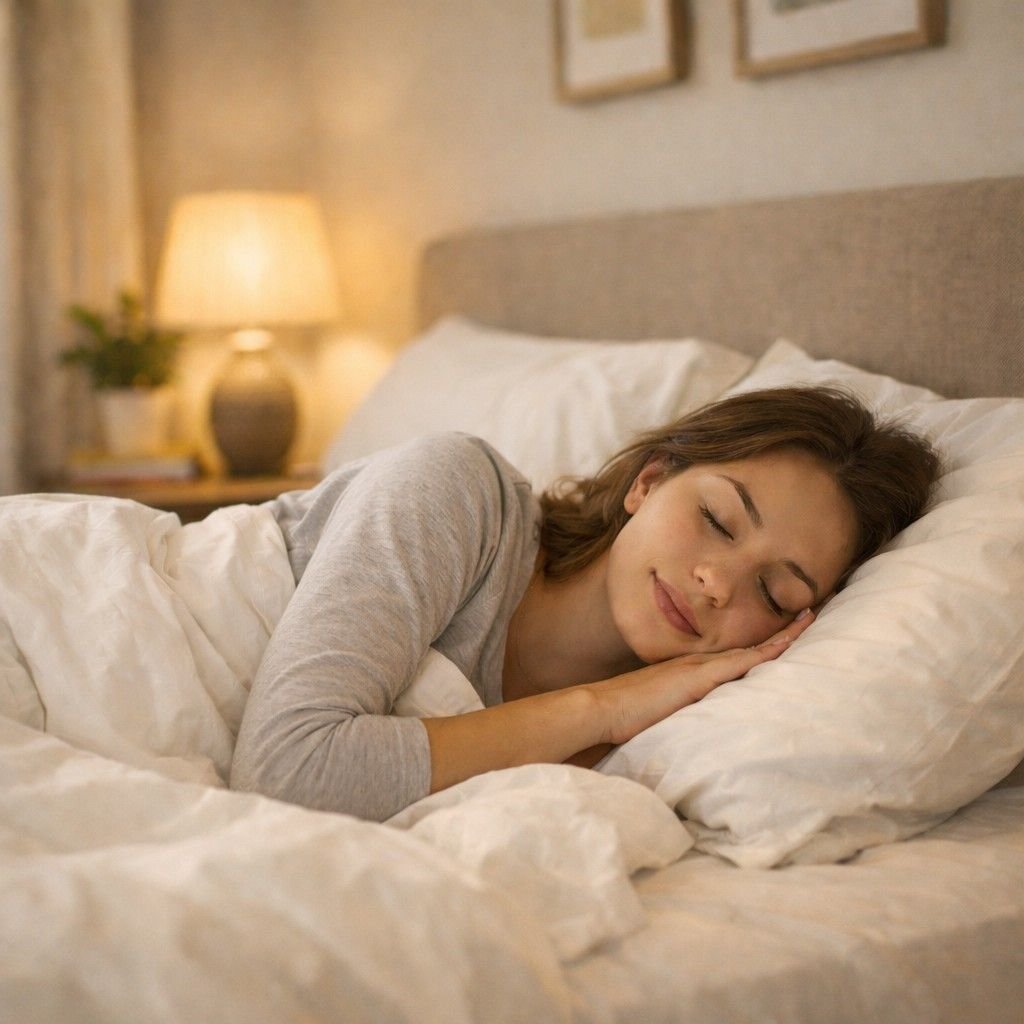
Sleeping at different times disrupts your internal clock. Your body thrives on routine and predictability.
Your body learns when to provide your natural sleep hormone. You will be tired for bed and you’ll wake up naturally in the morning without needing an alarm.
A lot of people sleep in at weekends to “catch up” on sleep. This actually makes things worse. It makes an entity known as social jet lag, that means your body never actually lands on a rhythm.
Building a consistent schedule:
- Pick a bedtime that will afford you 7-9 hours of sleep
- Get up at the same time each day — even if it means setting an alarm for both weekdays and weekends
- You need to do this even on weekends
- Have patience, it takes 2 weeks to adjust
Your body will be grateful for the regularity. You will find that you fall asleep more easily and wake up a lot easier.
Update #4: What You Eat Affects How You Sleep
Sleep and food are more intertwined than most people realize.
Eating a large meal before bed makes your digestive system work hard. This can be irritating and can lead to shallow sleep. Spicy foods can trigger heartburn, and high-fat foods slow digestion.
Caffeine has a half-life of 6 hours or more. That after-lunch cup of coffee may still be keeping you up at bedtime.
Alcohol is tricky. It may also help you get to sleep (fall asleep) faster, but it destroys sleep quality. You will awaken more often during the night, and experience less deep sleep.
Foods that help you sleep:
- Cherries (natural melatonin)
- Bananas (magnesium and potassium)
- Almonds (magnesium)
- Chamomile tea (calming effects)
- Turkey (contains tryptophan)
Finish your last big meal 3 hours before bed. If you’re very hungry and need a snack, make it light — like a small bowl of oatmeal or some nuts.
Update #5: Exercise Timing is Everything
Exercise is great for sleep, but timing makes a world of difference.
If you work out in the morning or afternoon, you’ll sleep better at night. They burn energy, reduce stress and tire out your muscles. Moderate to regular exercise has been shown to offer a 75% improvement in deep sleep.
But intense physical activity immediately before bedtime can backfire. It increases your heart rate, body temperature and adrenaline levels. All of these things are impediments to falling asleep.
| Exercise Timing | Effect on Sleep | Best For |
|---|---|---|
| Morning (6-10 AM) | Excellent – wakes you up and sets circadian rhythm | Early risers, energetic mornings |
| Afternoon (2-6 PM) | Excellent – peak performance, good sleep later | Most everyone, busy mornings |
| Evening (6-8 PM) | Good – allows 2-3 hours to cool down | Late workers, after dinner |
| Night (after 8 PM) | Poor – too stimulating before bed | Only gentle stretching or yoga |
Some light stretching or yoga before bed is a different story. These relaxing activities may even aid in better sleep.
Strive for at least a half-hour of moderate exercise most days. You will sleep so much better in a few weeks. For more tips on maintaining an active lifestyle that supports better sleep, visit Fitness Updates.
Update #6: Techniques to Reduce Stress for Better Sleep
Stress is one of the top sleep killers. When you are stressed, your brain produces cortisol to help keep you alert and awake.
A lot of people lie in bed with racing thoughts. They are anxious about work, romantic relationships or money. This mental exercise keeps the brain from powering down for sleep.
Effective stress-reduction methods:
Progressive muscle relaxation works wonders. Contract each group of muscles for 5 seconds, then release. Begin at your toes and move up to your face. This will help it release physical tension, as well as put your mind more at ease.
The 4-7-8 breathing method is simple, easy to do and one of the most effective. Breathe in 4 counts, hold for 7 counts, exhale 8 counts. That triggers your parasympathetic nervous system, which encourages relaxation.
Journaling before bed helps too. Put your worries on paper or list your to-dos for tomorrow. This is a way to get thoughts out of your head and onto paper.
For some, meditation apps or guided imagery recordings help. Those give your brain something calm to fixate on, as opposed to anxieties.
Update #7: The Power of a Good Night’s Sleep and Why Your Environment in Bed is Key for Proper Rest
Your bedroom should feel like a sleep sanctuary. The environment signals your brain that it’s time to go to sleep.
Darkness is critical. Even the smallest amounts of light can disrupt sleep. Streetlights, alarm clocks and charging indicators are all problematic.
Noise is another issue. Loud noises can rouse you out of slumber or keep you from falling deeply asleep. Solid background sounds are better than pin-drop silence.
Creating the perfect sleep space:
- Get blackout curtains or an eye mask
- Cover or remove light-emitting devices
- Use a white noise machine or fan
- The room is to be hygienic and tidy
- Use your bed only for sleep (not work, not eating)
Your mattress and pillows matter as well. Even the best of sleep habits will be sabotaged by an uncomfortable bed. You should change your mattress every 7 to 10 years and between 1 to 2 years for the pillows.
Update #8: Controlling Your Clock with Natural Light
Your body has an internal clock, known as the circadian rhythm. The clock is regulated to a large extent by how the body experiences natural light.
Natural light exposure in the morning signals to your brain that it’s time to wake up. That leaves you feeling alert during the day and drowsy at night.
Shift workers and others who work indoors all day often have disrupted circadian rhythms. Without sufficient natural light, their bodies don’t know when it is time to feel sleepy.
Maximizing light exposure:
- Open your curtains right when you wake up
- Get outside for 15-30 minutes in the morning
- Whenever possible, have your lunch outside
- During daytime, sit close to windows
- If it’s winter where you are, try a light therapy box
Evening is the time you need less light. Turn the lights down in your house 2-3 hours before bedtime. This sends a signal to your brain that it’s almost time for bed.
Update #9: Napping Strategies That Won’t Wreck Your Night
Naps can be restful or sleep-wrecking, depending on how you take them.
Long or late naps make it difficult to fall asleep at night. You are consuming sleep pressure that you should be expending for nighttime sleep.
But a short nap done right can provide an energy boost without interfering with nighttime sleep.
Smart napping rules:
- Keep naps under 20-30 minutes
- Nap before 3 PM
- Set an alarm so you don’t oversleep
- Take a nap in a comfortable but not too comfy spot
A 20-minute power nap can enhance and improve alertness, mood, and performance. Even if you do, try not to turn it into a 2-hour nap.
If you suffer from insomnia or have trouble sleeping at night, forgo naps. They could be making your issue worse.
Update #10: Sleep Supplements That Actually Work
There are countless supplements marketed as natural remedies for sleep. Some are based on sound science, but some probably aren’t as effective as advertised.
Melatonin is the most commonly used sleep aid. It’s most effective for people with circadian rhythm issues — such as shift workers, or jet lag. For regular insomnia it is not as useful.
The right dose matters. Most people take too much. Begin with 0.5-1 mg, not the 5-10 milligram pills typically sold.
Evidence-based sleep supplements:
Magnesium is good for sleep quality and muscle relaxation. It’s one of the most common mineral deficiencies. Try 200-400 mg of magnesium glycinate before bed.
L-theanine is a tea-derived amino acid. It promotes relaxation without drowsiness. An hour before bed, take 200 milligrams.
Another amino acid, glycine, can enhance the quality of sleep. Research indicates that 3 grams taken before bed helps people get to sleep faster.
There is conflicting data on valerian root. It helps some people and makes no difference whatsoever for others. It’s generally safe to try.
You should always consult a doctor before starting supplements, particularly if you are on medication. Supplements can interact with medications. For comprehensive information on sleep supplements and their effects, refer to the National Sleep Foundation.
Update #11: The Position You Sleep In Determines The Quality Of Your Rest
The position of your body affects how well you slumber and the condition you find yourself in when, finally, day breaks.
Sleeping on your back is even sometimes said to be the best. It helps keep your spine aligned and relieves pressure off of joints. But it may exacerbate snoring or sleep apnea.
Side sleeping is most common. It’s nice for cutting down on snoring and comfortable for most people. Sleeping on the left side can decrease acid reflux.
Stomach sleeping is hard on your neck and back. Many sleep experts caution against this position, if you can avoid it.
Position recommendations by condition:
| Condition | Best Position | Why |
|---|---|---|
| Back pain | On back with pillow under knees | Preserves spinal alignment |
| Neck pain | On back or side with proper pillow | Prevents neck strain |
| Snoring | On side | Keeps airways open |
| Acid reflux | Left side | Reduces flow of stomach acid |
| Sleep apnea | On side or elevated | Eases breathing |
The height of your pillow should allow your head to align with your spine. Thicker pillows work better for side sleepers than back sleepers do.
When you do change positions, pillows are your best friend. Body pillows can help side sleepers keep alignment. Back sleepers can benefit from a pillow under the knees.
Update #12: When to See a Sleep Doctor
Occasionally sleep issues do require professional assistance. If you struggle with serious problems, don’t go it alone.
Millions of people have sleep disorders. Better sleep habits are not going to resolve these situations. You need the right diagnosis and treatment.
When to see a sleep specialist:
- You have loud snoring and occasionally choke or gasp in sleep (possible sleep apnea)
- You can’t fall asleep for 30+ minutes most nights
- You wake up a lot, and can’t fall back asleep
- You’re tired after sleeping 7-9 hours
- You experience intense need to move your leg at night (restless leg syndrome)
- You fall asleep at the wrong time of day (narcolepsy)
- You have attempted to improve sleep hygiene for 3 months with no benefit
Sleep studies may uncover hidden problems, like sleep apnea or movement disorders. These tests record your brain waves, breathing and body movements to monitor what occurs during sleep.
Treatment could involve use of CPAP machines for sleep apnea, certain drugs for particular disorders, or cognitive behavioral therapy for insomnia (CBT-I). CBT-I is a structured program that helps you replace thoughts and behaviors that interfere with good sleep.
Don’t wait years to get help. Sleep problems mess with your health, work and relationships. When you get the right diagnosis, modern treatments are incredibly effective.

Preparing Your Own Sleep Action Plan
Now that you know these 12 essential updates, it’s time to put them into practice.
Don’t attempt to change everything at once. That’s overwhelming and generally ineffective. Instead choose 2-3 of these habits to begin with.
Week 1-2: Focus on consistency. Set the same time to go to bed and to rise every day. This one shift in your routine can change the game for your sleep.
Week 3-4: Optimize your environment. Adjust your room temperature to the optimal setting, install blackout curtains and take screens out of the bedroom.
Week 5-6: Fine-tune your evening routine. Quit caffeine after 2 PM, skip large meals before bedtime and begin a relaxation practice.
Keep a sleep diary to follow your progress. Keep track of when you went to bed, when you woke up, how it felt and what you did differently. This will help you recognize what your body likes.
Good sleep is just that: a skill you build over time. Be patient with yourself. Some nights are going to be better than others, and that is okay.
Your body is craving good sleep. You simply get out of your own way and create the proper conditions for your natural sleep system to function.
The Long View: Health Benefits of Better Sleep
Invest in better sleep and you will see benefits across the board.
Your physical health improves. Those who snooze well have stronger immune systems, better control of their blood pressure and a reduced risk of both heart disease and diabetes. They tend to have healthier weights because sleep makes sure our hunger hormones are well-regulated.
Mental health gets better too. Proper sleep alleviates anxiety and depression. This feels good, and it helps with emotion regulation and stress tolerance.
Your brain operates on a different level. Memory, concentration, creativity and problem-solving all benefit from quality sleep. Students who sleep well have better grades. Well-rested workers are more productive.
Relationships benefit when you’re well-rested. You have more patience and better communication and more energy for the people who matter most to you.
Athletic performance increases. You get faster, more accurate and your endurance increases with the proper amount of rest. It’s as important for professional athletes to sleep as it is to train.
Even your appearance improves. The quality of sleep matters in your skin health, the look of your eyes and overall attractiveness. That’s why they call it “beauty sleep.”
Frequently Asked Questions
How much sleep should I seriously be getting?
The average adult requires between 7-9 hours each night. Teenagers need 8-10 hours. Personal needs will be different according to genetics and activity level. Listen to your body and not a number.
Does catching up on sleep during weekends help?
Not really. Chronic sleep debt is bad for your health, even if you make up with a long lie-in at the weekend. You may feel somewhat better, but you can’t completely make up for lost sleep. It’s best to wake up at the same time each day.
Why do I keep waking up at 3 a.m. each night?
Several things can cause middle-of-the-night waking. Stress, falling blood sugar, sleep apnea and needing to use the bathroom are common culprits. If this occurs regularly over the course of more than a few weeks, talk to a doctor.
Are there safe sleeping pills for long-term use?
Most sleeping pills should not be used long term. Over time, it can be addictive and cause side effects. If you have been taking sleeping pills for months, work with your doctor to find better options.
Does reading before bed help you sleep better?
Yes, you can read your way to better sleep, if you do it right. Read a physical book in dim lighting, not from a screen. Opt for something relaxing, not a thriller that makes your heart race. This sends a message to your brain that it’s winding down.
How do I stop overthinking to fall asleep?
Try the “cognitive shuffle” technique. Try thinking of a random word, then naming things that start with each of the letters. This gives your mind something to think about but without anxiety. Breathing exercises and progressive muscle relaxation can also help divert racing thoughts.
Final Thoughts on Sleep Health
Sleep is not a luxury or waste of time. It’s a biological imperative — as essential to our health and wellbeing as water and food.
The 12 updates in this article are the newest research findings on sleep health. They are tested tactics that succeed when consistently applied.
Your path to getting better sleep begins tonight. You don’t have to invest in fancy gear or complicated software. You probably just need to make it a priority and give your body what it needs.
Small changes create big results. If you reduce your bedroom temperature by a couple of degrees, put down your phone an hour before bed or go to sleep at the same time each night, that can change how you feel.
Everyone deserves restful, restorative sleep. You should wake up refreshed and ready for the day! With these crucial updates, now you have the means to bring it about.
Start with one change tonight. Your future well-rested self will be grateful.
Good sleep and sweet dreams!